límite
“límite” means “border” in Spanish. It has 2 different meanings depending on context:
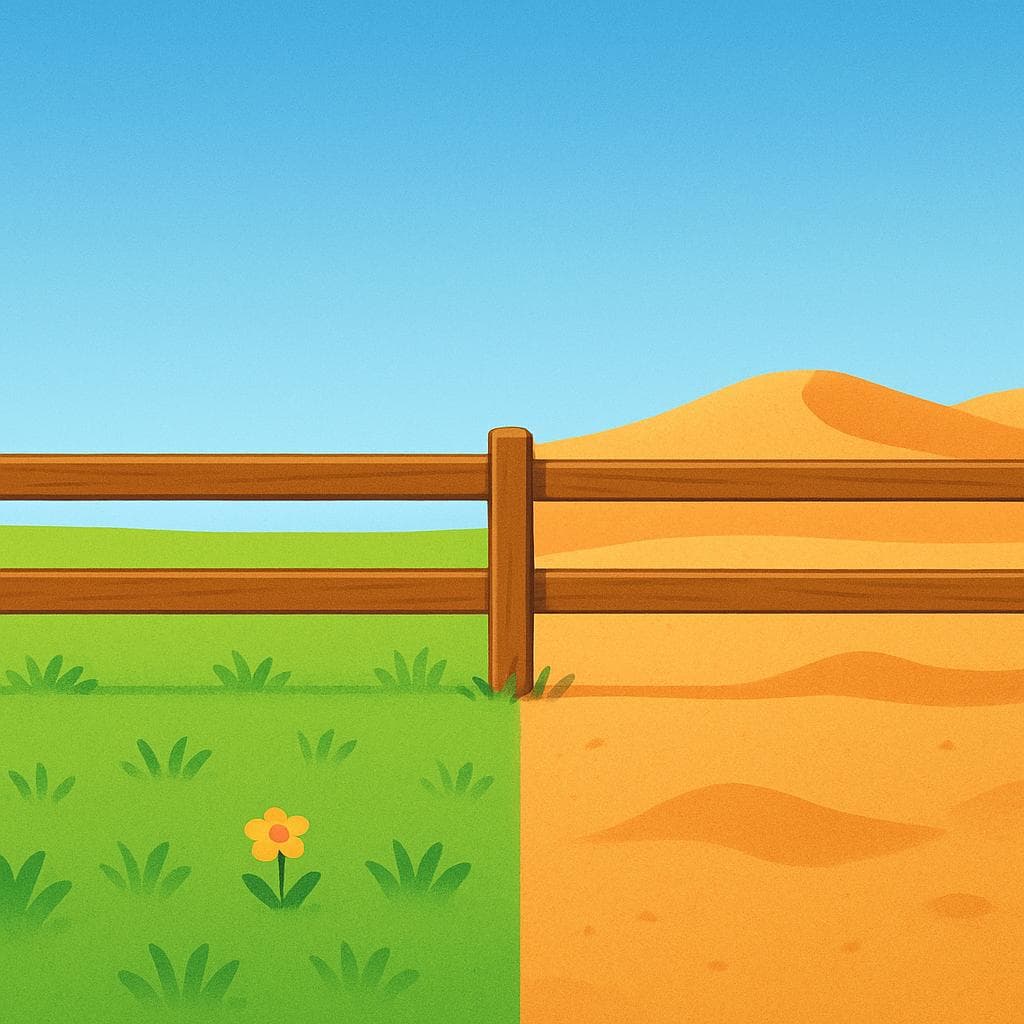

border, boundary
Also: edge
📝 In Action
Esta valla marca el límite de nuestra propiedad.
A2This fence marks the boundary of our property.
Estamos muy cerca del límite entre España y Portugal.
B1We are very close to the border between Spain and Portugal.
limit, deadline
Also: maximum
📝 In Action
Debes pagar antes del límite de la fecha.
B1You must pay before the deadline.
No hay límite de edad para aprender cosas nuevas.
A2There is no age limit for learning new things.
Necesitas poner un límite a tu consumo de café.
B2You need to set a limit on your coffee consumption.
El límite de velocidad en esta carretera es 100 km/h.
A2The speed limit on this road is 100 km/h.
✏️ Quick Practice
Quick Quiz: límite
Question 1 of 1
Which sentence uses 'límite' to mean a time restriction?
📚 More Resources
👥 Word Family▼
🎵 Rhymes▼
📚 Etymology▼
The word comes from the Latin word *līmes, līmitis*, which originally meant 'a path or boundary between two fields.' It was historically used to describe the fortifications and borders of the Roman Empire, eventually evolving into the idea of any kind of boundary or restriction.
First recorded: 15th century (in its current Spanish form)
Cognates (Related words)
💡 Master Spanish
Take your Spanish to the next level. Read 200+ illustrated and narrated Spanish stories tailored to your level with the Inklingo app!
Frequently Asked Questions
Is 'límite' masculine or feminine?
'Límite' is always a masculine noun, meaning you must use 'el límite' and not 'la límite.' The feminine noun 'limitación' is related but means 'restriction' or 'drawback.'
How do I express 'unlimited' in Spanish?
You can use the adjective 'ilimitado' (e.g., 'acceso ilimitado') or the phrase 'sin límite' (e.g., 'acceso sin límite').