mágica
“mágica” means “magical” in Spanish. It has 2 different meanings depending on context:
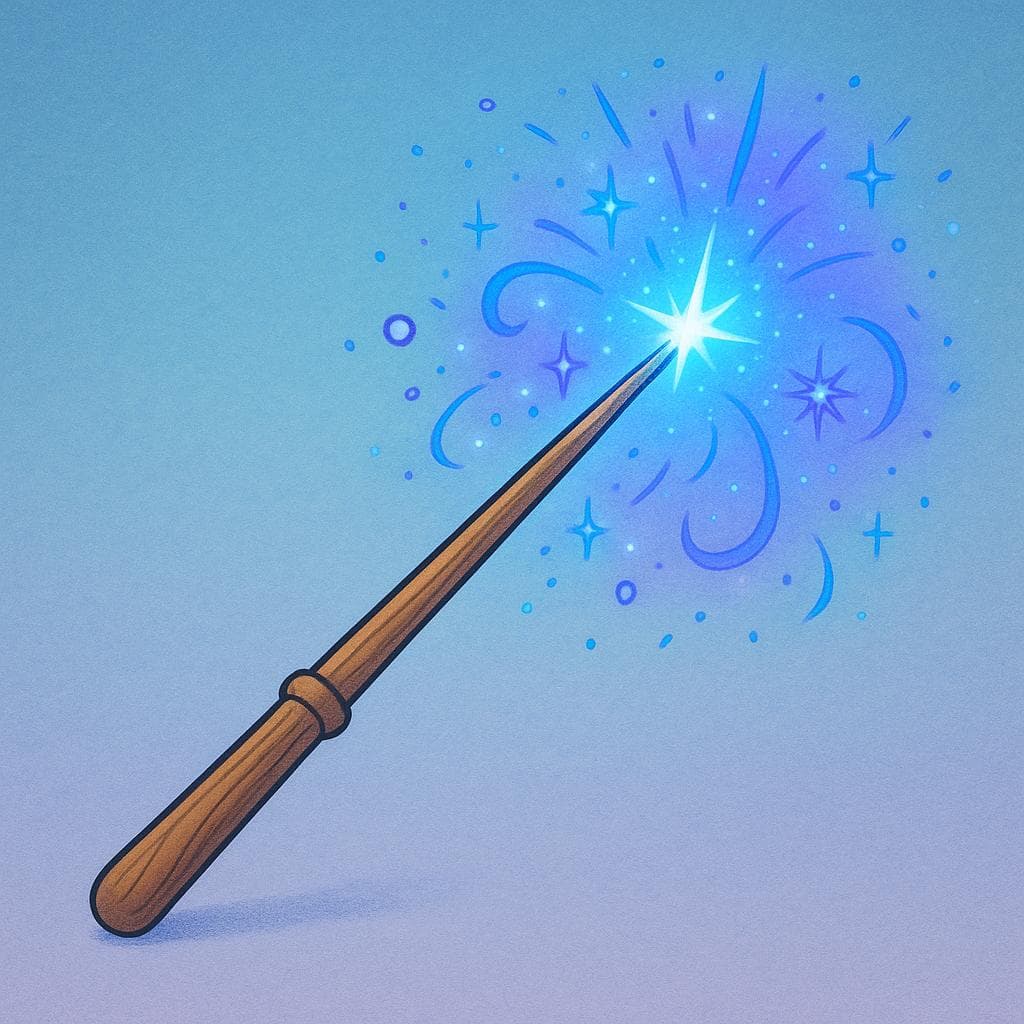

magicalAlso: mystical
📝 In Action
La varita mágica desapareció.
A2The magic wand disappeared.
Ella cree en las criaturas mágicas del bosque.
B1She believes in the magical creatures of the forest.
Esa poción mágica cura cualquier enfermedad.
B1That magic potion cures any illness.
Word Connections
wonderfulAlso: captivating, breathtaking
📝 In Action
Fue una noche mágica, llena de estrellas.
B1It was a wonderful night, full of stars.
La ciudad tiene una atmósfera mágica en Navidad.
B2The city has an enchanting atmosphere at Christmas.
Su voz tiene una cualidad mágica que te hipnotiza.
C1Her voice has a captivating quality that hypnotizes you.
Word Connections
✏️ Quick Practice
Quick Quiz: mágica
Question 1 of 1
Which sentence uses 'mágica' to describe something that is purely wonderful and enchanting, rather than literal supernatural power?
📚 More Resources
👥 Word Family
🎵 Rhymes
📚 Etymology
Comes from the Latin word *magicus*, which itself originated from the Greek word *magikós*. It is related to the ancient 'Magi,' or wise men/sorcerers of Persia, who were believed to possess special knowledge.
First recorded: Medieval Spanish texts
Cognates (Related words)
💡 Master Spanish
Take your Spanish to the next level. Read 200+ illustrated and narrated Spanish stories tailored to your level with the Inklingo app!
Frequently Asked Questions
What is the difference between 'mágica' and 'mágico'?
'Mágica' describes feminine things (like 'la luz mágica' - the magic light). 'Mágico' describes masculine things (like 'el momento mágico' - the magic moment). They mean the exact same thing, but must match the gender of the noun they describe.
Can I use 'mágica' before the noun?
Usually, 'mágica' comes after the noun (e.g., 'una noche mágica'). Placing it before the noun (e.g., 'una mágica noche') is possible but sounds more poetic, literary, or intense, and is less common in everyday conversation.