Inklingo

marchar

/mar-CHAR/

march

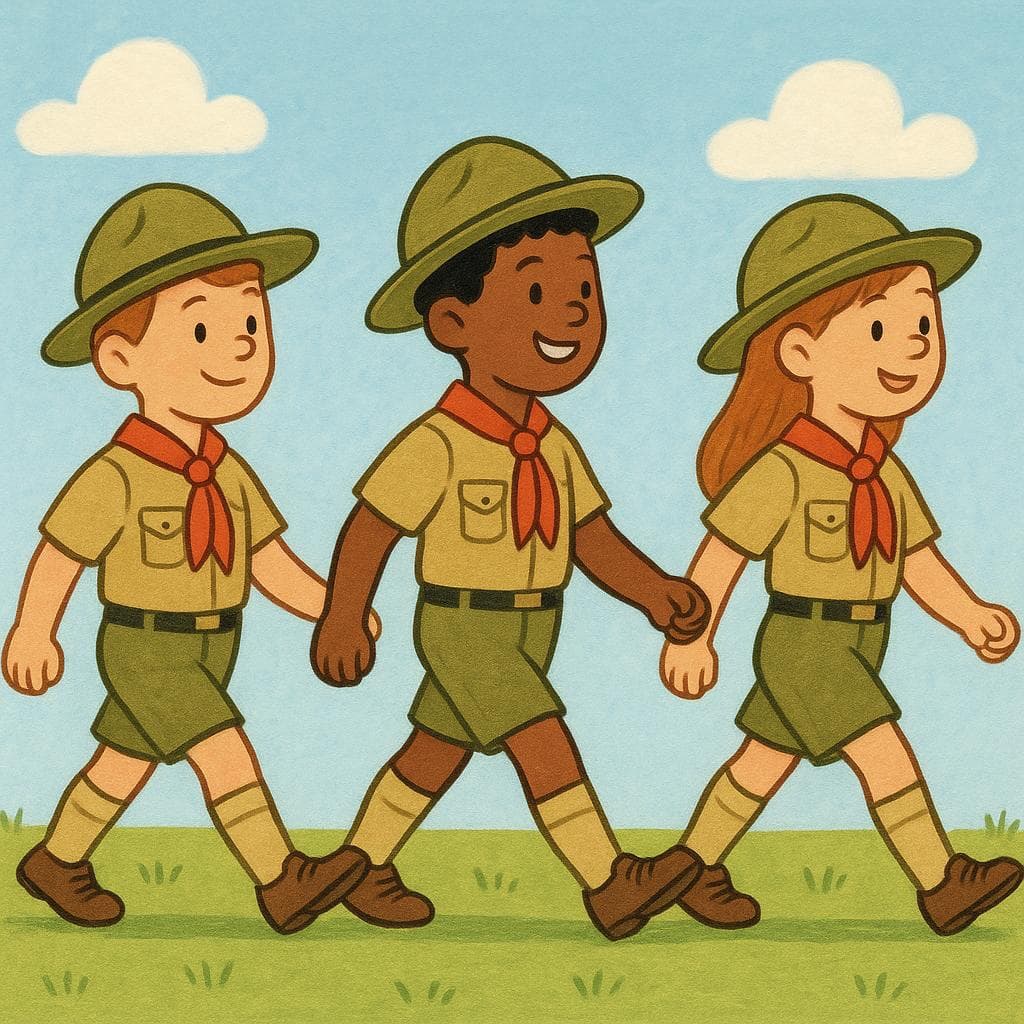
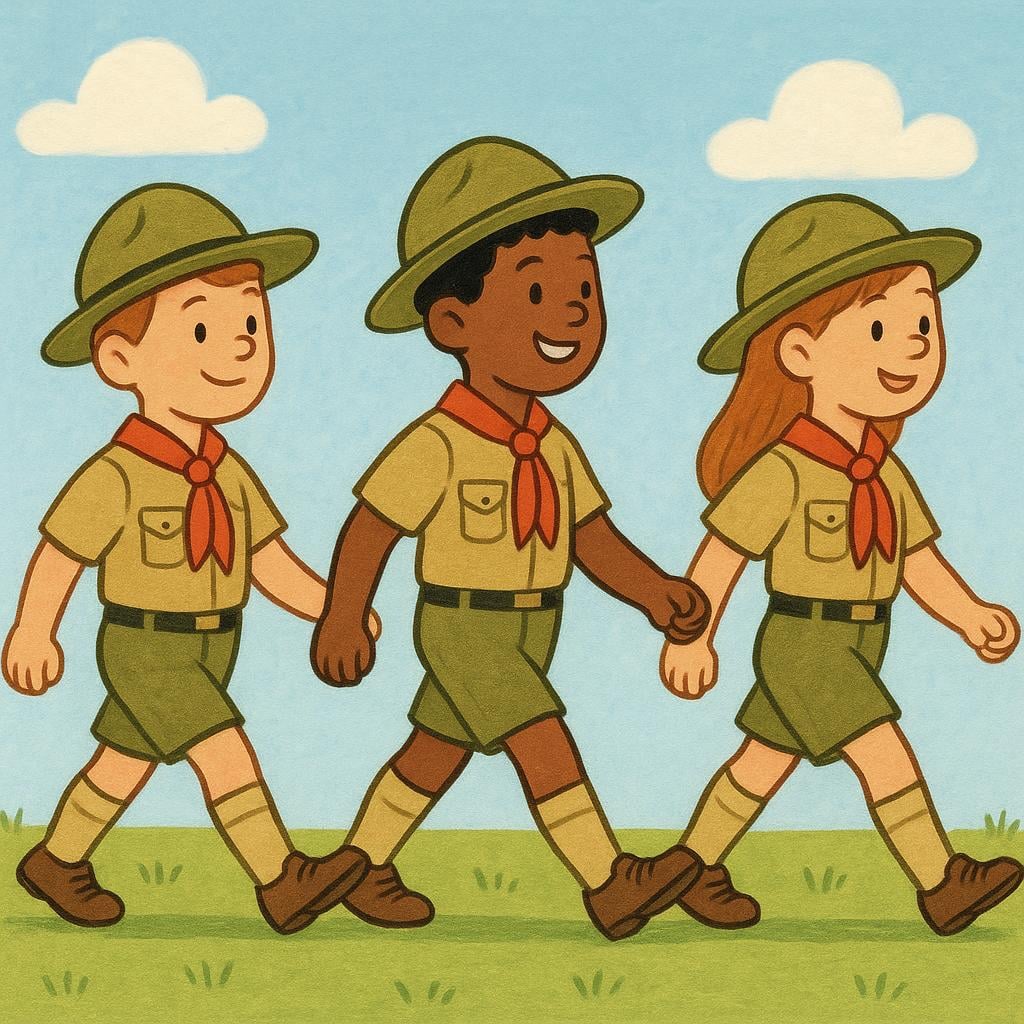
A line of three cartoon figures, perhaps soldiers or scouts, walking in step with determined expressions.

When people walk together in a disciplined formation, they march.

marchar(verb)

A2regular ar

march

?

to walk in an organized group

,

walk

?

to move on foot

Also:

parade

?

to participate in a procession

,

go

?

to travel (less common than 'ir')

📝 In Action

Los soldados marcharon durante horas bajo la lluvia.

A2

The soldiers marched for hours under the rain.

La manifestación marchó por el centro de la ciudad.

B1

The demonstration walked (marched) through the center of the city.

Word Connections

Synonyms

  • caminar (to walk)
  • desfilar (to parade)

Common Collocations

  • marchar lento/rápidoto march slowly/quickly

💡 Grammar Points

Regular -AR Verb

Marchar follows the standard pattern for all verbs ending in -ar. Once you know the pattern for one, you know it for all!

⭐ Usage Tips

Formal Movement

Use 'marchar' when the movement is organized, like a group walking together, or when you want a more formal verb than 'caminar' (to walk).

A solitary figure seen from behind walking away down a dirt road toward a distant setting sun, symbolizing departure.

To leave or depart is often expressed using the reflexive form, marcharse.

marchar(verb)

B1regular ar

leave

?

to depart (usually 'marcharse')

,

go away

?

to travel or move oneself away

Also:

take off

?

to start a journey

📝 In Action

Nos marchamos después de la cena para no molestar.

B1

We left after dinner so as not to bother anyone.

¿A qué hora te vas a marchar mañana?

A2

What time are you going to leave tomorrow?

Word Connections

Synonyms

Antonyms

💡 Grammar Points

The Power of 'Se'

When you add 'se' (or 'me', 'te', 'nos', etc.) to 'marchar', you create 'marcharse'. This emphasizes the action is done by the subject to themselves, focusing on the act of separating from a place, like saying 'to move oneself away'.

❌ Common Pitfalls

Marchar vs. Marcharse

Mistake: "Using 'Yo marcho de la fiesta' (I march from the party)."

Correction: Say 'Yo me marcho de la fiesta'. Using the reflexive form 'marcharse' is necessary when you mean 'to leave' or 'to go away'.

⭐ Usage Tips

A Polite Exit

'Marcharse' is a very common and neutral way to talk about leaving, often interchangeable with 'irse', but sometimes sounding slightly more formal.

A close-up view of two large, brightly colored interlocking mechanical gears smoothly rotating.

Marchar can mean that a machine or system is successfully working or functioning.

marchar(verb)

B2regular ar

work

?

to function (a machine or system)

,

go

?

to progress (a plan or situation)

Also:

run

?

how an engine or business operates

,

be going (well/badly)

?

describing status

📝 In Action

El negocio marcha muy bien este trimestre.

B2

The business is going very well this quarter.

Pregunté cómo marchaba la construcción de la casa.

C1

I asked how the construction of the house was progressing.

El motor ya no marcha, creo que está roto.

B2

The engine no longer works, I think it's broken.

Word Connections

Synonyms

  • funcionar (to work/function)
  • progresar (to progress)

Common Collocations

  • marchar bien/malto go well/badly

Idioms & Expressions

  • A toda marchaAt full speed/quickly

💡 Grammar Points

Impersonal Use

This meaning is often used in the third person (él/ella/usted) to talk about non-human things or situations, like asking '¿Cómo marcha todo?' (How is everything going?).

⭐ Usage Tips

Figurative Movement

Think of this meaning as a metaphor: if something is 'marching,' it is moving forward, progressing, and functioning correctly.

🔄 Conjugations

indicative

present

él/ella/ustedmarcha
yomarcho
marchas
ellos/ellas/ustedesmarchan
nosotrosmarchamos
vosotrosmarcháis

imperfect

él/ella/ustedmarchaba
yomarchaba
marchabas
ellos/ellas/ustedesmarchaban
nosotrosmarchábamos
vosotrosmarchabais

preterite

él/ella/ustedmarchó
yomarché
marchaste
ellos/ellas/ustedesmarcharon
nosotrosmarchamos
vosotrosmarchasteis

subjunctive

present

él/ella/ustedmarche
yomarche
marches
ellos/ellas/ustedesmarchen
nosotrosmarchemos
vosotrosmarchéis

imperfect

él/ella/ustedmarchara/marchase
yomarchara/marchase
marcharas/marchases
ellos/ellas/ustedesmarcharan/marchasen
nosotrosmarcháramos/marchásemos
vosotrosmarcharais/marchaseis

✏️ Quick Practice

💡 Quick Quiz: marchar

Question 1 of 2

Which sentence uses 'marchar' in the figurative sense of 'to function or progress'?

📚 More Resources

Word Family

Frequently Asked Questions

Is 'marchar' a strong synonym for 'caminar' (to walk)?

Yes, but 'marchar' often suggests a slightly more deliberate, formal, or measured pace than 'caminar.' It's perfect for when people are walking in a line or procession.

How do I use 'la marcha'?

'La marcha' is the noun form and has a few common meanings: 'the pace' (e.g., 'a buen marcha' = at a good pace), 'the gear' in a car, or 'a march/demonstration'.