Inklingo

meterte

/meh-TEHR-teh/

to get involved

A colorful illustration showing a child joining a group of other children who are collaboratively building a sandcastle on the beach.

When you decide to get involved in a fun activity.

meterte(verb)

B1regular er

to get involved

?

to participate in an activity

,

to join

?

to become part of a group

Also:

to engage

?

to take part

📝 In Action

Deberías meterte en el equipo de debate.

B1

You should get involved in the debate team.

¿Estás seguro de querer meterte en ese proyecto?

B2

Are you sure you want to join that project?

Word Connections

Synonyms

Common Collocations

  • meterse en políticato get into politics
  • meterse en un grupoto join a group

💡 Grammar Points

Infinitive + Pronoun

This form ('meterte') is the base verb ('meter') combined with the reflexive pronoun for 'tú' ('te'). It means 'for you to get involved' and is used after other verbs (like 'querer' or 'deber') or prepositions (like 'para').

❌ Common Pitfalls

Using the 'yo' form

Mistake: "Me quiero meterte en ese club."

Correction: Quiero meterme en ese club. ('Meterte' is only for the subject 'tú'.)

⭐ Usage Tips

The Root Verb

The root verb is 'meter' (to put or insert). When you add 'se' (making it 'meterse'), you are 'putting yourself' somewhere or into something, often meaning getting involved.

An illustration of a small person stepping through the dark, arched entrance of a large, rocky cave.

Imagine you need to go into a mysterious place.

meterte(verb)

A2regular er

to go into

?

a place, like a room or cave

,

to get into

?

a confined space, like a bed or car

Also:

to duck into

?

to enter quickly

📝 In Action

Hace frío. Deberías meterte en la casa.

A2

It's cold. You should go into the house.

No olvides meterte bajo las sábanas si tienes miedo.

B1

Don't forget to get under the covers if you are scared.

Word Connections

Synonyms

  • entrar (to enter)
  • introducirse (to introduce oneself (to go in))

Antonyms

Common Collocations

  • meterte en la camato get into bed
  • meterte al aguato get into the water

💡 Grammar Points

Meter vs. Meterse

Use 'meter' when putting an object somewhere ('Meto el libro en la mochila'). Use 'meterse' when the subject puts themselves somewhere ('Me meto en la mochila' - I put myself in the backpack).

⭐ Usage Tips

Preposition 'en'

This meaning almost always uses the preposition 'en' (in/into) to indicate the destination or space you are entering.

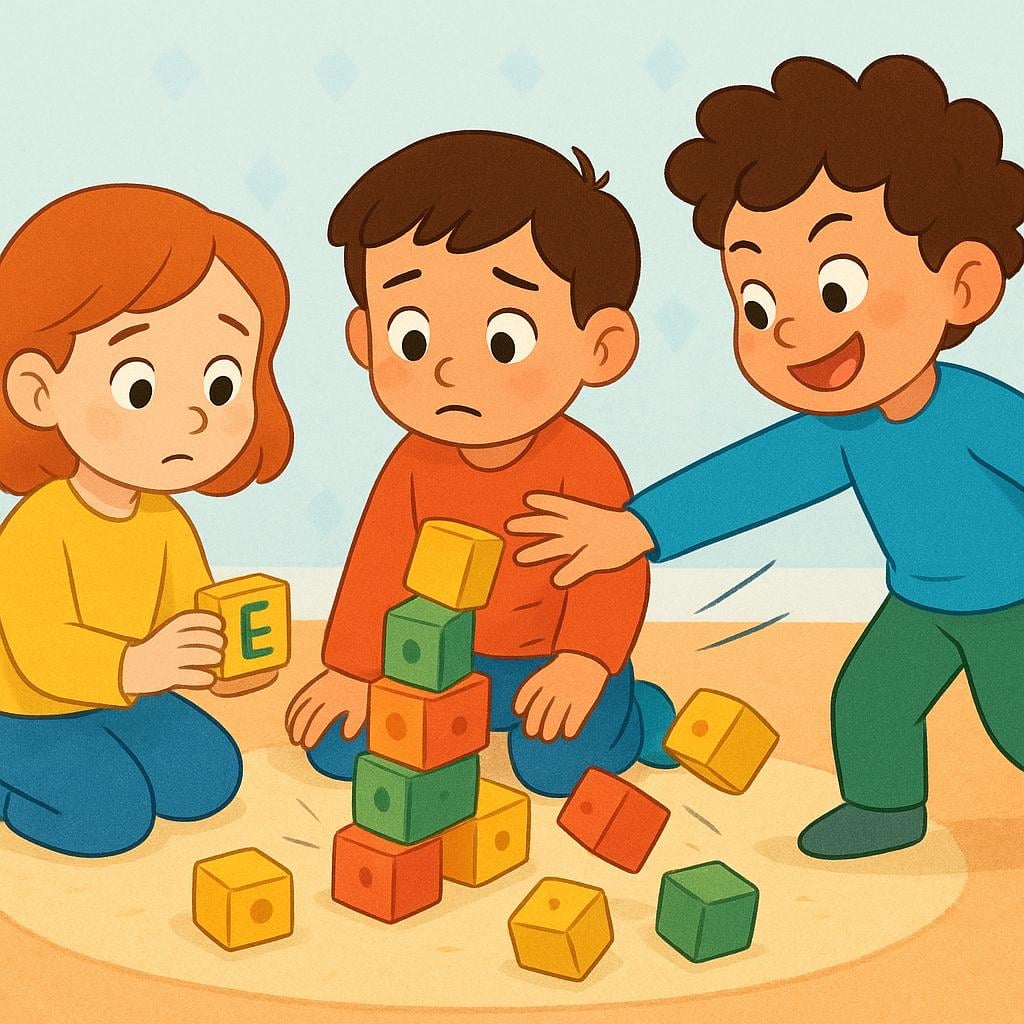
An illustration showing two characters concentrating on stacking wooden blocks, while a third character rudely pushes their hand into the stack, causing it to fall.

Sometimes, the word means to interfere in what someone else is doing.

meterte(verb)

B2regular er

to interfere

?

in someone else's affairs

,

to butt in

?

to interrupt rudely

Also:

to get into trouble

?

to cause a problem for oneself

📝 In Action

¡No es tu problema! No tienes por qué meterte.

B2

It's not your problem! You don't have to interfere.

Si sigues mintiendo, vas a meterte en un lío enorme.

C1

If you keep lying, you are going to get yourself into a huge mess (trouble).

Word Connections

Synonyms

  • entrometerse (to meddle)
  • inmiscuirse (to poke one's nose in)

Common Collocations

  • meterte en asuntos ajenosto interfere in other people's business
  • meterte en líosto get into trouble/messes

Idioms & Expressions

  • meterte donde no te llamanto butt in where you are not wanted

💡 Grammar Points

Negative Commands

The negative command for 'tú' is 'No te metas' (Don't interfere), where the pronoun 'te' moves before the verb, and the verb changes to the special form used for wishes and commands (subjunctive).

⭐ Usage Tips

Tone

When used in the sense of 'interfering,' 'meterte' often carries a negative or admonishing tone, implying the action is unwelcome or unnecessary.

🔄 Conjugations

indicative

present

él/ella/ustedse mete
yome meto
te metes
ellos/ellas/ustedesse meten
nosotrosnos metemos
vosotrosos metéis

imperfect

él/ella/ustedse metía
yome metía
te metías
ellos/ellas/ustedesse metían
nosotrosnos metíamos
vosotrosos metíais

preterite

él/ella/ustedse metió
yome metí
te metiste
ellos/ellas/ustedesse metieron
nosotrosnos metimos
vosotrosos metisteis

subjunctive

present

él/ella/ustedse meta
yome meta
te metas
ellos/ellas/ustedesse metan
nosotrosnos metamos
vosotrosos metáis

imperfect

él/ella/ustedse metiera
yome metiera
te metieras
ellos/ellas/ustedesse metieran
nosotrosnos metiéramos
vosotrosos metierais

✏️ Quick Practice

💡 Quick Quiz: meterte

Question 1 of 2

Which sentence uses 'meterte' in the sense of 'interfering'?

📚 More Resources

Word Family

meter(to put, to insert) - verb
metido(involved, nosy) - adjective

Frequently Asked Questions

Why does 'meterte' have 'te' at the end?

'Meterte' is the infinitive form of the verb ('meter') combined with the pronoun 'te,' which means 'you' (informal). This structure is used when the action of the verb is done *to* or *by* the subject 'tú' but the verb is not fully conjugated (often following another verb like 'deber' or 'querer').

What is the difference between 'meter' and 'meterse'?

'Meter' is transitive, meaning you put an *object* somewhere (e.g., 'meter la llave' - put the key). 'Meterse' is reflexive, meaning the *subject* puts themselves somewhere (e.g., 'meterse en la casa' - to go into the house).