mármol
“mármol” means “marble” in Spanish (the hard crystalline metamorphic rock).
marble
Also: tombstone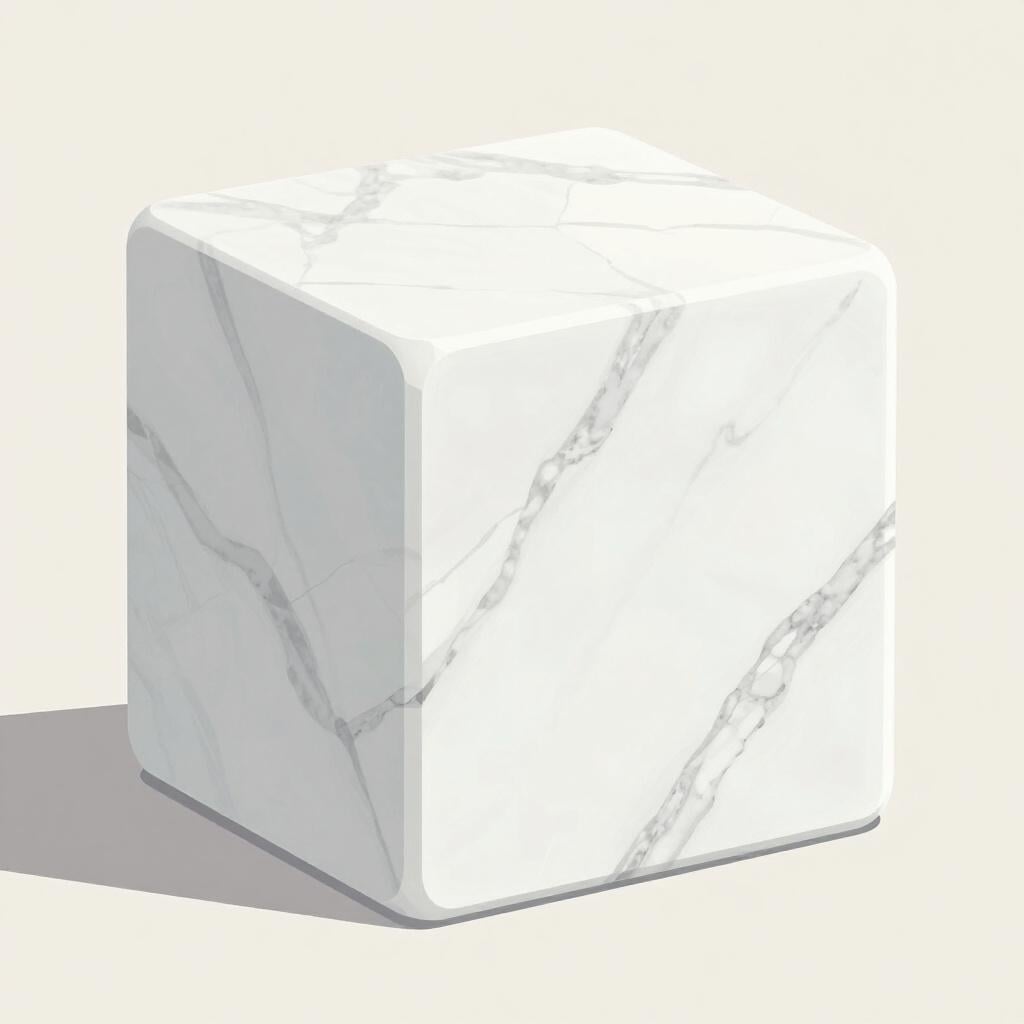
📝 In Action
La mesa de la cocina es de mármol blanco.
A1The kitchen table is made of white marble.
Miguel Ángel esculpió el David en un solo bloque de mármol.
B1Michelangelo sculpted the David from a single block of marble.
Parece que no tiene sentimientos, tiene el corazón de mármol.
B2It seems he has no feelings; he has a heart of marble.
Translate to Spanish
Words that translate to "mármol" in Spanish:
tombstone→✏️ Quick Practice
Quick Quiz: mármol
Question 1 of 3
Which of these is the correct plural form of 'mármol'?
📚 More Resources
👥 Word Family▼
🎵 Rhymes▼
📚 Etymology▼
From the Latin 'marmor', which was borrowed from the Greek 'mármaros', meaning 'shining stone'.
First recorded: 13th century
Cognates (Related words)
💡 Master Spanish
Take your Spanish to the next level. Read 200+ illustrated and narrated Spanish stories tailored to your level with the Inklingo app!
Frequently Asked Questions
Does 'mármol' refer to the small balls kids play with?
No, while in English those are called 'marbles', in Spanish the toy is called 'canica'. 'Mármol' only refers to the stone material.
Why does 'mármol' have an accent mark?
Because the stress falls on the second-to-last syllable and the word ends in 'l'. Spanish rules require an accent mark for this specific pattern.
Can 'mármol' be used as an adjective?
Not directly. You say 'de mármol' (of marble). If you want an actual adjective, you would use 'marmóreo' (marble-like).