oírme
“oírme” means “to hear me” in Spanish. It has 2 different meanings depending on context:

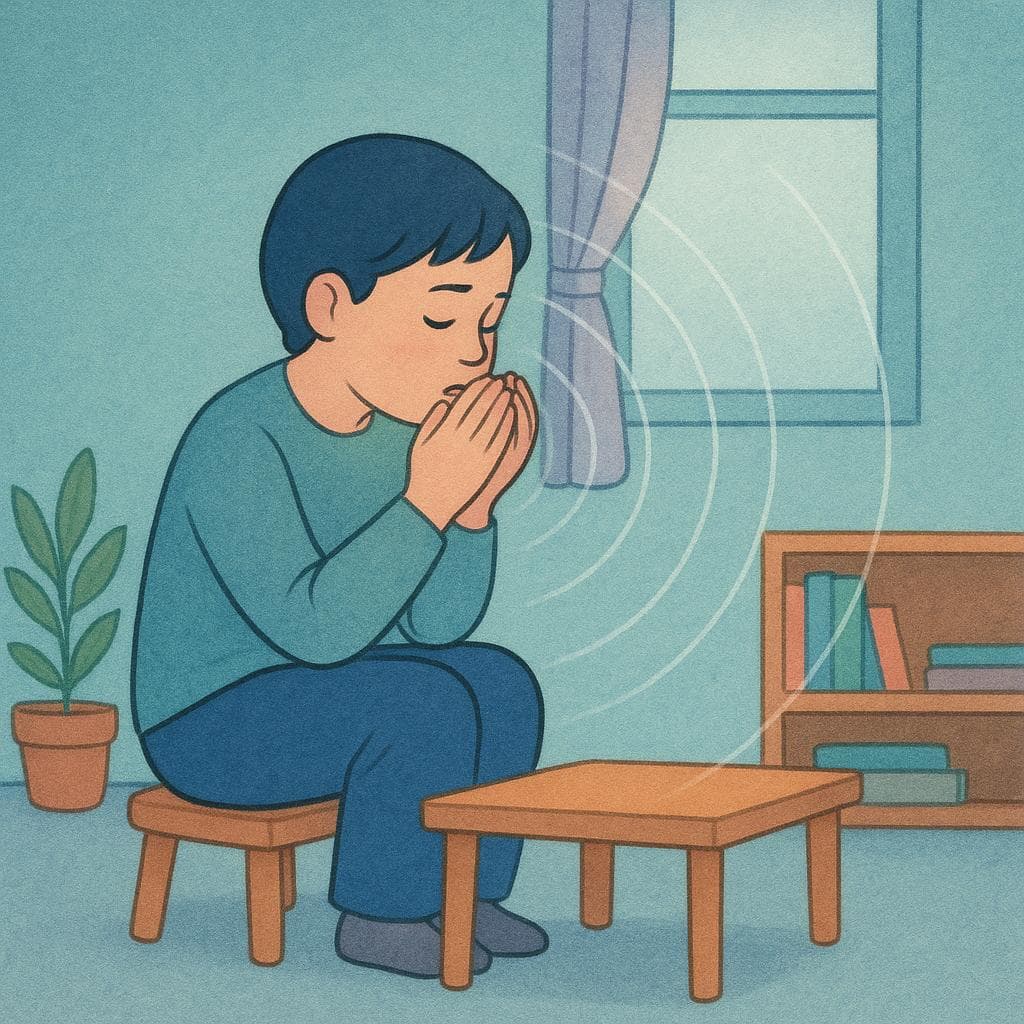
to hear me, to listen to me
Also: to perceive my voice
📝 In Action
¿Puedes oírme bien desde ahí?
A2Can you hear me well from over there?
Necesitas oírme cuando te hablo de cosas importantes.
B1You need to listen to me when I talk to you about important things.
Él no quiso oírme, así que me fui.
B2He didn't want to hear me, so I left.
to hear myself, to listen to myself

📝 In Action
Quiero grabar mi voz para oírme hablar.
B1I want to record my voice to hear myself speak.
Necesito un micrófono para oírme claramente.
B1I need a microphone to hear myself clearly.
🔄 Conjugations
indicative
present
imperfect
preterite
subjunctive
present
imperfect
✏️ Quick Practice
Quick Quiz: oírme
Question 1 of 2
Which sentence correctly uses 'oírme' in the direct object sense?
📚 More Resources
👥 Word Family▼
🎵 Rhymes▼
📚 Etymology▼
From the Latin verb *audīre*, meaning 'to hear.' The Spanish form *oír* developed irregularly, losing the 'd' sound. 'Me' comes from the Latin objective pronoun *mē*.
First recorded: Old Spanish
Cognates (Related words)
💡 Master Spanish
Take your Spanish to the next level. Read 200+ illustrated and narrated Spanish stories tailored to your level with the Inklingo app!
Frequently Asked Questions
Why does 'oírme' not have an accent mark, even though 'oí' does?
'Oí' (I heard) has an accent because the stress falls on the 'í', breaking the vowel blend (hiatus). When 'me' is attached to the infinitive 'oír' to form 'oírme', the natural stress of the infinitive (on the 'í') remains, but since the attachment creates a new word that follows the standard stress rules (stress on the second-to-last syllable, 'ír'), no written accent is needed on the 'i'.
What is the difference between 'oírme' and 'escucharme'?
'Oírme' is about the physical perception of sound (Can you hear my voice?). 'Escucharme' is about paying active attention (Are you listening to what I am saying?). If you are shouting across a field, you use 'oírme'. If you are giving advice, you use 'escucharme'.