orquesta
“orquesta” means “orchestra” in Spanish. It has 2 different meanings depending on context:
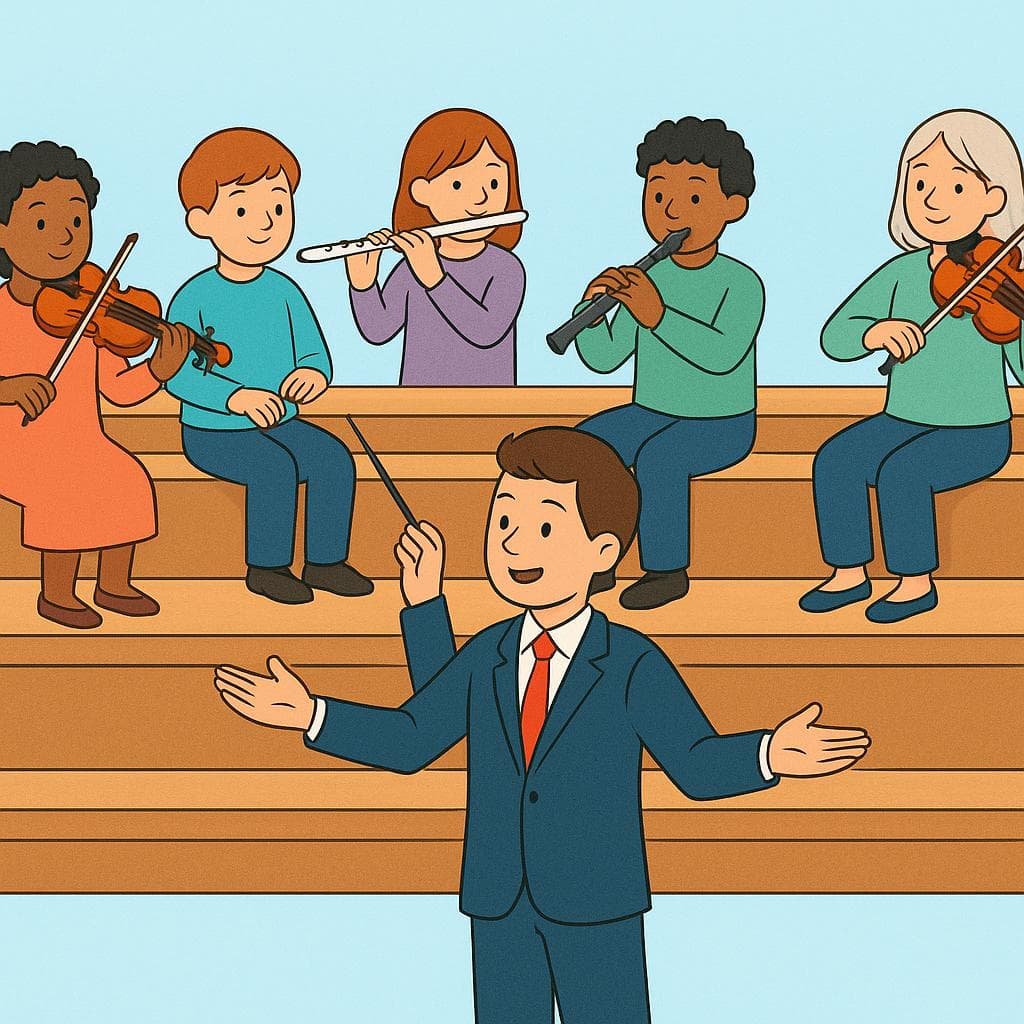

orchestraAlso: band
📝 In Action
La orquesta sinfónica tocó una pieza de Mozart.
A2The symphony orchestra played a piece by Mozart.
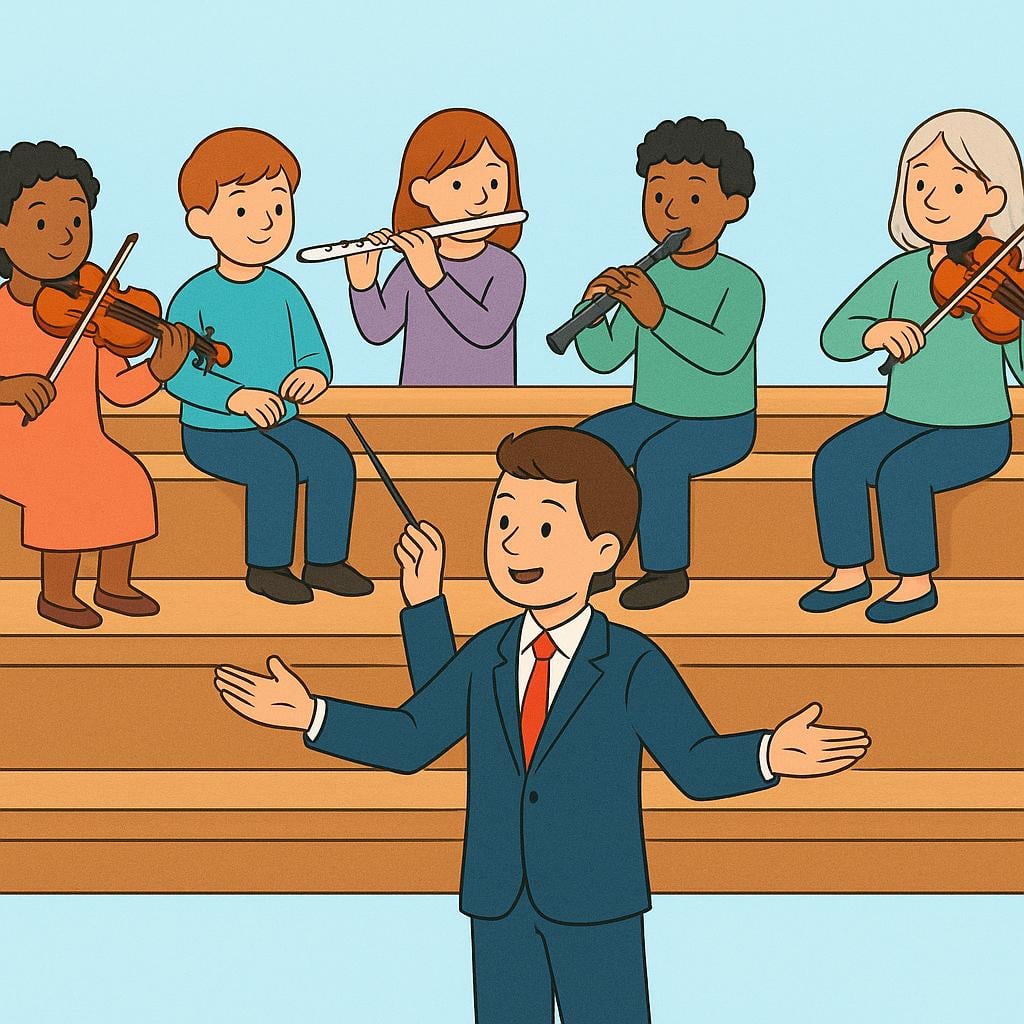
El director levantó la batuta y la orquesta comenzó a sonar.
B1The conductor raised the baton and the orchestra began to play.
Word Connections
coordination, jumbleAlso: arrangement

📝 In Action
La orquesta de trámites burocráticos nos agotó.
B2The complex arrangement (orchestra) of bureaucratic procedures exhausted us.
Se necesitó una orquesta de esfuerzos para lanzar el proyecto a tiempo.
C1An enormous coordination of efforts was needed to launch the project on time.
Word Connections
Translate to Spanish
Words that translate to "orquesta" in Spanish:
✏️ Quick Practice
Quick Quiz: orquesta
Question 1 of 2
Which sentence uses 'orquesta' in its figurative, non-musical sense?
📚 More Resources
👥 Word Family
📚 Etymology
The word comes from the Greek word *orkhēstra*, which originally described the semicircular space in front of the stage in an ancient Greek theater where the chorus would dance and sing. It later evolved through Latin and eventually French to mean the entire body of musicians.
First recorded: 17th century (in Spanish with the modern musical meaning)
Cognates (Related words)
💡 Master Spanish
Take your Spanish to the next level. Read 200+ illustrated and narrated Spanish stories tailored to your level with the Inklingo app!
Frequently Asked Questions
Does 'orquesta' only refer to classical music groups?
While 'orquesta' most often refers to a large classical music ensemble (like a symphony), it can sometimes be used for large Latin music or jazz groups as well. However, for rock or pop, Spanish speakers usually use 'banda' or 'grupo'.
What is the difference between 'orquesta' and 'banda'?
'Orquesta' usually implies a larger group of musicians playing instruments like strings, woodwinds, and brass (classical/symphonic). 'Banda' is broader and can refer to any smaller or larger musical group, especially pop, rock, or traditional brass bands.