parad
“parad” means “stop” in Spanish (command directed at 'you all' (vosotros)).
stop, halt
Also: cease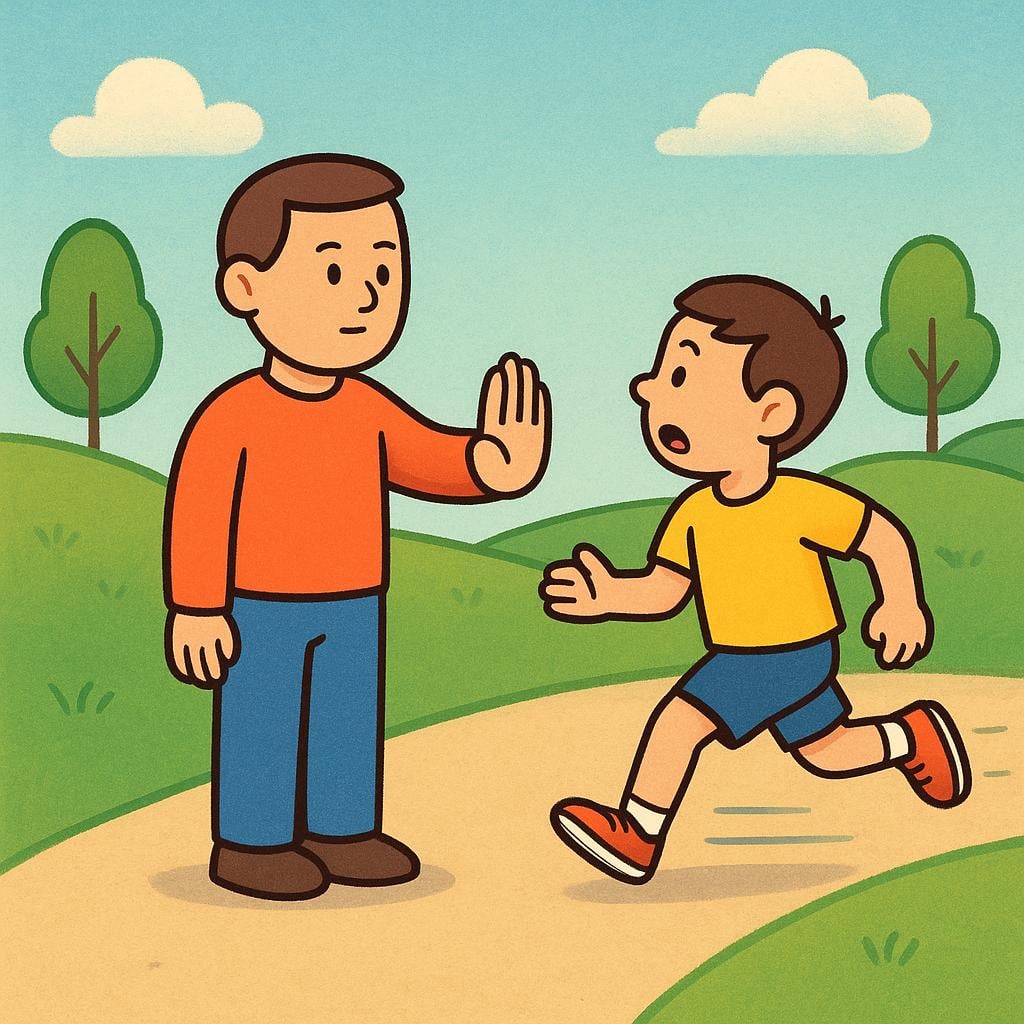
📝 In Action
¡Parad inmediatamente! Hay un peligro más adelante.
A2Stop immediately! There is danger ahead.
Chicos, parad de gritar, por favor.
B1Kids, stop shouting, please.
Si estáis cansados, parad un momento y bebed agua.
B1If you are tired, stop a moment and drink water.
Indicative
Preterite
Present
Imperfect
Subjunctive
Present Subjunctive
Imperfect Subjunctive
✏️ Quick Practice
Quick Quiz: parad
Question 1 of 1
Which Spanish-speaking region would most commonly hear the command '¡Parad!'?
📚 More Resources
👥 Word Family▼
🎵 Rhymes▼
📚 Etymology▼
'Parar' comes from the Latin verb *parāre*, which originally meant 'to prepare' or 'to make ready.' Over time, in Spanish, it shifted its meaning to 'prepare to stop' and eventually just 'to stop' or 'to halt.'
First recorded: Medieval Spanish
Cognates (Related words)
💡 Master Spanish
Take your Spanish to the next level. Read 200+ illustrated and narrated Spanish stories tailored to your level with the Inklingo app!
Frequently Asked Questions
Why does the command form 'parad' end in -d, but the present tense 'paráis' ends in -s?
This is a unique rule for *vosotros* affirmative commands in Spanish. For all -ar verbs, the command form drops the 'r' of the infinitive and adds a 'd' (e.g., *parar* → *parad*). The 's' ending is reserved for statements about what you are currently doing (e.g., 'Vosotros paráis mucho'—You all stop a lot).