rota
“rota” means “broken” in Spanish. It has 2 different meanings depending on context:
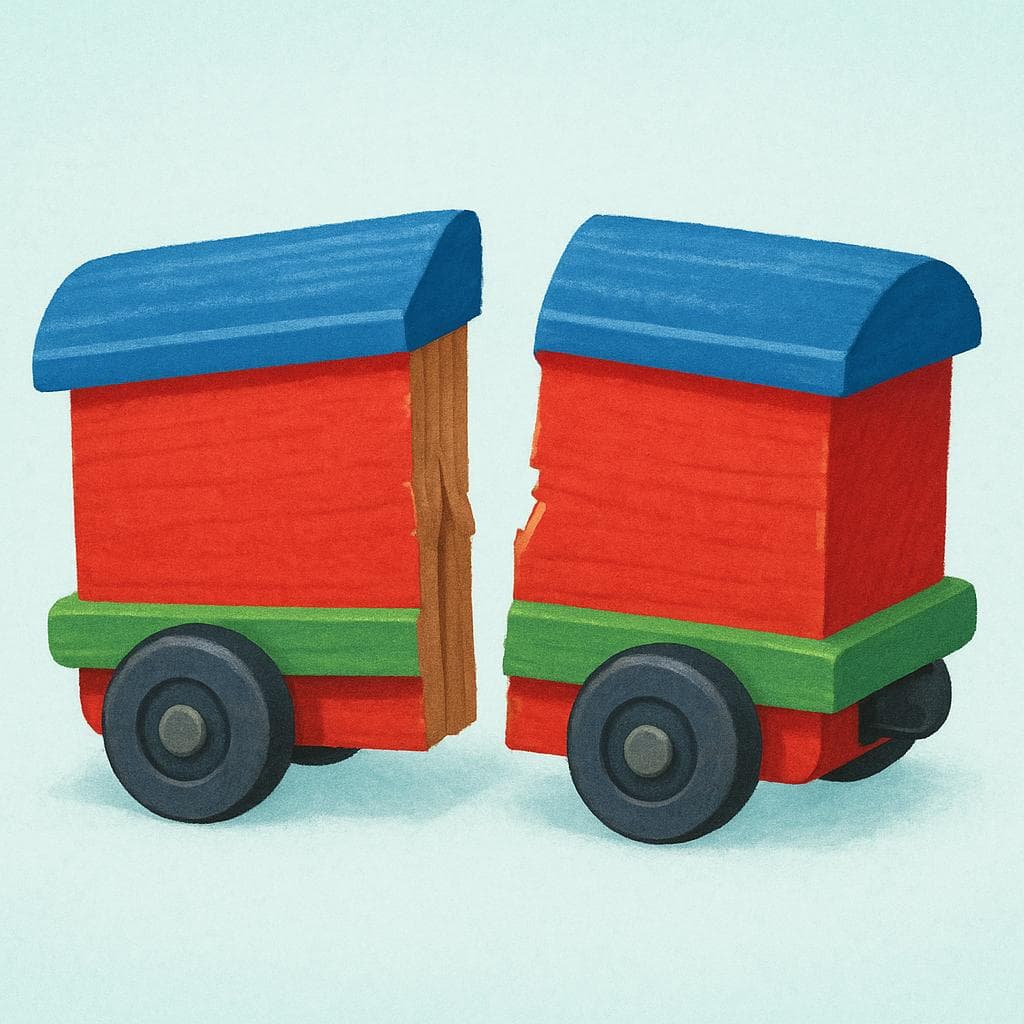

broken, tornAlso: smashed, shattered

📝 In Action
La taza se cayó y está rota.
A1The cup fell and it is broken.
Mi pierna se sentía rota después del accidente.
A2My leg felt broken after the accident.
Necesito tirar esta ropa porque está rota.
A1I need to throw away these clothes because they are torn.
Word Connections
rotates, spinsAlso: takes turns

📝 In Action
El motor rota a mil revoluciones por minuto.
B1The engine rotates at a thousand revolutions per minute.
El director rota el personal de la oficina.
B2The director rotates the office personnel.
¡Rota la rueda en sentido contrario!
B1Rotate the wheel in the opposite direction!
Indicative
Present
Imperfect
Preterite
Subjunctive
Present Subjunctive
Imperfect Subjunctive
Translate to Spanish
Words that translate to "rota" in Spanish:
✏️ Quick Practice
Quick Quiz: rota
Question 1 of 1
Which sentence uses 'rota' as an adjective meaning 'broken'?
📚 More Resources
👥 Word Family
📚 Etymology
The word 'rota' is a perfect example of two words that sound identical but have completely different histories. The ADJECTIVE 'rota' comes from the Latin verb *rumpere* (to break), via its past participle *ruptus*. The VERB form 'rota' comes from the Latin verb *rotāre* (to wheel or spin), which is also the root of the English word 'rotate'.
First recorded: Both roots date back to Vulgar Latin, appearing in Spanish texts since the Middle Ages.
Cognates (Related words)
💡 Master Spanish
Take your Spanish to the next level. Read 200+ illustrated and narrated Spanish stories tailored to your level with the Inklingo app!
Frequently Asked Questions
How do I know if 'rota' means 'broken' or 'rotates'?
The context and the grammar tell you everything! If it follows the verb 'estar' (está rota), it is the adjective (broken). If it's used as an action performed by a person or thing (el motor rota), it is the verb (rotates).