tobillo
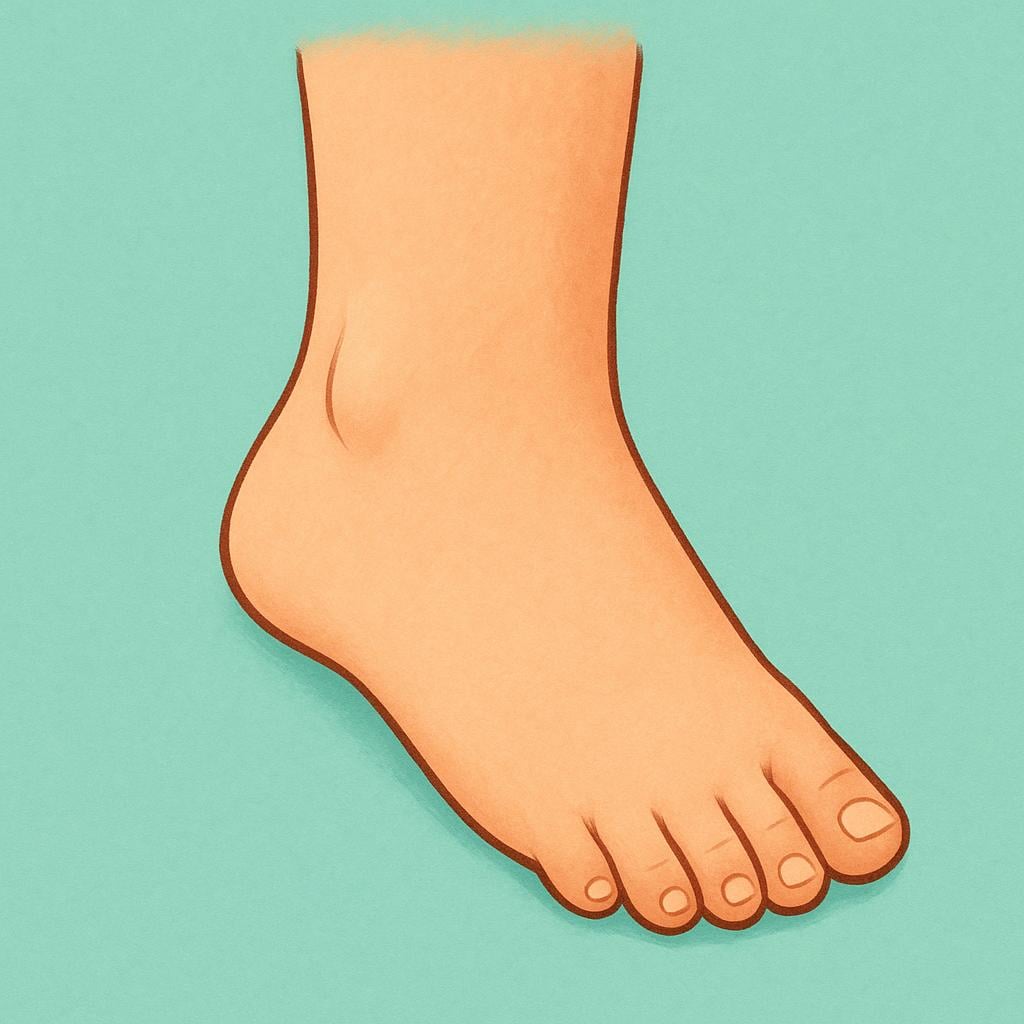
“tobillo” means “ankle” in Spanish (body part).
ankle
📝 In Action
Me caí y ahora tengo el tobillo muy hinchado.
A2I fell and now my ankle is very swollen.
Necesitas llevar zapatos que te sujeten bien el tobillo.
B1You need to wear shoes that support your ankle well.
El doctor dice que solo es un esguince de tobillo leve.
B1The doctor says it's only a mild ankle sprain.
Translate to Spanish
Words that translate to "tobillo" in Spanish:
ankle→✏️ Quick Practice
Quick Quiz: tobillo
Question 1 of 1
Which sentence correctly describes an ankle injury?
📚 More Resources
👥 Word Family▼
📚 Etymology▼
The word comes from the older Spanish word 'toba,' which referred to a knot, lump, or knob. 'Tobillo' is the diminutive form, meaning 'little knot,' referring to the knob-like joint where the foot meets the leg.
First recorded: 15th century
Cognates (Related words)
💡 Master Spanish
Take your Spanish to the next level. Read 200+ illustrated and narrated Spanish stories tailored to your level with the Inklingo app!
Frequently Asked Questions
How do I say 'I sprained my ankle' correctly in Spanish?
The most common and natural way is 'Me torcí el tobillo.' Remember to use the reflexive pronoun 'me' because the action happened to your body.
Is 'tobillo' used to describe anything besides the body part?
No, 'tobillo' almost exclusively refers to the anatomical joint connecting the foot and the leg. It does not have common figurative meanings like 'head' (cabeza) or 'hand' (mano).