Inklingo

tomaba

/toh-MAH-bah/

was taking

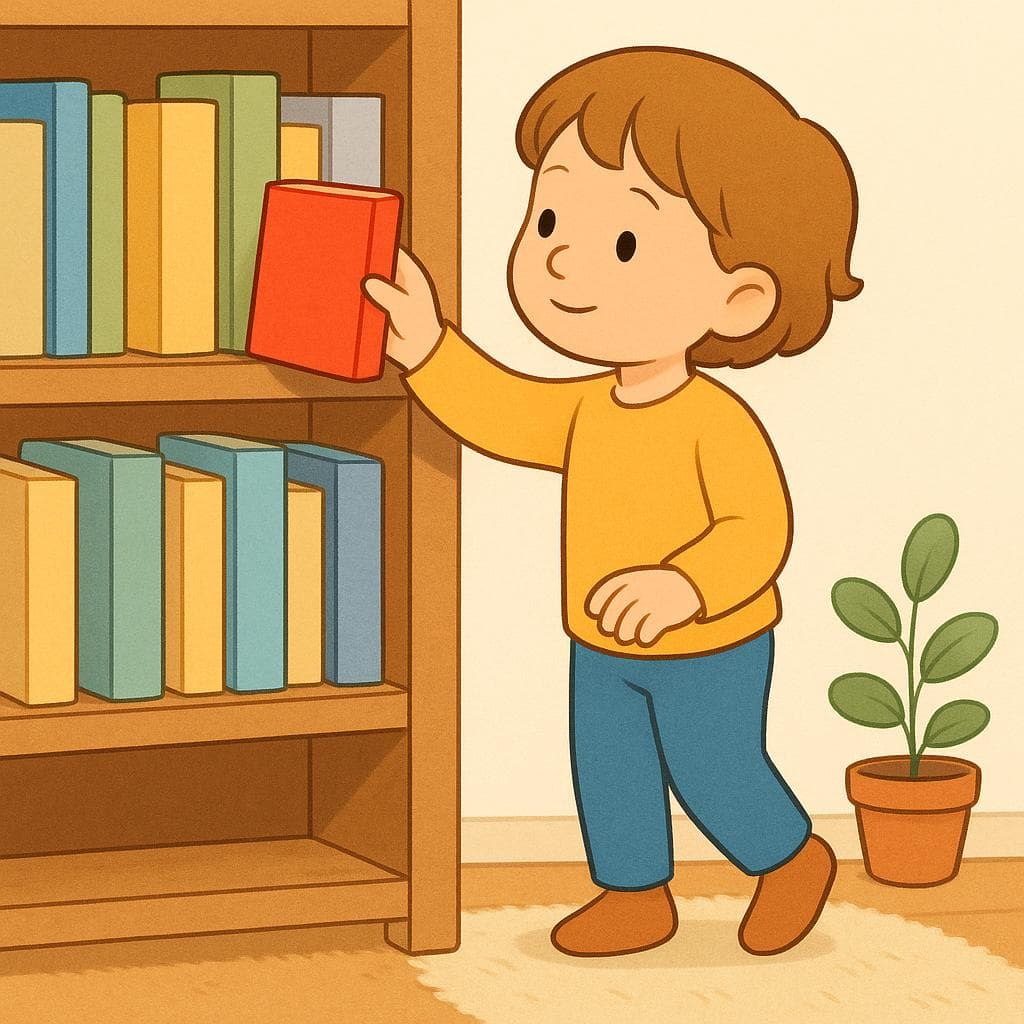
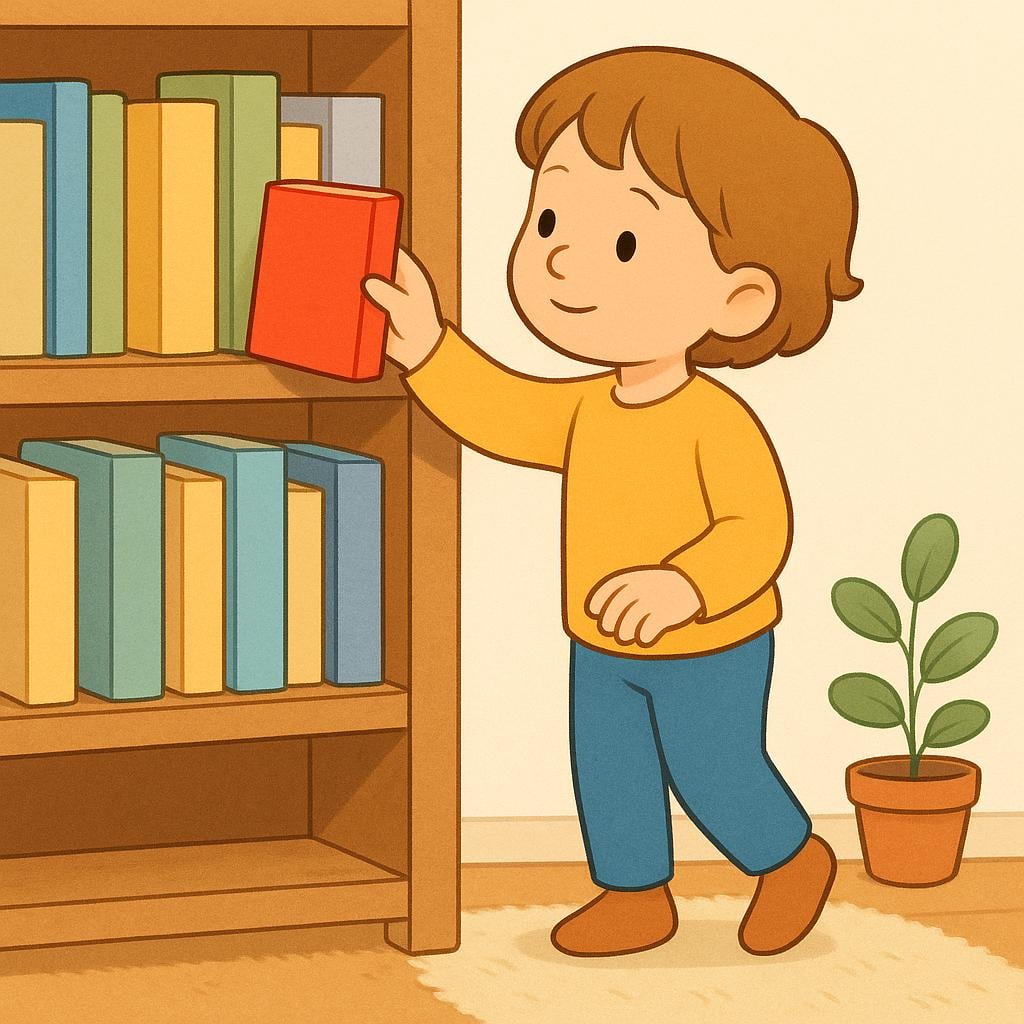
A colorful illustration of a child reaching out to take a single red book from a wooden bookshelf.

The continuous past action of 'was taking' is shown by the child in the process of grasping the book.

tomaba(Verb)

A1regular ar

was taking

?

continuous past action

,

used to take

?

habitual past action

Also:

was grabbing

?

physical action

,

would take

?

past routine

📝 In Action

Ella siempre **tomaba** mi mano cuando cruzábamos la calle.

A1

She always used to take my hand when we crossed the street.

Yo **tomaba** el libro de la mesa y empezaba a leer.

A2

I would take the book from the table and start reading.

Word Connections

Synonyms

  • agarraba (was grabbing)
  • cogía (was taking/catching (Spain))

Common Collocations

  • tomaba un descansowas taking a break
  • tomaba notaswas taking notes

💡 Grammar Points

Who is 'Tomaba'?

'Tomaba' can mean 'I was taking/used to take' (yo) OR 'He/She/You formal was taking/used to take' (él/ella/usted). Context is key to knowing who is doing the action.

The Imperfect Tense's Role

This tense describes actions that were repeated habits in the past ('used to do') or actions that were ongoing and unfinished ('was doing'). It often sets the scene.

❌ Common Pitfalls

Confusing Imperfect and Preterite

Mistake: "Usando 'tomó' (preterite) cuando se refiere a un hábito, como 'Cada mañana él tomó café.'"

Correction: Use 'tomaba' for repeated habits: 'Cada mañana él tomaba café.' (Every morning he used to drink coffee.)

⭐ Usage Tips

Setting the Scene

Use 'tomaba' to describe how things were, what people were wearing, or what was happening in the background when something else (a single completed action) occurred.

A colorful illustration of a person taking a continuous sip from a glass filled with orange juice.

When referring to liquids, 'tomaba' means 'was drinking', illustrated by the person enjoying their juice.

tomaba(Verb)

A1regular ar

was drinking

?

liquids

,

used to drink

?

past habit of consuming

Also:

was having

?

referring to a meal or drink

📝 In Action

Cuando hacía calor, mi abuela siempre **tomaba** limonada.

A1

When it was hot, my grandmother always used to drink lemonade.

Yo **tomaba** la medicina a diario, por eso me sentía mejor.

A2

I was taking the medicine daily, that's why I felt better.

Word Connections

Synonyms

  • bebía (was drinking)
  • ingería (was ingesting (more formal))

Common Collocations

  • tomaba un téwas drinking tea

💡 Grammar Points

Taking vs. Drinking

In Spanish, 'tomar' is used for both 'to take' and 'to drink.' If the thing being 'tomada' is a beverage, it almost always means 'to drink.' ('Tomar un taxi' means 'take a taxi,' but 'tomar un café' means 'drink a coffee.')

A colorful illustration showing a person with a small backpack stepping onto the entrance of a bright yellow bus, indicating they were catching transportation.

'Tomaba' can mean 'was catching' when referring to transportation, depicted here by the person boarding the bus.

tomaba(Verb)

A2regular ar

was catching

?

transportation

,

used to take

?

routine transport

Also:

was making (a decision)

?

abstract concepts

📝 In Action

Antes, él **tomaba** el autobús para ir a trabajar.

A2

Before, he used to take the bus to go to work.

La junta **tomaba** decisiones muy importantes cada mes.

B1

The board used to make very important decisions every month.

Word Connections

Synonyms

  • usaba (was using (transport))
  • decidía (was deciding)

Common Collocations

  • tomaba el metrowas taking the subway
  • tomaba medidaswas taking measures

❌ Common Pitfalls

Using 'Hacer' for Decisions

Mistake: "Decir 'hacía una decisión' para 'was making a decision'."

Correction: The correct verb is 'tomar': 'tomaba una decisión'.

🔄 Conjugations

indicative

present

vosotrostomáis
él/ella/ustedtoma
tomas
yotomo
nosotrostomamos
ellos/ellas/ustedestoman

preterite

vosotrostomasteis
él/ella/ustedtomó
tomaste
yotomé
nosotrostomamos
ellos/ellas/ustedestomaron

imperfect

vosotrostomabais
él/ella/ustedtomaba
tomabas
yotomaba
nosotrostomábamos
ellos/ellas/ustedestomaban

subjunctive

present

vosotrostoméis
él/ella/ustedtome
tomes
yotome
nosotrostomemos
ellos/ellas/ustedestomen

imperfect

vosotrostomarais/tomaseis
él/ella/ustedtomara/tomase
tomaras/tomases
yotomara/tomase
nosotrostomáramos/tomásemos
ellos/ellas/ustedestomaran/tomasen

✏️ Quick Practice

💡 Quick Quiz: tomaba

Question 1 of 2

Which sentence uses 'tomaba' correctly to describe a repeated past action?

📚 More Resources

Frequently Asked Questions

What is the difference between 'tomaba' and 'tomó'?

'Tomaba' is the Imperfect tense, used for ongoing, habitual, or descriptive actions in the past (e.g., 'He used to take'). 'Tomó' is the Preterite tense, used for single, completed actions that happened at a specific point in the past (e.g., 'He took it once').

How do I know if 'tomaba' means 'to take' or 'to drink'?

Look at the object. If the object is a liquid (café, agua, cerveza) or medicine, it means 'to drink/consume.' If the object is a physical item, transportation, or an abstract concept (decisión, medida), it means 'to take/grab.'