



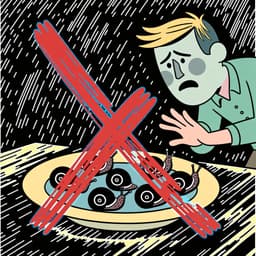

Using 'Bueno' Instead of 'Vale' or 'Mejor'
Mistake: “Saying 'Bueno tarde que nunca.'”
Correction: 'Más vale tarde que nunca' or 'Mejor tarde que nunca.'
MAHS VAH-leh TAR-deh keh NOON-kah
This is the classic, universally understood proverb for 'better late than never.' It's a direct equivalent and the one you'll hear most often across the entire Spanish-speaking world.

Whether it's a gift, an apology, or just you, arriving late is better than not arriving at all. 'Más vale tarde que nunca' is the perfect phrase for these moments.
better late than never — in Spanish
meh-HOR TAR-deh keh NOON-kah
A very common and slightly shorter alternative. 'Mejor' means 'better,' making this a more literal translation, while 'más vale' means 'it's worth more.' Both are used interchangeably in most situations.
NOON-kah ess TAR-deh see lah DEE-chah ess BWEH-nah
This beautiful proverb translates to 'It's never too late if the outcome is good.' It's more optimistic and focuses on the positive result, not just the lateness.
VAH-leh MAHS AHL-go keh NAH-dah
This means 'Something is worth more than nothing.' While not a direct translation, it captures a similar spirit of accepting a less-than-perfect situation over a complete failure.
Here's a quick comparison of the main ways to express this idea, helping you choose the perfect one for your situation.
| Phrase | Literal Meaning | Best For | Avoid When |
|---|---|---|---|
| Más vale tarde que nunca | It's worth more late than never | Almost any situation of everyday tardiness, from arriving late to finishing a task late. | In very formal or serious situations where lateness has major consequences. |
| Mejor tarde que nunca | Better late than never | Exactly the same situations as 'Más vale tarde que nunca'; it's a perfect synonym. | Same as above; it's not appropriate for excusing serious delays. |
| Nunca es tarde si la dicha es buena | It's never late if the outcome is good | Major, positive life events that took a long time to achieve (e.g., graduating, getting married, finding success). | Trivial, everyday lateness. It would sound strange and overly poetic. |
Fairly easy. The 'r' in 'tarde' is a simple tap, not a roll. The main challenge is linking the words together smoothly.
It's a fixed phrase, a 'refrán' (proverb), so you don't need to worry about conjugating verbs or changing words. You just learn it as one complete chunk.
While the phrase is simple, understanding when it might sound sincere versus sarcastic depends entirely on context and tone, which takes some practice to master.
Perdón por el regalo de cumpleaños tardío. Pero bueno, más vale tarde que nunca, ¿no?
Sorry for the late birthday gift. But hey, better late than never, right?
El gobierno finalmente aprobó la ley de protección ambiental. Más vale tarde que nunca.
The government finally passed the environmental protection law. Better late than never.
Mi abuela aprendió a usar un smartphone a los 80 años. ¡Nunca es tarde si la dicha es buena!
My grandmother learned to use a smartphone at 80 years old. It's never too late if the outcome is good!
Llegué a la fiesta a las 11, pero al menos llegué. Como dicen, mejor tarde que nunca.
I got to the party at 11, but at least I made it. As they say, better late than never.
Spanish culture is rich with proverbs, or 'refranes,' which are used frequently in everyday conversation to convey wisdom. Using 'Más vale tarde que nunca' shows you understand not just the language, but also this cultural habit of summing up a situation with a timeless saying.
In many Spanish-speaking cultures, the concept of time can be more relaxed than in others. While punctuality is still valued, especially in professional settings, being slightly late for social gatherings is often acceptable. This proverb can be a friendly way to acknowledge lateness without making a big deal of it.
Like in English, the meaning of this phrase can change dramatically with your tone of voice. Said with a warm smile, it's forgiving and kind. Said with a flat tone and a pointed look, it can come across as passive-aggressive or sarcastic, implying 'Well, it's about time!'
Mistake: “Saying 'Bueno tarde que nunca.'”
Correction: 'Más vale tarde que nunca' or 'Mejor tarde que nunca.'
Mistake: “Saying 'Más vale tarde que jamás.'”
Correction: 'Más vale tarde que nunca.'
Mistake: “Using 'Nunca es tarde si la dicha es buena' for being 15 minutes late to a meeting.”
Correction: Use 'Más vale tarde que nunca' for everyday lateness.
When you arrive late or deliver something after the deadline, you can say this with a self-deprecating smile. It's a lighthearted way to acknowledge your tardiness and move on. For example: '¡Aquí está el informe! Más vale tarde que nunca.'
If a friend arrives late to meet you, you can greet them with a friendly '¡No te preocupes, más vale tarde que nunca!' (Don't worry, better late than never!). It immediately puts them at ease and shows there are no hard feelings.
Adding '¿no?' or '¿verdad?' (right?) to the end of the phrase makes it more conversational and invites agreement. For example: 'Terminé el curso, por fin. Más vale tarde que nunca, ¿verdad?'
Proverbs are extremely common in daily conversation in Spain. This phrase is used frequently and without much thought, from casual chats to office environments. The sarcastic alternatives are also quite popular among friends.
The phrase is used widely in Mexico with a generally patient and good-natured attitude. It can be part of the friendly, non-confrontational communication style, used to smooth over minor inconveniences like someone running late.
Argentinians use this phrase just as much as others, but the distinctive 'sh' pronunciation of 'll' and 'y' will make it sound different. The general attitude is often direct, so the tone will clearly indicate if it's sincere or impatient.
Jaja, no te preocupes. Lo importante es que llegaste.
Haha, don't worry. The important thing is that you're here.
Gracias por la paciencia.
Thanks for your patience.
¡Feliz cumpleaños atrasado! Perdón por la demora.
Happy belated birthday! Sorry for the delay.
¡Muchas gracias! Más vale tarde que nunca.
Thank you so much! Better late than never.
By remembering the meaning of each small word, you can build the phrase logically instead of just memorizing a string of sounds.
The core meaning and usage of 'Better late than never' and 'Más vale tarde que nunca' are remarkably similar. The main difference isn't linguistic but cultural. In some Spanish-speaking cultures, the threshold for what is considered 'late' can be more flexible in social contexts, so the phrase might be used with more frequency and less gravity than in a very time-strict culture.
The phrase is equally direct in both languages. It's a straightforward proverb that clearly states a preference for a late success over a timely failure.
This is the opposite sentiment, encouraging punctuality and proactivity, providing a balanced view on time management.
This phrase also relates to patience and the process of completing things over time, similar to the idea that finishing late is okay.
This is a more direct and formal way to apologize for being late, a useful alternative to the proverb.
Another common expression about time that you'll hear in conversations where punctuality or the passage of time is being discussed.
Question 1 of 3
Your friend was supposed to send you a study guide last week, but sends it the morning of the exam. What's the most appropriate response?
Knowing a phrase is one thing — using it at the right moment is another. Read 200+ illustrated and narrated Spanish stories to see phrases in the contexts where they actually belong.
It's neutral. You can use it in almost any situation, from a casual chat with friends to a relaxed office environment. For a very formal or serious business apology, you might choose a more direct phrase like 'Le pido disculpas por la demora' (I apologize for the delay).
Absolutely. Just like in English, your tone of voice is key. If you say it with a flat, annoyed tone and a roll of the eyes, it becomes a sarcastic comment meaning 'It's about time!' When using it, make sure your tone is friendly and sincere.
Functionally, there is no difference. They are used interchangeably in all regions. 'Más vale' literally means 'it's worth more,' while 'mejor' means 'better.' Think of them as two slightly different ways to say the exact same thing, like 'awesome' vs. 'great'.
They are likely trying to make you feel comfortable. A simple 'Gracias por tu paciencia' (Thanks for your patience) or 'Sí, ¡perdón otra vez!' (Yes, sorry again!) works perfectly. It shows you appreciate their understanding.
Yes, very! Spanish speakers often use 'refranes' (proverbs or sayings) to express ideas concisely. Learning common ones like this will make your Spanish sound much more natural and culturally fluent.
Strengthen the grammar behind this phrase:
Dive deeper into related topics:
Find similar phrases to expand your Spanish vocabulary:
Browse our complete collection of Spanish phrases organized by situation, from basic greetings to advanced conversations. Perfect for travelers, students, and anyone learning Spanish.
View All Spanish Phrases →