



Using 'Question' as a False Friend
Mistake: “Yo tengo una cuestión.”
Correction: Tengo una pregunta.
TEN-goh OO-nah preh-GOON-tah
This is the most common and direct way to say 'I have a question' across the entire Spanish-speaking world.
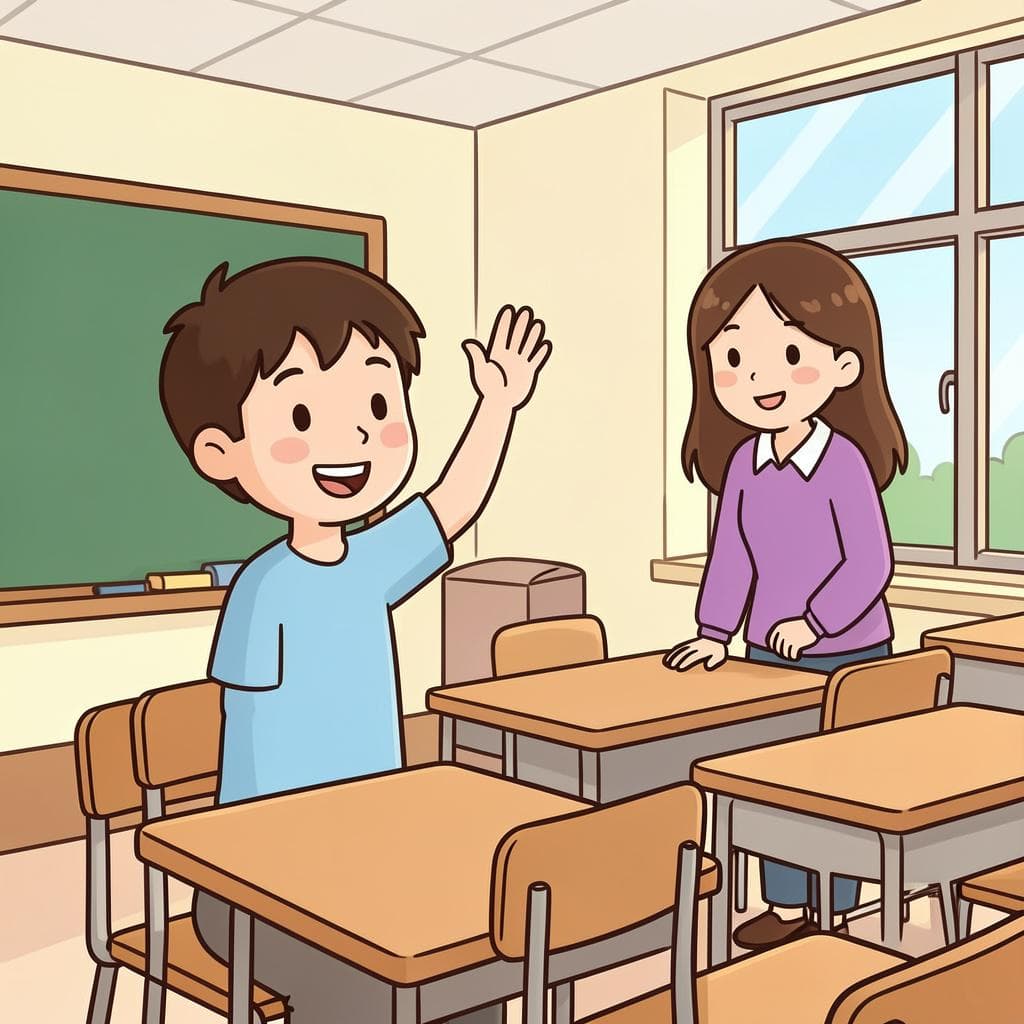
Raising your hand and saying 'Tengo una pregunta' is the best way to get a teacher's attention.
I have a question — in Spanish
TEN-goh OO-nah DOO-dah
Literally 'I have a doubt,' but used exactly like 'I have a question' in classrooms or learning environments.
kee-SYEH-rah ah-SEHR OO-nah preh-GOON-tah
A more polite and softened way to say 'I would like to ask a question.'
TEN-goh OO-nah een-kyeh-TOOD
Literally means 'I have a concern' or 'I have a curiosity.'
leh PWEH-doh ah-SEHR OO-nah kohn-SOOL-tah
Uses the word 'consulta' which implies a more professional or technical inquiry.
OO-nah preh-goon-TEE-tah
Adding 'ita' to the end makes the question sound small or quick.
Choose the right phrase based on how professional or casual you want to be.
| Phrase | Formality | Best For | Avoid When |
|---|---|---|---|
| Tengo una pregunta | Neutral | Daily life, shops, friends. | Never; it's always safe. |
| Tengo una duda | Neutral/Academic | Learning something new or being confused. | When you want to sound 100% confident. |
| Quisiera hacer una pregunta | Formal | Public speaking or important meetings. | Talking to siblings or close friends. |
The 'r' in pregunta can be tricky for beginners, but the rest is very phonetic.
Simple subject-verb-object structure that matches English perfectly.
Understanding the 'duda' vs 'pregunta' difference is the only minor hurdle.
Perdone, profesor, tengo una pregunta sobre la tarea.
Excuse me, teacher, I have a question about the homework.
Tengo una duda sobre el horario de apertura.
I have a question about the opening hours.
Quisiera hacer una pregunta si me lo permite.
I would like to ask a question if you'll allow me.
In English, 'I have a doubt' sounds like you don't believe someone. In Spanish, saying 'tengo una duda' is the most natural way to signal you're confused in a classroom or during a tutorial. Don't be afraid to use it!
Spanish speakers often use 'preguntita' (little question) to soften a request. It's a cultural way of being polite by suggesting that you aren't going to bother the other person for very long.
Mistake: “Yo tengo una cuestión.”
Correction: Tengo una pregunta.
Mistake: “Quiero preguntar una pregunta.”
Correction: Quiero hacer una pregunta.
Before saying 'Tengo una pregunta,' always start with 'Disculpe' (formal) or 'Oye' (informal) to make sure the person is listening.
While common in school, if you are in a high-stakes business negotiation, stick to 'pregunta.' Using 'duda' might make you sound like you aren't confident in the proposal.
In Spain, 'duda' is extremely frequent in educational settings, more so than in some parts of Latin America.
Mexicans love using diminutives (adding -ita) to sound more polite and less intrusive.
Sí, dime.
Yes, tell me.
Gracias, ¿cómo se dice...?
Thank you, how do you say...?
Adelante, te escucho.
Go ahead, I'm listening.
Es sobre lo que dijiste antes.
It's about what you said earlier.
A 'pregunta' starts like 'pray' (pre-). Imagine you are 'praying' for an answer to your question.
Useful to say immediately after your question if the answer is too fast.
Essential for when you don't catch the answer to your question.
The most common question you will have as a learner.
Question 1 of 2
You are in a Spanish class and you're confused about a grammar rule. What is the most natural thing to say?
Knowing a phrase is one thing — using it at the right moment is another. Read 200+ illustrated and narrated Spanish stories to see phrases in the contexts where they actually belong.
Yes, but 'Tengo una pregunta' is more common if you're asking about the menu. 'Duda' implies you are actually confused by something.
Almost never if you want an answer. 'Cuestión' means 'issue' or 'matter,' like 'una cuestión de dinero' (a matter of money).
It's just a difference in how the languages view the action. In Spanish, you 'construct' or 'perform' (hacer) the question.
Strengthen the grammar behind this phrase:
Dive deeper into related topics:
Find similar phrases to expand your Spanish vocabulary:
Browse our complete collection of Spanish phrases organized by situation, from basic greetings to advanced conversations. Perfect for travelers, students, and anyone learning Spanish.
View All Spanish Phrases →