



Using 'Tiempo' instead of 'Hora'
Mistake: “¿A qué tiempo cierran?”
Correction: ¿A qué hora cierran?
ah keh OR-ah see-EH-rrahn
This is the most useful, standard way to ask. It literally means 'At what time do you (plural) close?' addressing the staff as a group, or referring to the business in general.

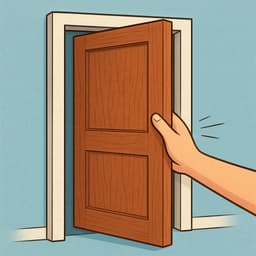
Asking '¿A qué hora cierran?' helps you avoid the disappointment of arriving at a locked door.
ah keh OR-ah see-EH-rrah
Uses the singular formal 'you' (usted) or refers to 'la tienda' (the store). Use this when speaking to a manager, an older person, or if you want to sound very polite.
AH-stah keh OR-ah eh-STAHN ah-bee-EHR-tohs
Means 'Until what time are you open?' This focuses on the duration of availability rather than the act of closing.
ah keh OR-ah see-EH-rrahs
The informal singular 'you' (tú). Used when speaking to a friend who works there or a peer in a casual setting.
ah keh OR-ah the-RRAICE
The 'vosotros' form used specifically in Spain to address a group of people informally.
KWAN-doh see-EH-rrahn
Means simply 'When do you close?' It's shorter but slightly less specific than asking for the exact hour.
Choosing the right verb ending depends on who you are addressing and where you are.
| Phrase | Formality | Best For | Avoid When |
|---|---|---|---|
| ¿A qué hora cierran? | Neutral / Plural | Any business, anywhere (safest option) | Speaking to a close friend who owns the shop (too distant) |
| ¿A qué hora cierras? | Informal Singular | Street markets, friends, peers | Speaking to elderly owners or in luxury stores |
| ¿A qué hora cerráis? | Informal Plural (Spain) | Casual settings in Spain only | You are in Latin America (they don't use this form) |
Fairly easy, though the double 'rr' in 'cerrar' requires a trill. The 'ci' sound varies by region (s-sound vs th-sound).
Basic question structure. The main challenge is remembering to add 'A' at the beginning.
Straightforward, but remember to use greetings first to be polite.
Disculpe, ¿a qué hora cierran hoy?
Excuse me, what time do you close today?
Necesitamos ir al banco, pero no sé a qué hora cierra.
We need to go to the bank, but I don't know what time it closes.
¿Sabes hasta qué hora está abierto el restaurante?
Do you know until what time the restaurant is open?
¡Chicos! ¿A qué hora cerráis la cocina?
Guys! What time do you close the kitchen?
In Spain and some smaller towns in Latin America, businesses often close for a few hours in the afternoon (roughly 2 PM to 5 PM) for lunch and rest, then reopen until late evening. If you ask '¿A qué hora cierran?', they might give you the afternoon closing time, not the end-of-day time.
While people often speak in 12-hour time (saying 'las ocho de la noche'), posted signs and official answers often use the 24-hour clock (military time). So, if they say 'cerramos a las veinte' (20:00), that means 8 PM.
In Latin America, especially Mexico and Colombia, it is considered abrupt to just walk up and ask the time. It's culturally expected to start with a greeting like 'Buenas tardes' or 'Disculpe' (Excuse me) before asking your question.
Mistake: “¿A qué tiempo cierran?”
Correction: ¿A qué hora cierran?
Mistake: “¿Qué hora cierran?”
Correction: ¿A qué hora cierran?
Mistake: “¿A qué hora cerca?”
Correction: ¿A qué hora cierra?
If you are unsure whether to use formal or informal, singular or plural, just use '¿A qué hora cierran?'. It works everywhere because it addresses the business as a group of people ('they' or 'you all').
The answer might include 'en punto' (on the dot) or 'y media' (and a half/30). For example, 'Cerramos a las nueve y media' means 9:30.
In restaurants, the kitchen often closes before the dining room. To be safe, ask specifically: '¿A qué hora cierra la cocina?' (What time does the kitchen close?).
In Spain, the distinction between formal (ustedes) and informal (vosotros) is very strong. Use 'cerráis' for casual bars/shops. Also, be aware of the split schedule where shops close for lunch.
Throughout Latin America, 'ustedes' (cierran) is used for both formal and informal groups. You don't need to learn a separate plural form like in Spain.
It is very common to simply ask '¿Hasta qué hora están?' (Until what time are you [here]?). It implies 'open' without saying it.
Cerramos en diez minutos.
We close in ten minutes.
Gracias, seré rápido/a.
Thanks, I'll be quick.
Ya cerramos.
We already closed.
Entiendo, ¿a qué hora abren mañana?
I understand, what time do you open tomorrow?
In English, we often use the singular 'does it close' referring to the store. In Spanish, it is much more common to personalize the business using the plural 'you' (cierran) - essentially asking 'At what time do [you guys] close?'
Why it''s different: Translating this literally sounds awkward. Spanish speakers focus on the action of closing (verb) or the state of being open.
Use instead: ¿A qué hora cierran?
The natural counterpart to closing time; useful for planning returns.
You need to understand the numbers and format to understand the answer they give you.
Closing times often change depending on the day (weekends vs weekdays).
Question 1 of 3
You are in Mexico City walking into a large department store. Which phrase is the most appropriate?
Knowing a phrase is one thing — using it at the right moment is another. Read 200+ illustrated and narrated Spanish stories to see phrases in the contexts where they actually belong.
Yes, '¿Cuándo cierran?' (When do you close?) is grammatically correct and understood. However, '¿A qué hora...?' is more specific and prompts a precise time rather than a vague answer.
In Spanish grammar, when asking for a specific time an event happens, you must use the preposition 'a' (at). It's like saying 'At what hour...?' English drops the 'at', but Spanish keeps it.
Not at all, as long as you ask politely! If you walk in 5 minutes before closing, they might be annoyed, but asking the question itself is practical. Just remember to say 'Hola' or 'Disculpe' first.
Don't worry! You can use the alternative '¿Hasta qué hora están abiertos?' (Until what time are you open?), which avoids the double-R sound entirely.
Strengthen the grammar behind this phrase:
Dive deeper into related topics:
Find similar phrases to expand your Spanish vocabulary:
Browse our complete collection of Spanish phrases organized by situation, from basic greetings to advanced conversations. Perfect for travelers, students, and anyone learning Spanish.
View All Spanish Phrases →