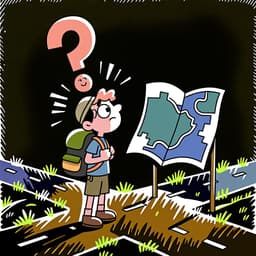



Using 'Ser' instead of 'Estar'
Mistake: “A common error is saying '¿Dónde es la embajada?'.”
Correction: The correct verb is 'está': '¿Dónde está la embajada?'.
DOHN-deh ehs-TAH lah em-bah-KHAH-dah
This is the most direct, common, and universally understood way to ask for an embassy's location. It's suitable for any situation, formal or informal.
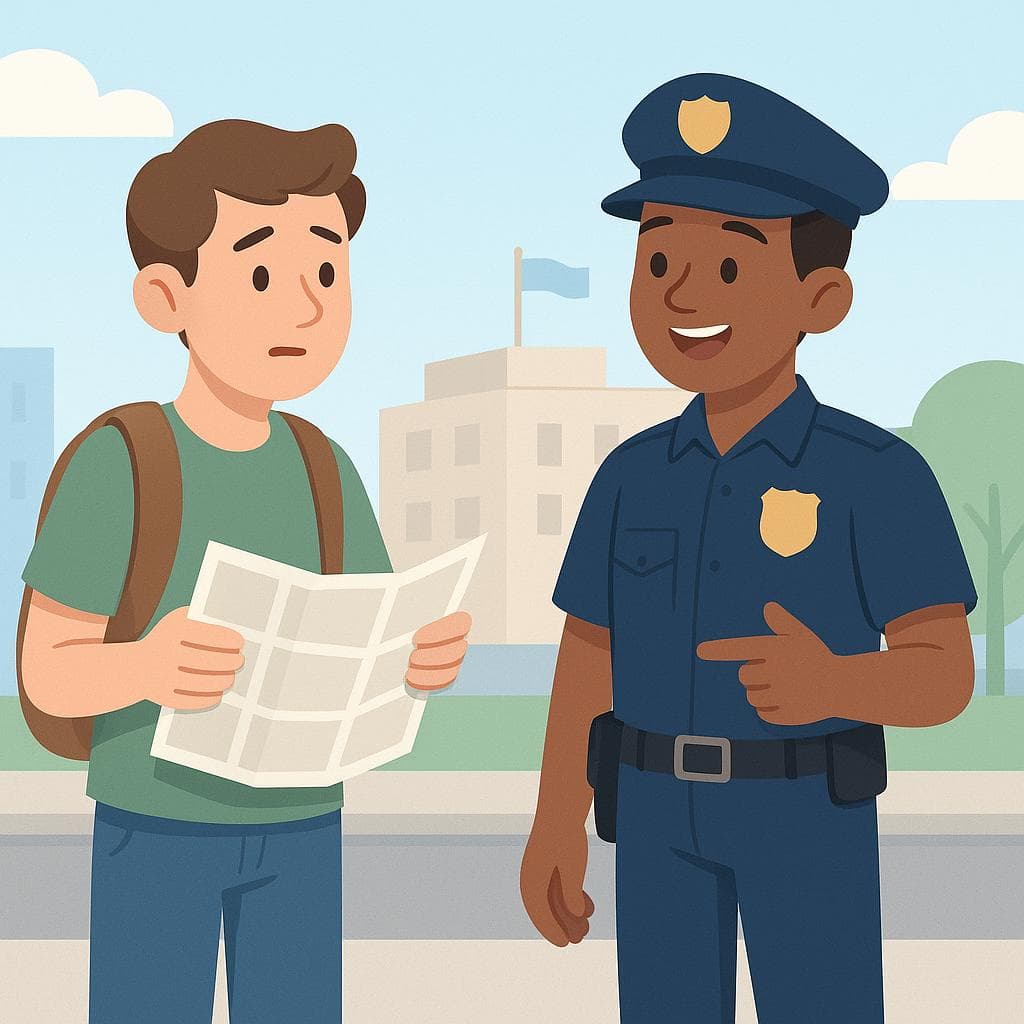
Asking for directions to the embassy is a key skill for any traveler. A polite opener like 'Disculpe' can make all the difference.
DOHN-deh seh en-KWEN-trah lah em-bah-KHAH-dah
This is an extremely common alternative that means 'Where is the embassy located?'. 'Se encuentra' is a slightly more complete-sounding way to ask and is interchangeable with 'está'.
dees-KOOL-peh, poh-DREE-ah deh-SEER-meh DOHN-deh ehs-TAH lah em-bah-KHAH-dah
This version, meaning 'Excuse me, could you tell me where the embassy is?', adds two layers of politeness: 'Disculpe' (Excuse me) and 'podría decirme' (could you tell me).
pehr-DOHN, SAH-beh DOHN-deh ehs-TAH lah em-bah-KHAH-dah
This translates to 'Pardon me, do you know where the embassy is?'. It's a very common and friendly way to approach a stranger for directions.
DOHN-deh KEH-dah lah em-bah-KHAH-dah
The verb 'quedar' is often used in Latin America to mean 'to be located'. It's a very common and natural-sounding substitute for 'estar' in the context of directions.
BOOS-koh lah em-bah-KHAH-dah deh [Country]
This means 'I'm looking for the embassy of [Country]'. It's not a direct question but implies you need directions. It's a soft and effective way to ask for help.
Here’s a quick comparison to help you choose the best way to ask for the embassy based on the situation.
| Phrase | Formality | Best For | Avoid When |
|---|---|---|---|
| ¿Dónde está la embajada? | Neutral | Quick, direct questions in almost any context. It's the universal standard. | It's never wrong, but a more polite version is better for formal authorities. |
| ¿Podría decirme dónde está...? | Formal | Addressing police officers, officials, or elderly people to show maximum respect. | It might sound overly formal when asking a peer or in a very casual setting. |
| ¿Sabe dónde está...? | Neutral | A friendly, natural-sounding way to start a conversation with a stranger on the street. | In a highly formal or official interaction where more deference is expected. |
| ¿Dónde queda la embajada? | Neutral | Sounding like a local in most parts of Latin America. | It's less common in Spain, where 'está' is more standard for this question. |
The 'j' in 'embajada' is pronounced like a strong 'h' sound (/kh/), which can be tricky. The 'd' sounds in 'dónde' and 'embajada' are also softer than in English.
The sentence structure is very simple and mirrors English (Question word + verb + noun). The key is remembering to use 'está' (from estar) for location.
The phrase itself is straightforward, but the cultural nuance lies in using politeness markers like 'Disculpe' or 'Perdón' before asking, which is highly recommended.
Disculpe, oficial, ¿dónde está la embajada de Canadá?
Excuse me, officer, where is the Canadian embassy?
Estoy un poco perdido. Necesito llegar a la embajada americana, ¿sabe dónde se encuentra?
I'm a bit lost. I need to get to the American embassy, do you know where it's located?
Buenas tardes, ¿me podría indicar en este mapa dónde queda la embajada del Reino Unido, por favor?
Good afternoon, could you show me on this map where the United Kingdom's embassy is, please?
Perdón la molestia, busco la embajada de Australia. ¿Voy bien por aquí?
Sorry to bother you, I'm looking for the Australian embassy. Am I going the right way?
When approaching a stranger for help in any Spanish-speaking country, it's crucial to start with a polite opening like 'Disculpe' (Excuse me, more formal) or 'Perdón' (Pardon me, more common). Jumping straight into the question can be seen as abrupt or rude.
Know the difference between 'embajada' (embassy) and 'consulado' (consulate). The embassy is the main diplomatic representation, usually in the capital city. Consulates handle smaller diplomatic tasks (like visas) and can be in other major cities. Asking for the 'embajada' in a city that only has a 'consulado' might cause confusion.
Never just ask for 'the embassy'. You must always specify which country's embassy you need, for example, 'la embajada de Estados Unidos' or 'la embajada de Irlanda'. Otherwise, the immediate response will be '¿Cuál?' or '¿De qué país?' ('Which one?' or 'From what country?').
People may get physically closer to you than you're used to when giving directions, and they will likely use a lot of hand gestures. This is a normal and friendly part of communication in many Hispanic cultures. They might even walk with you for a block or two to make sure you're headed the right way.
Mistake: “A common error is saying '¿Dónde es la embajada?'.”
Correction: The correct verb is 'está': '¿Dónde está la embajada?'.
Mistake: “Saying '¿Dónde está embajada?' without 'la'.”
Correction: Always include the article: '¿Dónde está la embajada?'.
Mistake: “Pronouncing the 'j' sound like the 'j' in the English word 'jump'.”
Correction: The 'j' in Spanish sounds like the 'h' in 'hello', but a bit stronger, from the back of your throat: /em-bah-KHAH-dah/.
Before you travel, learn how to say your country's name in Spanish (e.g., 'Estados Unidos' for USA, 'Reino Unido' for UK, 'Canadá', 'Australia', 'Irlanda'). You will need to add this to your question, as in '¿Dónde está la embajada de Canadá?'.
Asking the question is only half the battle! Be prepared to understand directions. Learn basic direction words like 'a la derecha' (to the right), 'a la izquierda' (to the left), 'todo recto' (straight ahead), and 'cuadra'/'manzana' (city block).
Have a physical or digital map ready. You can say '¿Puede mostrarme en el mapa?' ('Can you show me on the map?'). This is a lifesaver if you don't understand the spoken directions.
'Perdone' is a very common polite opener. In directions, you'll hear 'coger el metro/autobús' (to take the metro/bus), which means something very different in parts of Latin America.
Mexicans are known for their politeness. Using 'Disculpe' before asking is standard practice. Directions often refer to 'cuadras' (blocks) and landmarks.
The use of 'vos' instead of 'tú' is universal, which changes verb endings (e.g., 'sabes' becomes 'sabés'). 'Che' is a very common, informal way to get someone's attention.
Está a unas tres cuadras, cerca del parque.
It's about three blocks away, near the park.
Muchas gracias. ¿Está lejos para ir caminando?
Thank you very much. Is it far to walk?
Uhm, no estoy seguro, la verdad.
Uhm, I'm not sure, honestly.
No se preocupe, gracias de todos modos.
Don't worry, thanks anyway.
Claro, siga todo recto hasta el semáforo y luego gire a la izquierda.
Of course, go straight until the traffic light and then turn left.
Perdón, ¿más despacio por favor?
Sorry, slower please?
This is a crucial phrase to know in any emergency situation where you might need your embassy.
This provides important context for why you are asking for directions to the embassy.
This broadens your ability to ask for any location, not just the embassy.
After someone helps you with directions, you'll need to know how to thank them properly.
Question 1 of 3
You need to ask a police officer in Mexico for directions to the U.S. Embassy. What is the most appropriate and polite way to ask?
Knowing a phrase is one thing — using it at the right moment is another. Read 200+ illustrated and narrated Spanish stories to see phrases in the contexts where they actually belong.
Functionally, there is almost no difference. Both mean 'Where is...?' and are used interchangeably. '¿Dónde se encuentra?' can sometimes sound a tiny bit more formal or complete, but both are perfectly normal in everyday conversation.
Always try to say the country's name in Spanish (e.g., 'Estados Unidos' not 'USA', 'Reino Unido' not 'UK'). While people might understand the English version, using the Spanish name is clearer and shows you've made an effort to learn.
Don't worry! The most important parts are being polite and clear. Simply starting with 'Disculpe' or 'Perdón' and then asking the basic question '¿Dónde está la embajada de [mi país]?' is perfectly fine and will be understood.
It's easy! Just swap the word 'embajada' for 'consulado'. The question becomes '¿Dónde está el consulado de [país]?'. Note that 'consulado' is masculine, so you use the article 'el' instead of 'la'.
The most polite way is to make eye contact, smile, and say 'Disculpe la molestia' (Sorry to bother you) or just a simple 'Disculpe...'. This signals your intent to ask a question respectfully without being too abrupt.
Strengthen the grammar behind this phrase:
Find similar phrases to expand your Spanish vocabulary:
Browse our complete collection of Spanish phrases organized by situation, from basic greetings to advanced conversations. Perfect for travelers, students, and anyone learning Spanish.
View All Spanish Phrases →