Ya merito
YAH meh-REE-toh
🎨 Literal vs. Figurative
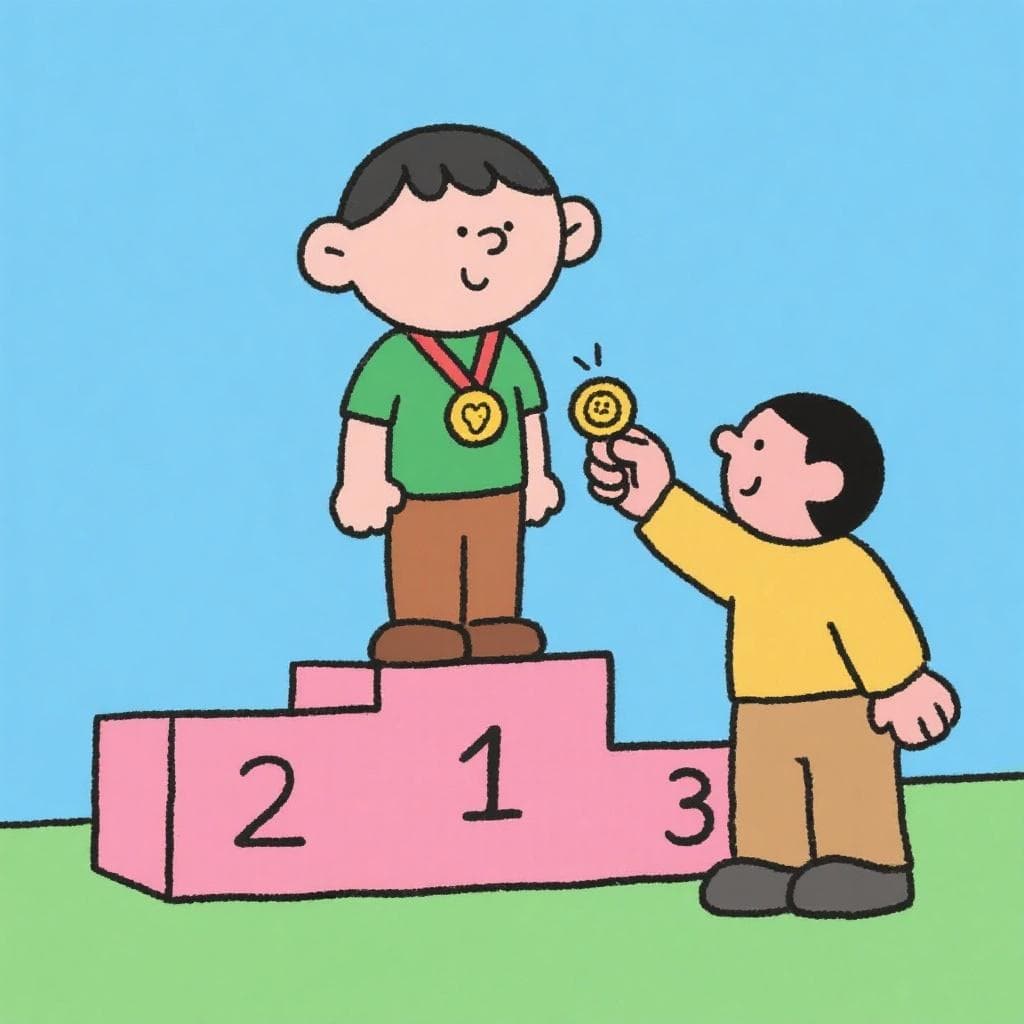
A literal wordplay on 'mérito' (merit), as if someone is 'already' about to get a 'little merit'.

In practice, 'ya merito' means you're almost there or something is just about to happen.
Key Words in This Idiom:

📝 In Action
¿Terminaste la tarea? — Ya merito, solo me falta un párrafo.
B1Did you finish the homework? — Almost, I just have one paragraph left.
¡Apúrate, el tren ya merito se va!
B1Hurry up, the train is about to leave!
Ten cuidado con ese escalón, ¡ya merito me caigo!
B2Be careful with that step, I almost fell!
📜 Origin Story
This phrase is a star of Mexican Spanish. It comes from the word 'mero', which in Mexico is used to mean 'the very one' or 'exactly'. For example, 'el mero centro' is 'the very center' of town. 'Merito' is the 'diminutive' form, which is a cute, smaller version of a word. So, 'merito' softens 'exactly' to mean 'just about exactly' or 'almost there'. It’s a perfect example of how adding '-ito' can subtly change a word's meaning.
⭐ Usage Tips
The Mexican 'Almost'
This is your go-to phrase for 'almost' in Mexico and parts of Central America. Using it will make you sound very natural and local. It works for things that are about to happen ('Ya merito llego' - I'm almost there) and for things that nearly happened in the past ('Ya merito me caía' - I almost fell).
It's All About Immediacy
'Ya merito' implies that something is very, very close to happening. It has a sense of immediacy that the standard word 'casi' (almost) doesn't always carry. Use it when the event is just around the corner.
❌ Common Pitfalls
Using It Outside Mexico
Mistake: “Using 'ya merito' while speaking with someone from Spain or Argentina.”
Correction: This phrase is a hallmark of Mexican Spanish. While many Spanish speakers will understand it from TV shows, it's not used in their daily lives. In most other countries, stick to 'casi' or 'ya casi' to be understood clearly.
Confusing 'Merito' with 'Mérito'
Mistake: “Thinking the phrase has something to do with 'mérito', which means 'merit' or 'achievement'.”
Correction: Despite sounding almost identical, they are unrelated. 'Ya merito' comes from 'mero' (exact) not 'mérito' (merit). You're not about to earn an award, you're just 'almost' there!
📚 Related Grammar
Want to understand the grammar behind this idiom? Explore these lessons for a deep dive:
The Imperative Mood (Affirmative Commands)
The examples use informal commands like '¡Apúrate!' (Hurry up!) and 'Ten cuidado' (Be careful) to tell someone what action to take right away.
Reflexive Verbs and Daily Routines
We see reflexive structures in the examples, like the command 'Apúrate' (hurry yourself) and the near-miss statement 'me caigo' (I fall/am falling).
🌎 Where It''s Used
Mexico
Extremely common. A defining feature of everyday, informal Mexican Spanish.
Central America
Frequently used in countries like Guatemala, El Salvador, and Honduras.
Spain
Not used. The standard equivalent is 'casi' or 'ya casi'.
South America
Generally not used, though it might be understood in countries with more exposure to Mexican media. 'Casi' is the standard.
✏️ Quick Practice
Quick Quiz: Ya merito
Question 1 of 1
Your friend in Mexico City texts you, 'Ya merito llego.' What does she mean?
🗣️ Practice Pronunciation
Want to sound more natural when using this idiom? Practice your Spanish pronunciation with our collection of tongue twisters.
Browse Spanish Tongue Twisters →🏷️ Tags
Hear idioms come alive
Idioms make sense in context. Read 200+ illustrated and narrated Spanish stories to see idioms used naturally by characters — and build the ear native speakers have.
Frequently Asked Questions
Can I just use 'casi' instead of 'ya merito' in Mexico?
Yes, of course! 'Casi' means 'almost' everywhere and is perfectly understood in Mexico. However, using 'ya merito' shows you have a deeper knowledge of local slang and will make you sound much more natural in an informal conversation.