Ya ni la amuelas
yah nee lah ah-MWEH-lahs
🎨 Literal vs. Figurative
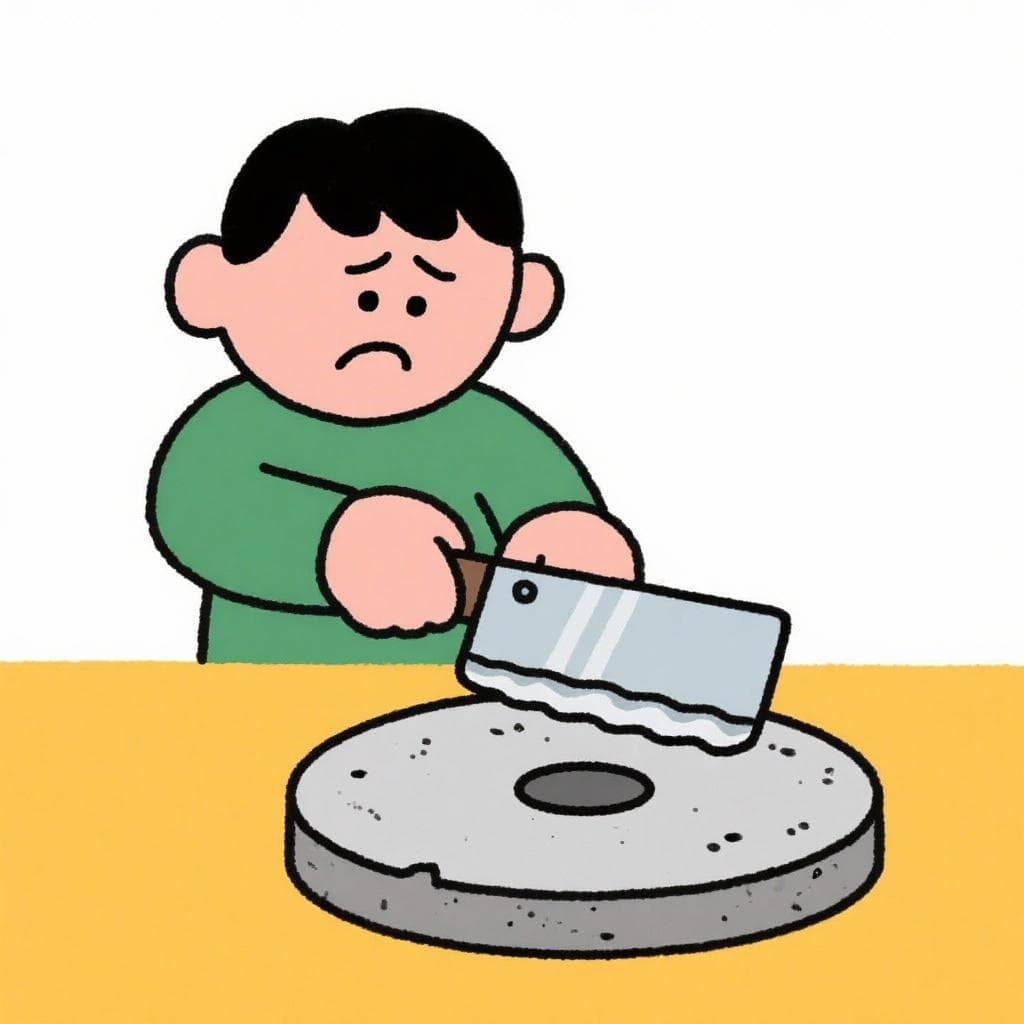
Literally, 'amolar' means to sharpen on a grinding stone ('muela'), which is useless when worn out.

In practice, you say '¡Ya ni la amuelas!' when someone is being annoying or has gone too far.
Key Words in This Idiom:


📝 In Action
¿Me pides dinero otra vez? ¡Ya ni la amuelas! Te acabo de prestar ayer.
B2You're asking me for money again? Give me a break! I just lent you some yesterday.
Llegaste dos horas tarde y sin lo que te pedí. ¡En serio, ya ni la amuelas!
B2You arrived two hours late and without the thing I asked for. Seriously, you've really gone too far!
—Se me olvidó que hoy era tu cumpleaños. —¡Ya ni la amuelas, Luis! Te lo recordé esta mañana.
B2—I forgot today was your birthday. —Oh, you've got to be kidding me, Luis! I reminded you this morning.
📜 Origin Story
This phrase comes from the verb 'amolar', which literally means 'to sharpen on a grinding stone' (una muela). When a grinding stone becomes completely smooth and worn out, it's useless for sharpening. Over time, 'amolar' took on the figurative meaning of 'to ruin,' 'to break,' or 'to annoy intensely' in Mexican Spanish. The expression 'Ya ni la amuelas' is like saying 'You're not even trying to sharpen it anymore,' implying the situation is so worn out, pointless, or ruined by the person's actions that it's just ridiculous.
⭐ Usage Tips
Expressing Exasperation
Use this when you're fed up. It's a strong but informal way to tell someone they're being unreasonable, annoying, or have crossed a line. It's the perfect response to a terrible excuse or a repeated annoyance.
It's All in the Tone
Your tone of voice is key. It can be used playfully between friends if someone makes a ridiculous excuse, or it can be said with real anger to show you're genuinely frustrated and have reached your limit.
❌ Common Pitfalls
Not for Formal Situations
Mistake: “Using 'Ya ni la amuelas' in a business meeting or with a stranger.”
Correction: This is strictly informal and very colloquial. Using it in a formal context would be seen as rude and unprofessional. Stick to phrases like 'Eso es inaceptable' (That is unacceptable) in formal settings.
Using it Outside Mexico
Mistake: “Assuming all Spanish speakers will understand this phrase.”
Correction: This is a hallmark of Mexican Spanish. While some may understand it from movies or TV, it's not used in Spain or most of South America. Using it elsewhere will likely cause confusion.
📚 Related Grammar
Want to understand the grammar behind this idiom? Explore these lessons for a deep dive:
Direct Object Pronouns (lo, la, los, las)
The idiom uses the direct object pronoun 'la' in 'Ya ni la amuelas,' showing how these small words are placed right before the main verb.
Present Tense: Stem-Changing Verbs (e.g., querer, poder, pedir)
The verb 'amolar' changes its vowel from 'o' to 'ue' in the present tense, which is why we see 'amuelas' instead of 'amolas' when talking about 'tú'.
🌎 Where It''s Used
Mexico
Extremely common and widely understood. It's a quintessential Mexican expression of frustration.
Spain
Not used. A speaker from Spain would likely not understand this idiom and would be confused by the verb 'amolar' in this context.
Latin America
Generally not used outside of Mexico, though it might be recognized in some Central American countries or by people familiar with Mexican media.
✏️ Quick Practice
Quick Quiz: Ya ni la amuelas
Question 1 of 1
Your friend promises to help you move, but shows up three hours late without a car. What's an appropriate Mexican Spanish response?
🗣️ Practice Pronunciation
Want to sound more natural when using this idiom? Practice your Spanish pronunciation with our collection of tongue twisters.
Browse Spanish Tongue Twisters →🏷️ Tags
Hear idioms come alive
Idioms make sense in context. Read 200+ illustrated and narrated Spanish stories to see idioms used naturally by characters — and build the ear native speakers have.
Frequently Asked Questions
Is 'Ya ni la amuelas' a strong insult?
It can be, depending on the tone. Among friends, it's usually a lighthearted way to call someone out for being ridiculous. However, if said with real anger to a stranger or in a tense situation, it can be quite confrontational and insulting.
What does the 'la' refer to in 'Ya ni la amuelas'?
It's a great question! The 'la' is a bit ambiguous. It likely originally referred to 'la muela' (the grinding stone), but in modern usage, it doesn't refer to anything specific. It's just part of the fixed expression, so you don't need to worry about what 'it' is.