Tuve un tubo y lo retuve.
TU-ve un TU-bo y lo re-TU-ve
I had a tube and I kept it.
🔊 Listen & Practice
Start with slow speed to master pronunciation, then gradually increase to challenge yourself.
🎨 Visualization
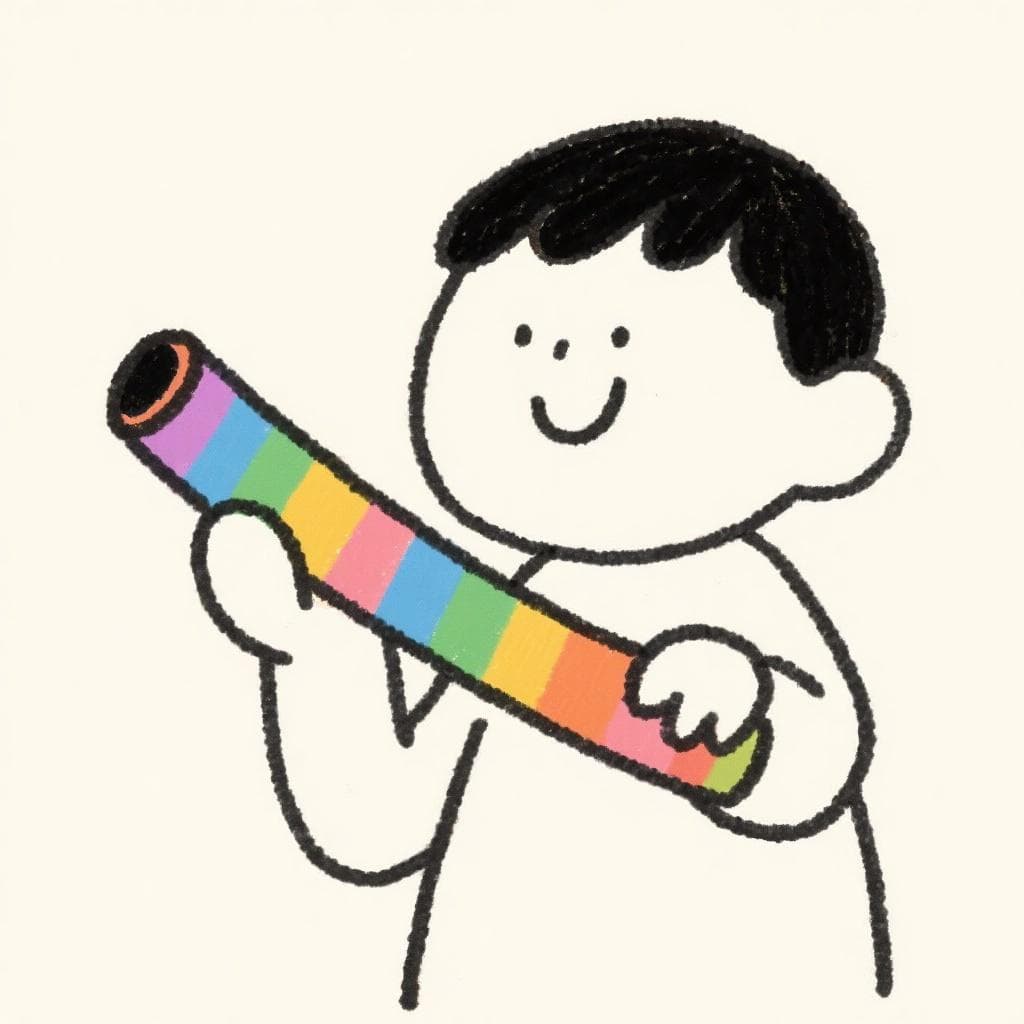
I had a tube, and I kept it! Now, can you say it without mixing up the sounds?
🎯 Pronunciation Focus
The Spanish 'b' and 'v' Sound
b/, /βThe most important lesson here: in Spanish, 'b' and 'v' make the exact same sound with the lips. There is no 'v' sound made with the teeth like in English 'victory'. This exercise trains your mouth to treat them as the same sound.
📝 Practice Breakdown
Start here. The 'v' in 'Tuve' and the 'b' in 'tubo' are made the same way: with your lips. The first one is a bit harder (like English 'b'), the second is softer because it's between vowels.
Now for the second half. The 'v' in 'retuve' should sound exactly like the 'b' in 'tubo'. It's the same soft, lips-almost-touching sound.
Key Words in This Tongue Twister:


📚 Background
This is a classic short trabalenguas used to highlight one of the biggest pronunciation traps for English speakers: the fact that 'b' and 'v' sound exactly the same in Spanish. It's a fantastic exercise for building the right muscle memory.
❌ Common Pitfalls
Using the English 'v' Sound
Mistake: “Pronouncing 'tuve' and 'retuve' with a 'v' sound where your top teeth touch your bottom lip, like in the English word 'vine'.”
Correction: Forget the English 'v' sound exists! In Spanish, both 'b' and 'v' are 'bilabial,' meaning you only use your lips. Press them together for a 'b' sound. This is the only way to say 'b' or 'v' in Spanish.
Trying to Make 'b' and 'v' Different
Mistake: “Intentionally trying to make the 'b' in 'tubo' and the 'v' in 'tuve' sound different from each other.”
Correction: Relax! They are the same sound. The spelling is just a historical convention. Your goal is to make them sound identical. Focus on using only your lips for both letters.
🌎 Where It''s Used
General Spanish
This tongue twister is known throughout the Spanish-speaking world as a fundamental pronunciation exercise for mastering the identical 'b'/'v' sound.
🔗 Related Tongue Twisters
The Tube Repetition Challenge
Say it five times in a row as fast as you can. The goal is to make the 'b' in 'tubo' and the 'v' in 'retuve' sound identical every single time.
🏷️ Tags
Frequently Asked Questions
Wait, so 'b' and 'v' are really the same sound in Spanish?
Yes, exactly! This is a huge difference from English. They represent the same sound, made only with your lips. The spelling is a matter of tradition, but the pronunciation is identical. This tongue twister is the perfect way to practice that.
Why does the 'b' in 'tubo' sound a little softer than the 'T' in 'Tuve'?
Great question! The Spanish 'b'/'v' sound has two versions depending on its position. It's a 'hard' sound (like English 'b') at the very beginning of a spoken phrase. It becomes a 'soft', breathy sound (where your lips get close but don't stop the air completely) when it's between two vowels, like in 'un tubo' or 'lo retuve'.