How to Say "that guy" in Spanish
The Spanish word for “that guy” is “ése” — A1 level. This is a very common word in everyday Spanish.
Examples
No me gusta este abrigo, prefiero ése.
I don't like this coat, I prefer that one.
¿Cuál de los coches es tuyo? —Ése de allí.
Which of the cars is yours? —That one over there.
Mi hermano es el alto. Sí, ése que está hablando con la profesora.
My brother is the tall one. Yes, that one who is talking to the teacher.
Pointing Out 'That One'
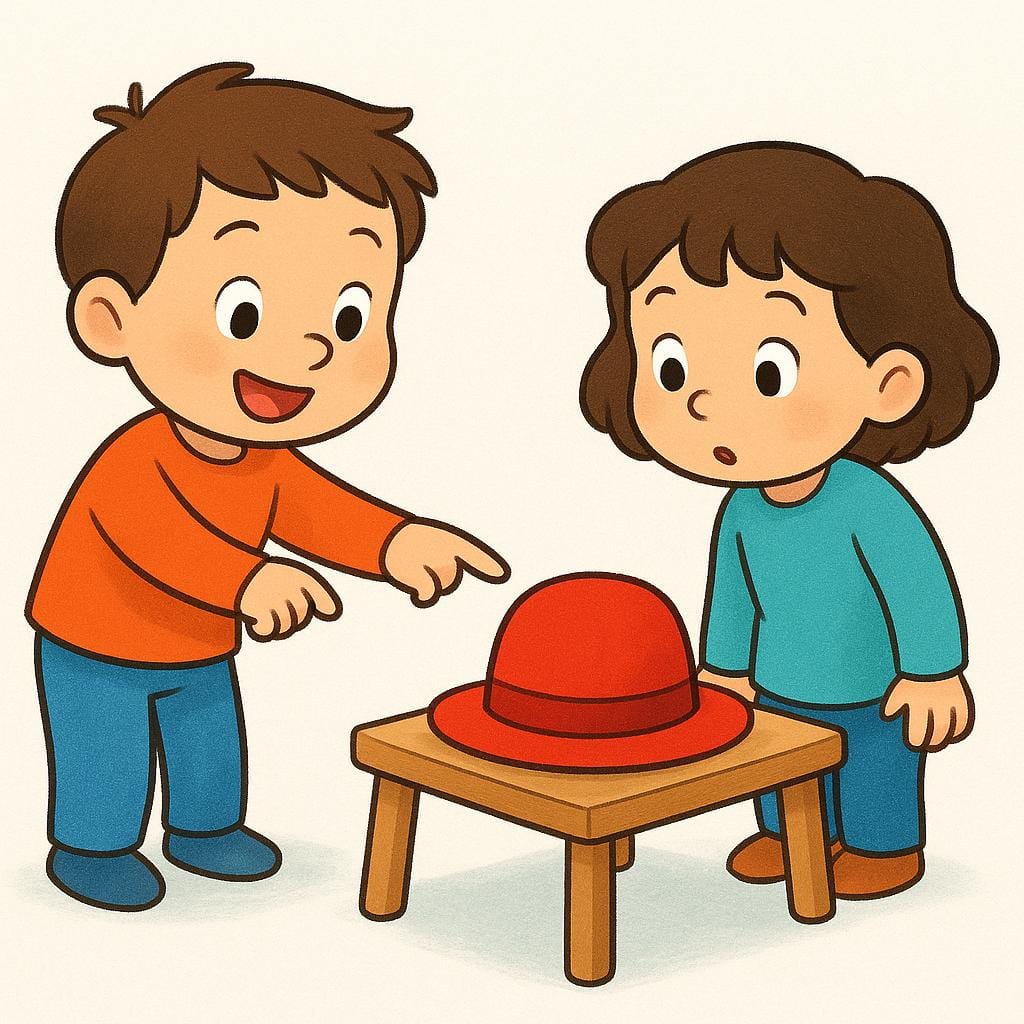
Use 'ése' to replace a masculine noun that's near the person you're talking to, or that you've both just mentioned. It's the perfect word for pointing something out that isn't right next to you, but is close to your listener.
The Accent Mark (Tilde)
The little line over the 'e' (é) is a clue that 'ése' is standing in for a noun. Its partner word, 'ese' (no accent), goes before a noun ('ese coche'). The official rule-makers now say this accent is optional, but many people still use it to be extra clear.
Mixing up 'ése' and 'eso'
Mistake: “Cuando ves una cosa extraña: *¿Qué es ése?*”
Correction: The better way is: *¿Qué es eso?* Use 'eso' (the neutral one) for unknown objects, ideas, or situations. Use 'ése' only when you know the thing you're replacing is masculine, like 'el libro' (the book) or 'el perro' (the dog).
Using it for Feminine Nouns
Mistake: “Me gusta la camisa. Voy a comprar ése.”
Correction: Correct version: *Me gusta la camisa. Voy a comprar ésa.* Since 'camisa' (shirt) is a feminine word, you need to use the feminine version, 'ésa'.
Learn Spanish with Inklingo
Interactive stories, personalized learning, and more.