How to Say "too bad" in Spanish
The Spanish word for “too bad” is “lástima” — B1 level. This is a very common word in everyday Spanish.
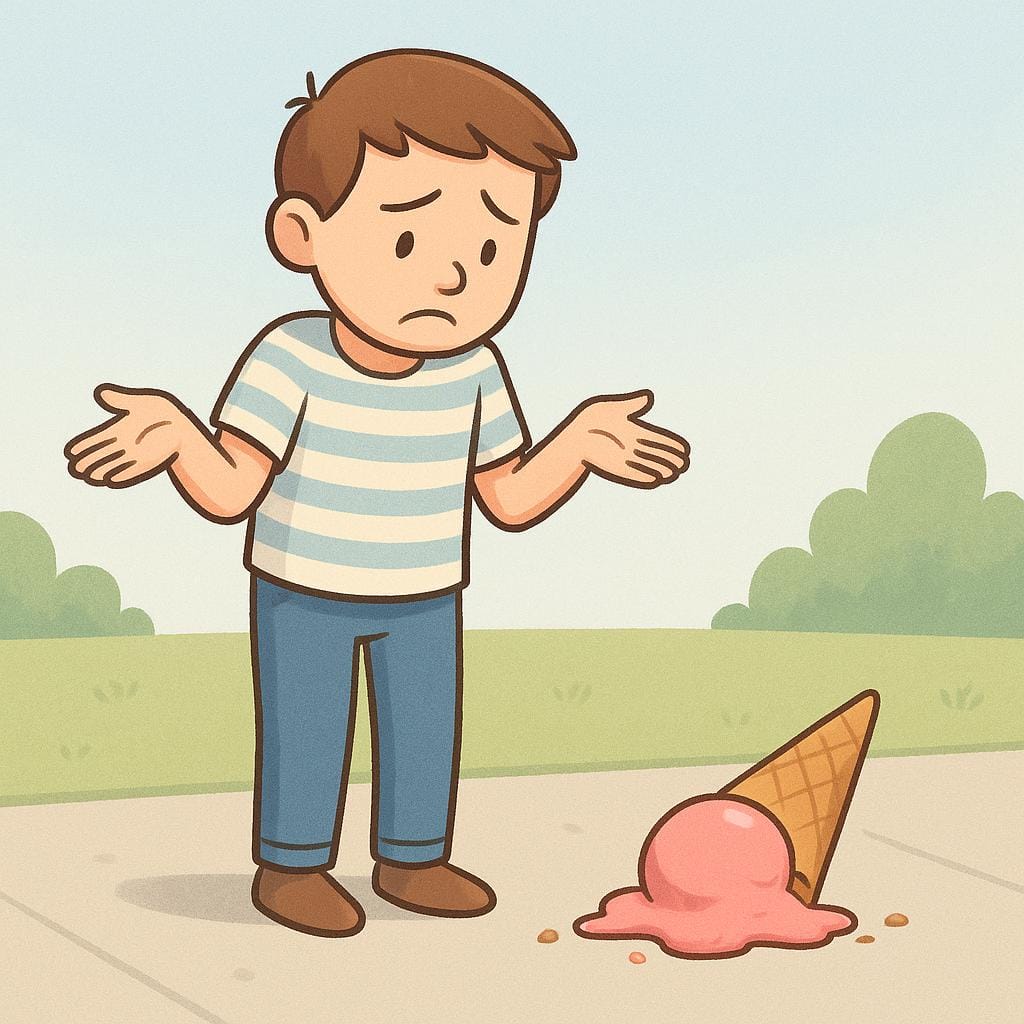
Examples
¡Qué lástima! Se nos acabó la pizza antes de que llegaras.
What a shame! We ran out of pizza before you arrived.
Es una lástima que no exista una solución fácil.
It's a pity that an easy solution doesn't exist.
Lástima que el concierto haya sido cancelado.
Too bad the concert was canceled.
Subjunctive Alert!
When you use '¡Qué lástima que...' or 'Es una lástima que...' to talk about a situation, the verb that follows must be in the special verb form (the subjunctive) because you are expressing emotion or a judgment about the situation. For example, 'que haya sido' (that it has been) instead of 'que ha sido' (that it has been - normal form).
The Short Form
In casual talk, you can drop the 'Es' and just say 'Una lástima' or simply 'Lástima' to react quickly to bad news.
Using the Wrong Verb Form
Mistake: “Es lástima que *fue* un día feo. (Using the normal past tense)”
Correction: Es lástima que *fuera* un día feo. (Using the special past verb form/subjunctive) — Remember, expressing regret requires that special verb change!
Learn Spanish with Inklingo
Interactive stories, personalized learning, and more.