How to Say "woke up" in Spanish
The Spanish word for “woke up” is “despertó” — A1 level. This is a very common word in everyday Spanish.
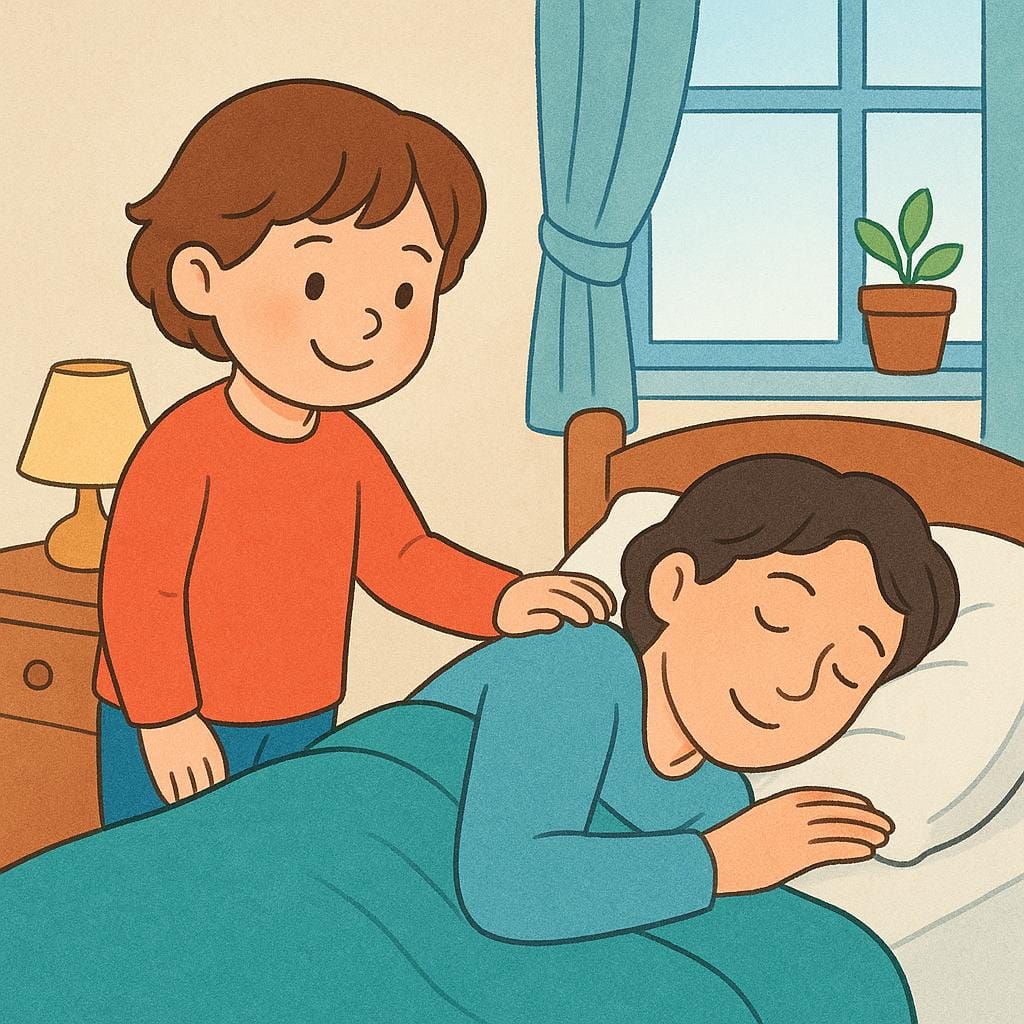
Examples
Mi madre me despertó a las siete esta mañana.
My mother woke me up at seven this morning.
¿Quién despertó al bebé con tanto ruido?
Who woke the baby up with so much noise?
Usted despertó a toda la casa con su alarma.
You (formal) woke up the whole house with your alarm.
Preterite Tense: Completed Action
Since 'despertó' is in the preterite, it means the action of waking someone up was finished at a specific time in the past (e.g., 'yesterday,' 'at seven').
Stem Change Exception
The base verb 'despertar' changes the 'e' to 'ie' in the present tense ('despierto'), but this change disappears completely in the preterite ('despertó').
Waking Yourself Up vs. Waking Someone Else
Mistake: “Using 'despertó' when you mean 'he/she woke up' (themselves).”
Correction: To say 'He woke up,' you must use the reflexive form: 'Se despertó.' 'Despertó' (without 'se') means 'He/she woke up someone else.'
Related Translations
Learn Spanish with Inklingo
Interactive stories, personalized learning, and more.