The Smuggler's Map Stitched into the Fisherman's Coat
Tryck på valfritt ord för en omedelbar översättning. Använd uppspelningsknapparna för att höra berättelsen medan du läser.
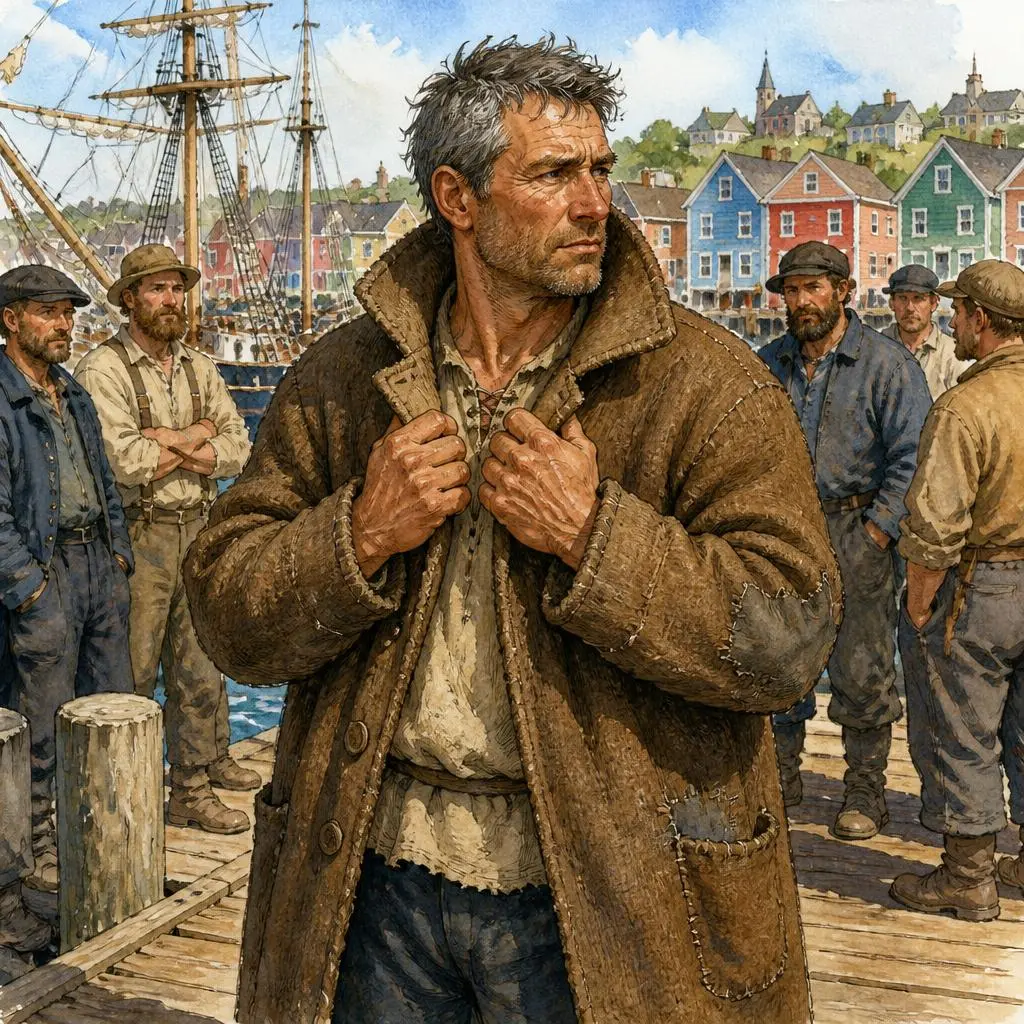
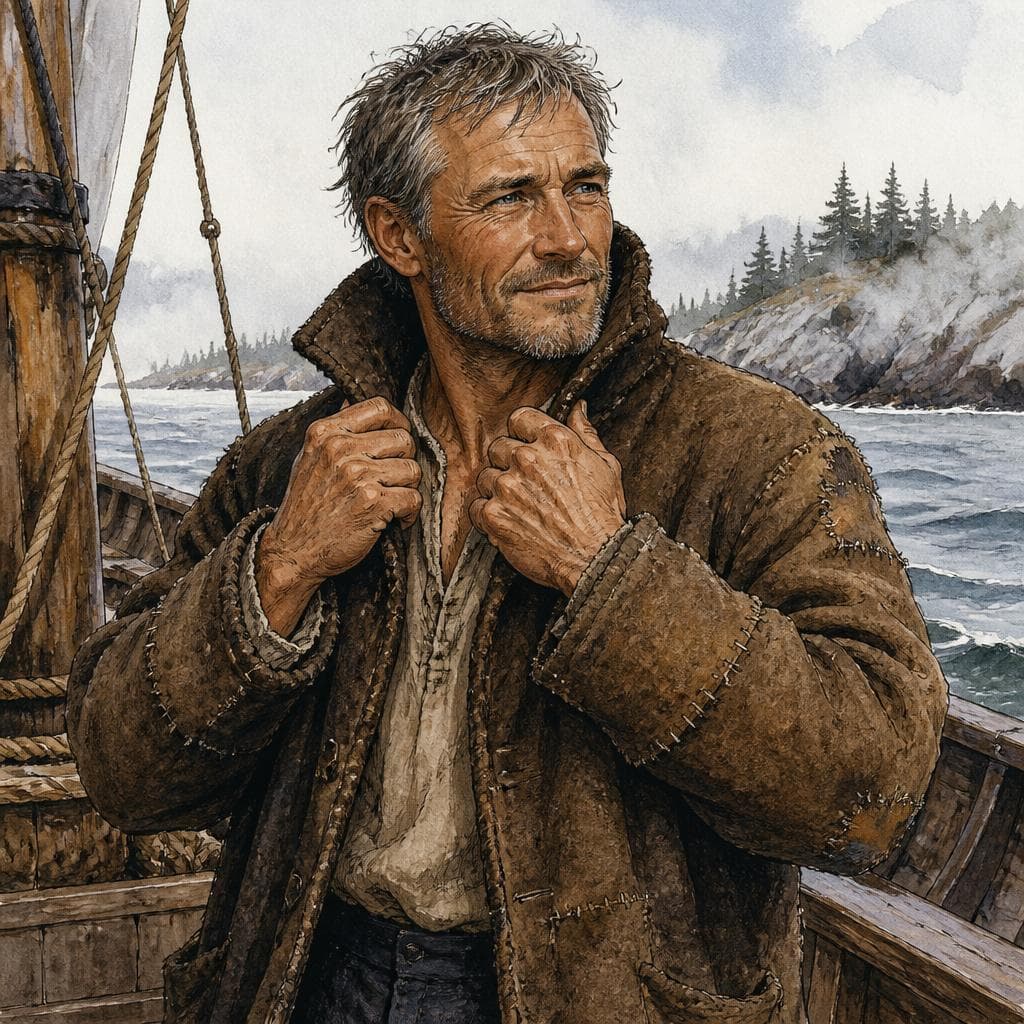
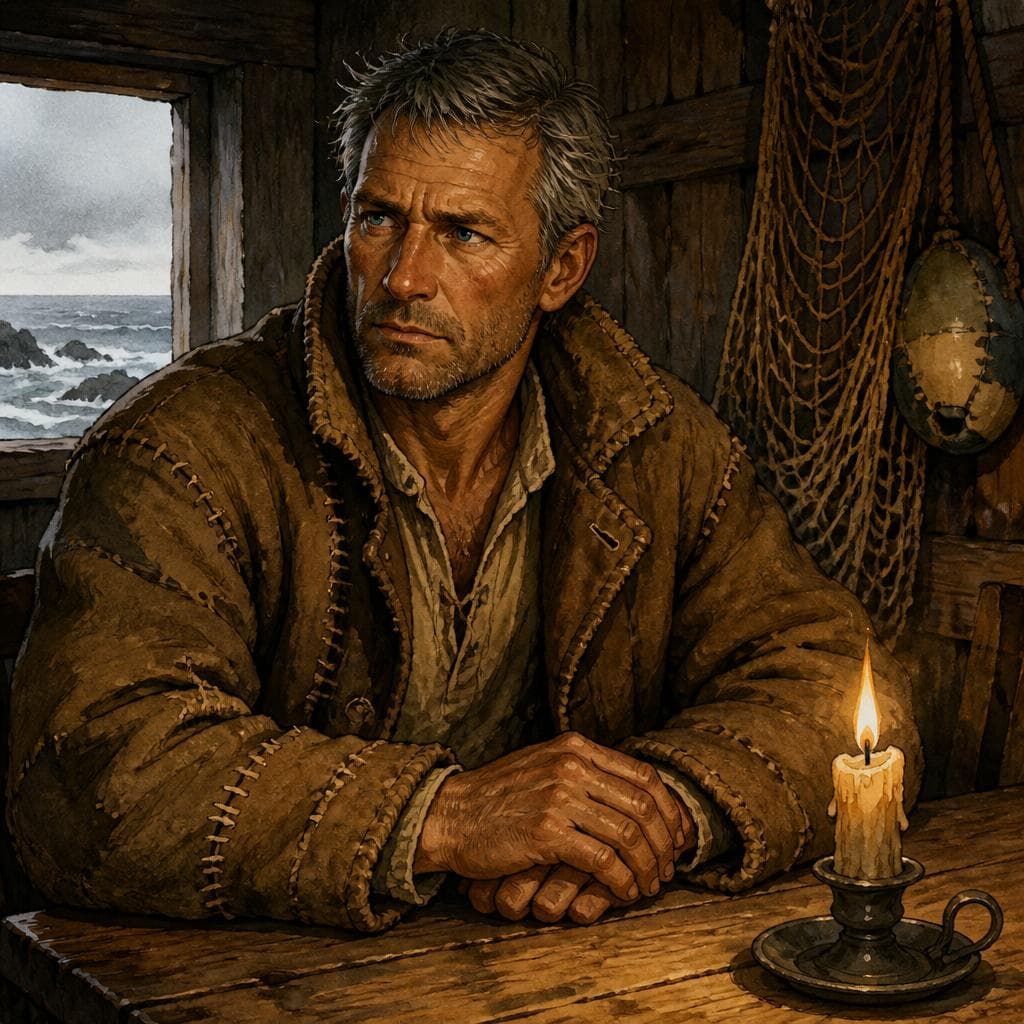
The coat smelled of salt and old fish. It was heavy, too — heavier than it should have been for a simple wool jacket. But Thomas Mader never took it off, not even in summer, not even when the other fishermen laughed at him on the docks of Lunenburg.
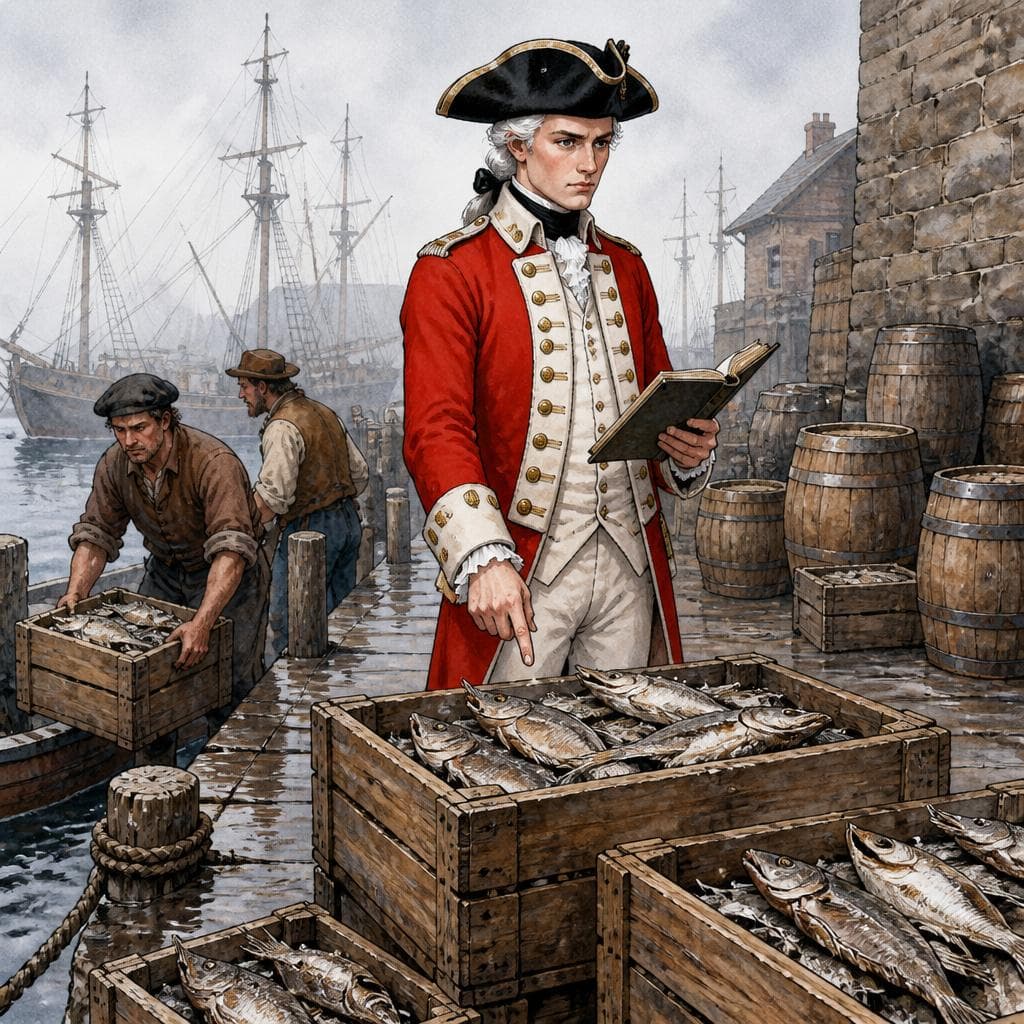
It was the year 1783, and the British Crown controlled every port along the Nova Scotia coastline. Customs officers checked every boat, every barrel, and every crate of salted cod. They were looking for smugglers — men who traded with American merchants without paying the King's taxes. The penalty for smuggling was not just a fine. It was prison, or sometimes worse.
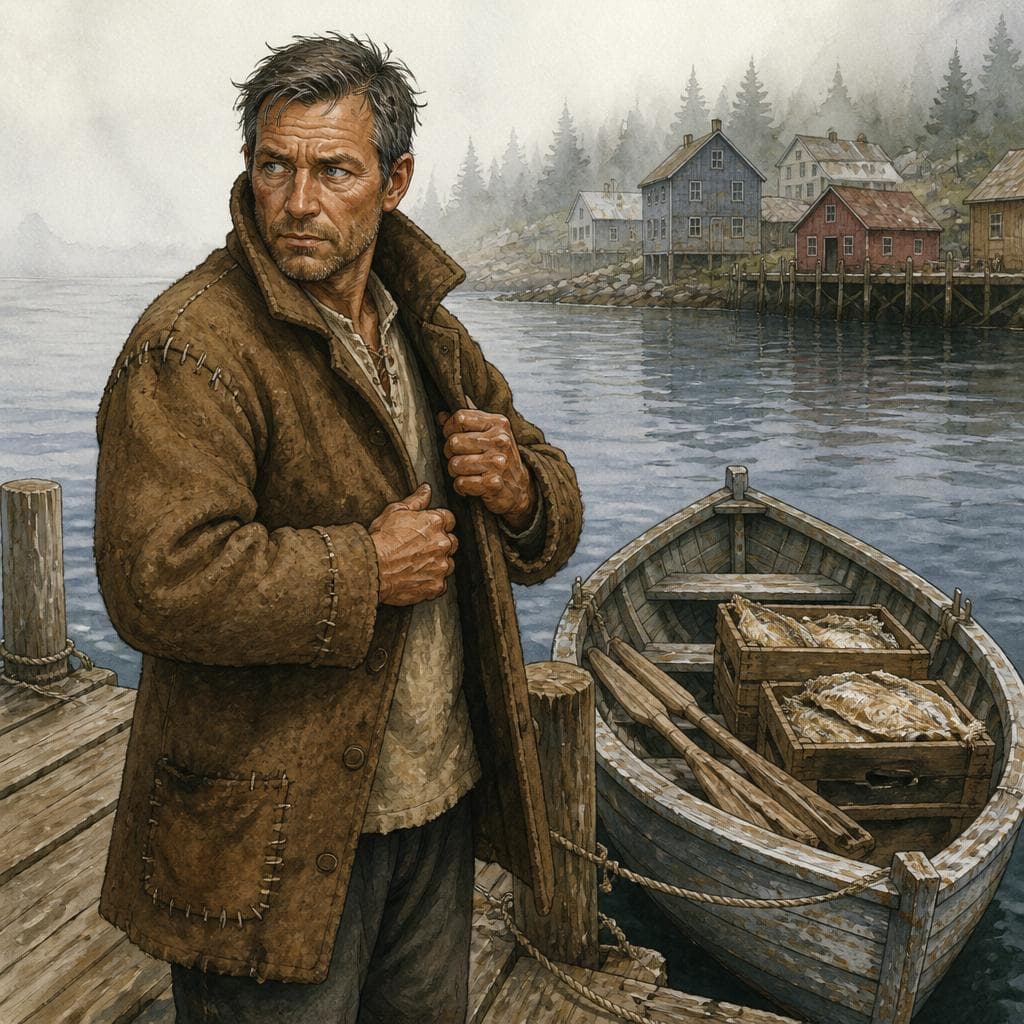
Thomas was not a smuggler himself. But he was helping one.
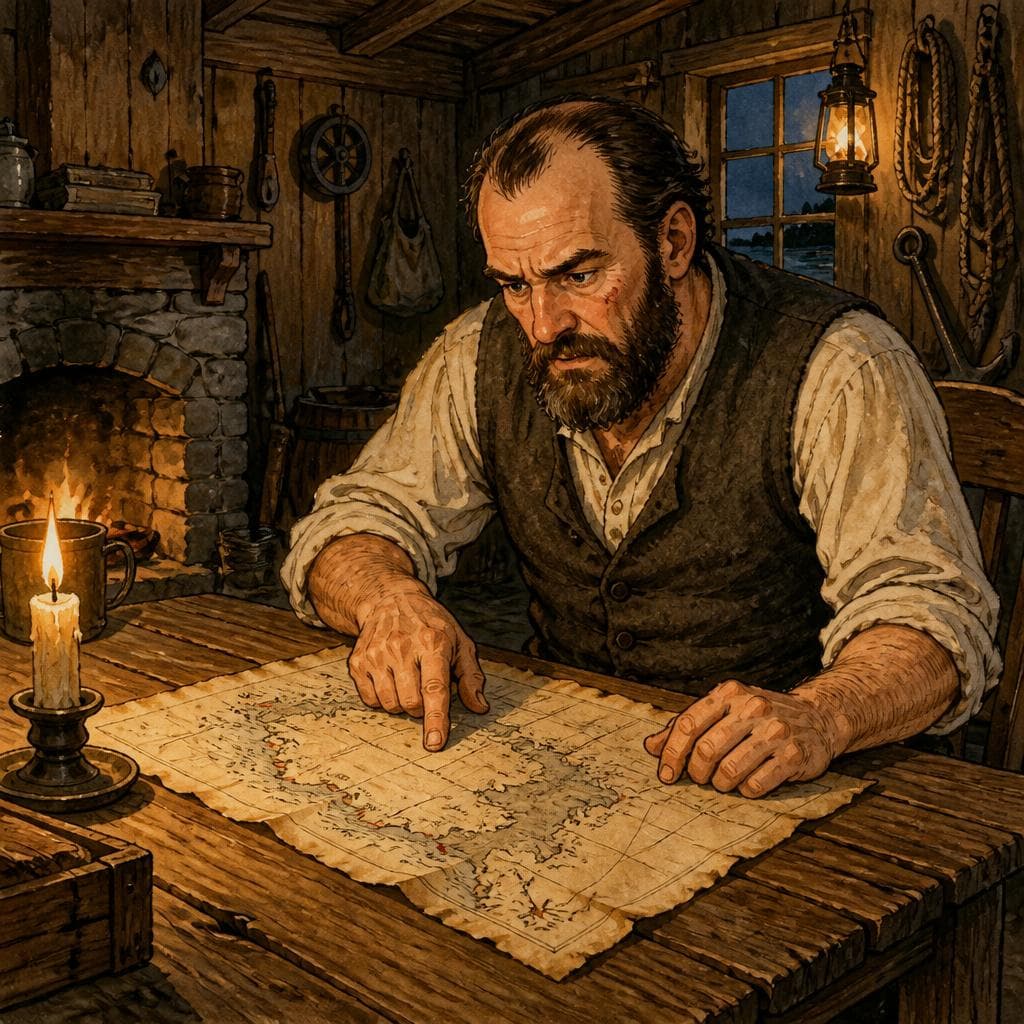
His neighbour, a man named Eckhardt, had spent three years building a network of small trade routes between Nova Scotia fishing villages and merchants in Massachusetts. It was dangerous work, but it kept families fed during hard winters when the official trade system offered almost nothing. The routes were secret, of course. Every contact, every hidden cove, and every sympathetic harbour master — all of it was recorded on a single document. Eckhardt had called it, simply, "the map."
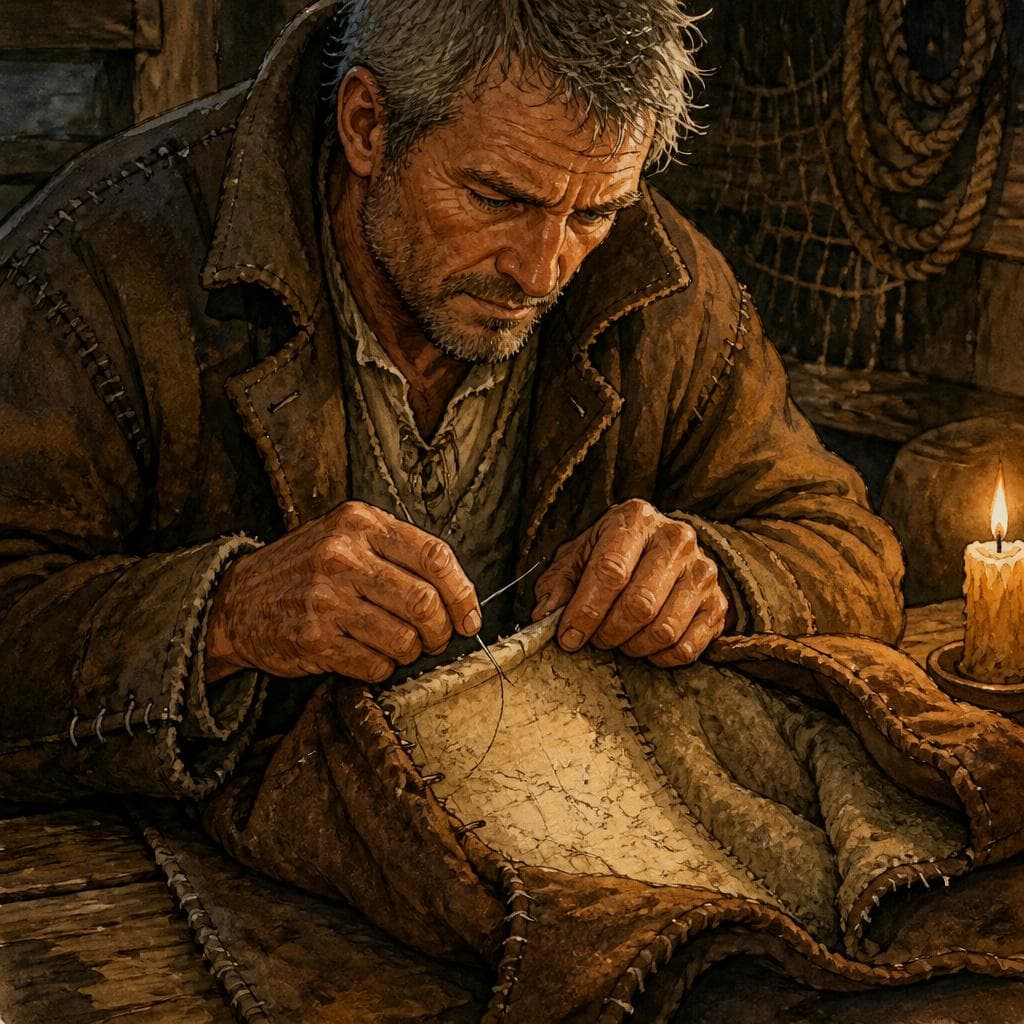
And now the map was sewn into the lining of Thomas's coat.
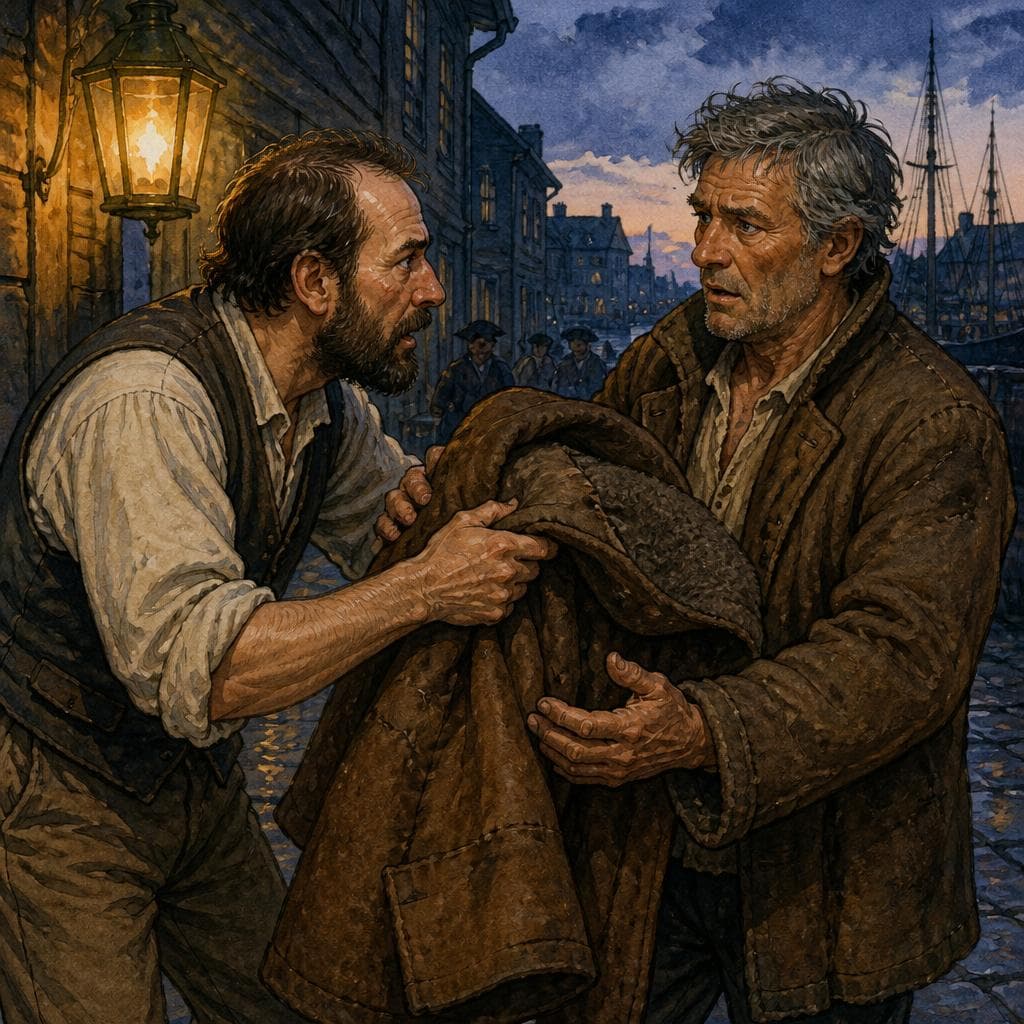
Eckhardt had disappeared two weeks earlier. A customs officer had recognised him at the Halifax market, and Eckhardt had run. No one had heard from him since. Before he vanished, he had pushed the coat into Thomas's arms and whispered three words: "Keep it safe."
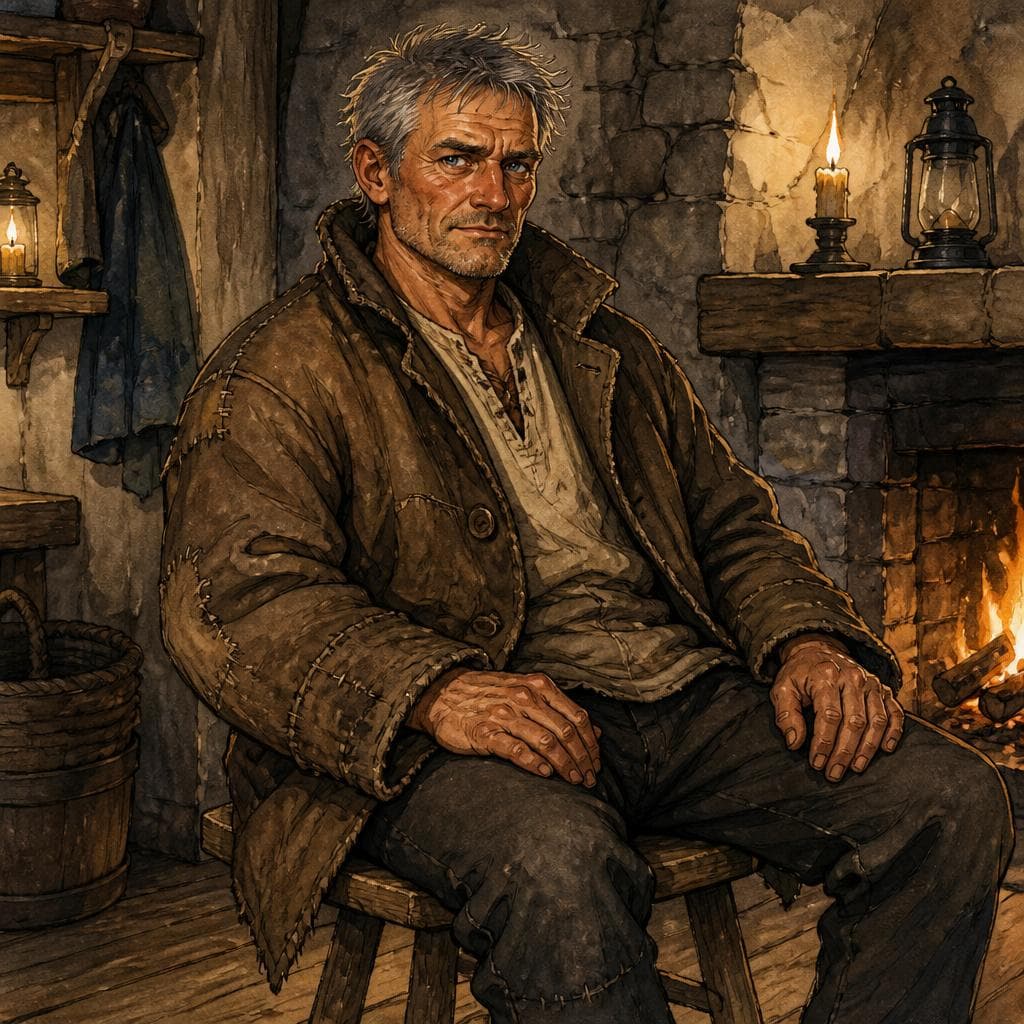
Thomas had done exactly that. He wore the coat every day. He slept in it. He told his wife it was because of his bad back — the wool helped with the pain. She did not believe him, but she asked no questions. She was a wise woman.
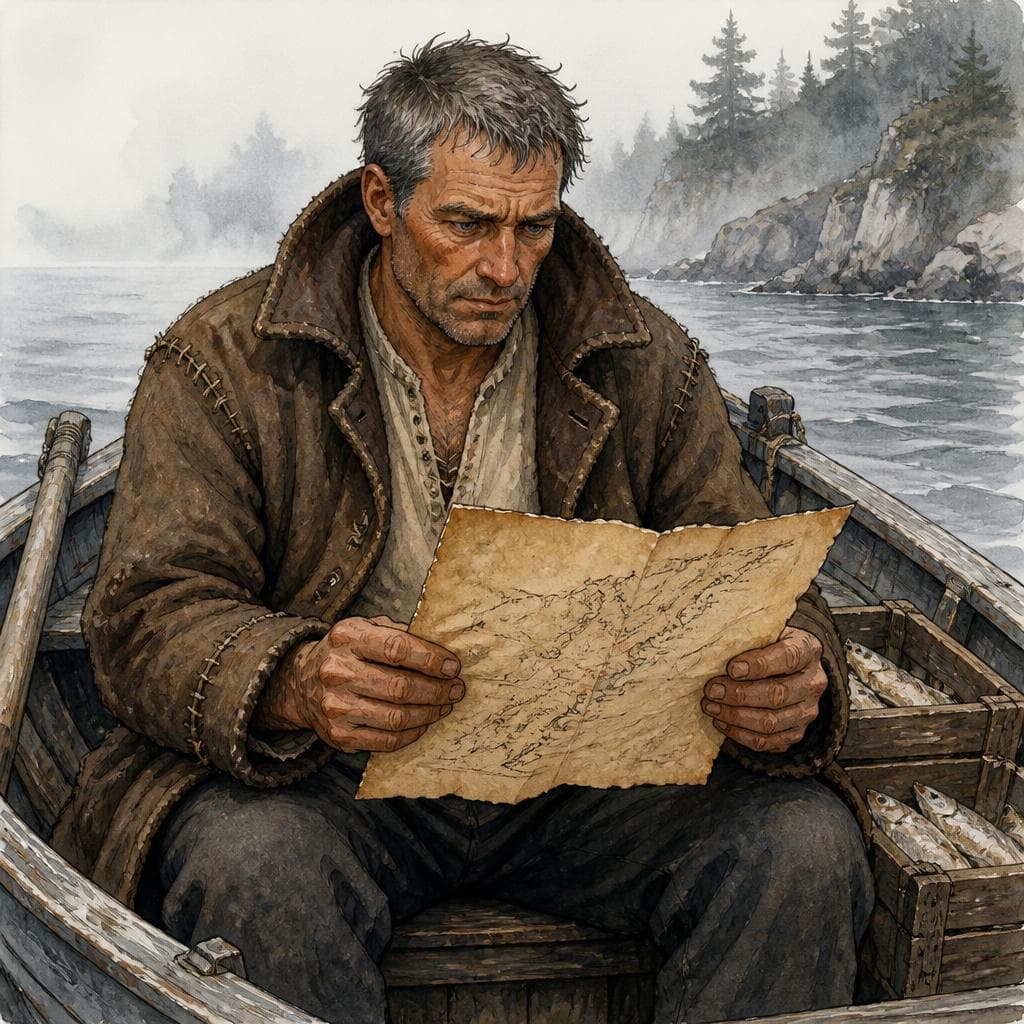
The problem was this: Thomas needed to get the map to a merchant in a small village called Rose Bay, about forty kilometres up the coast. The merchant's name was on the map, and if the authorities found the document first, that man would go to prison. Thomas had never met him, but Eckhardt had trusted him. That was enough.
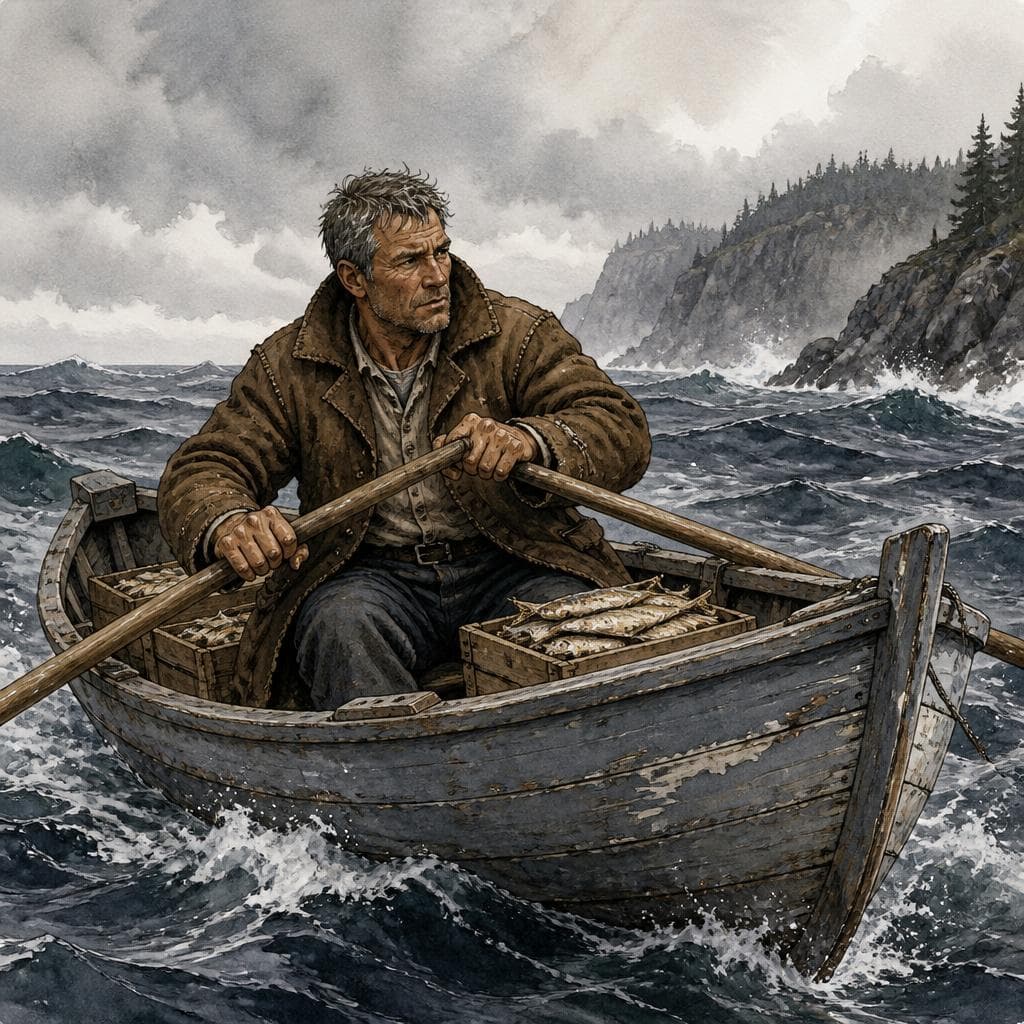
On a grey Tuesday morning in October, Thomas loaded his boat with cod and began the journey up the coast. The wind was cold and sharp. The sea was not calm, but it was manageable. He had made this trip many times before. He was just a fisherman. That was the story, and he planned to keep it simple.

He was halfway to Rose Bay when he saw the customs patrol boat.
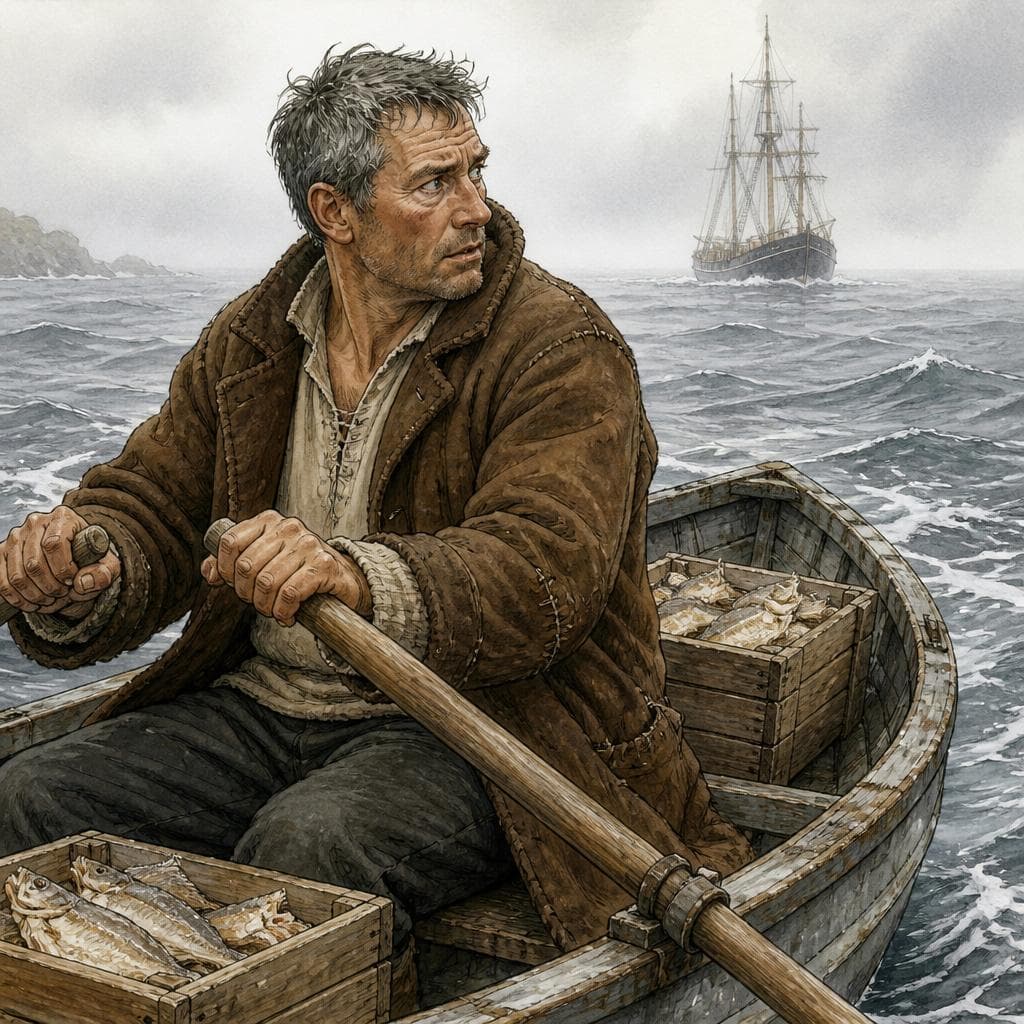
It was moving fast, cutting through the grey water directly toward him. Thomas felt his heart drop into his stomach. He forced himself to keep rowing at the same steady pace. Stopping or turning around would look suspicious. He reminded himself: you are just a fisherman. You are nobody. You have nothing.
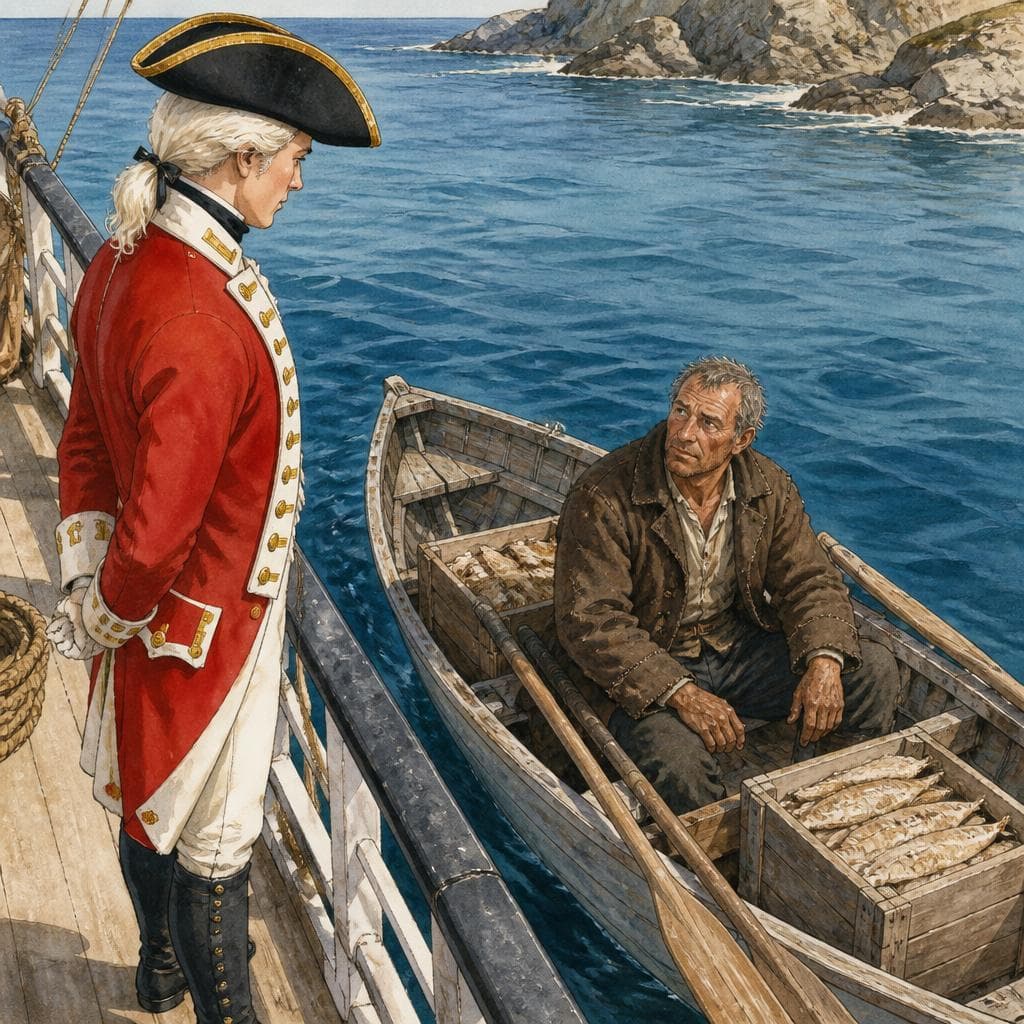
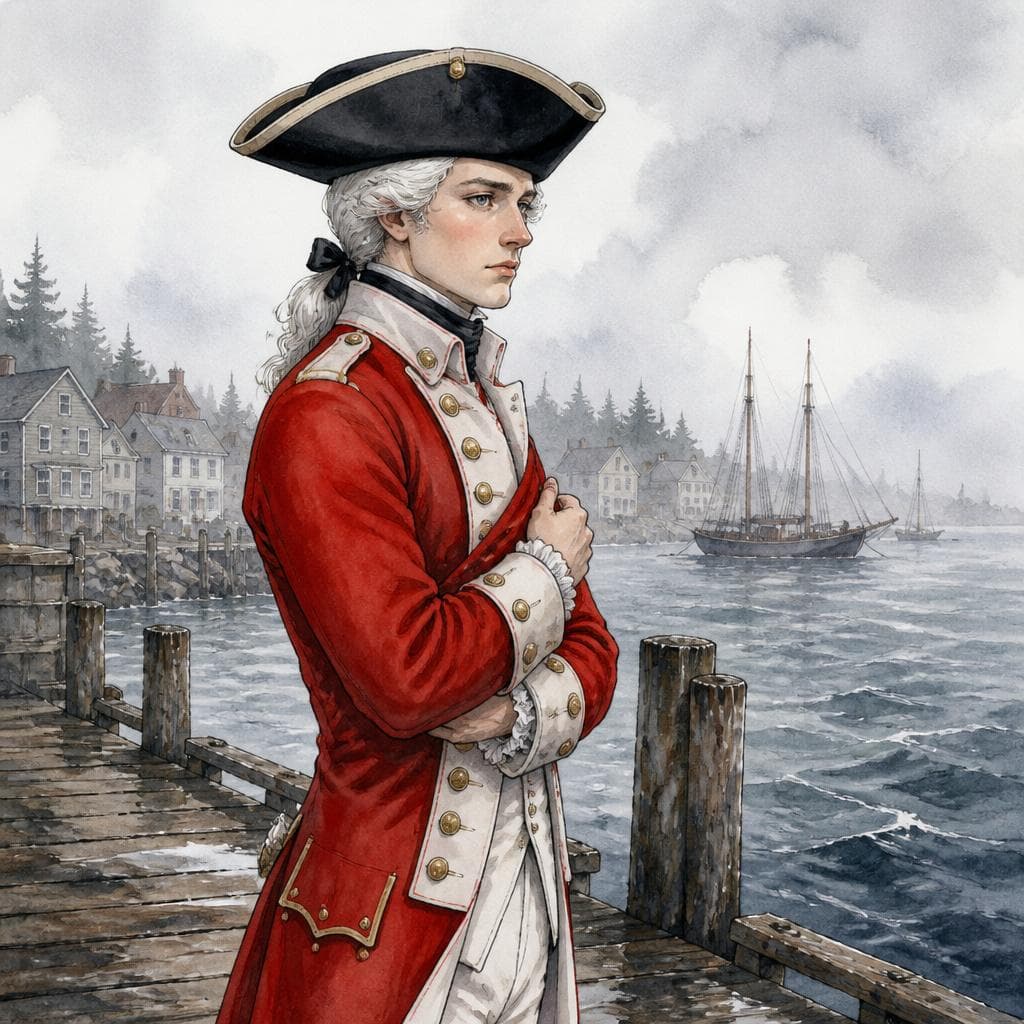
The patrol boat pulled alongside him. A young officer with a red coat and a serious face looked down at him.
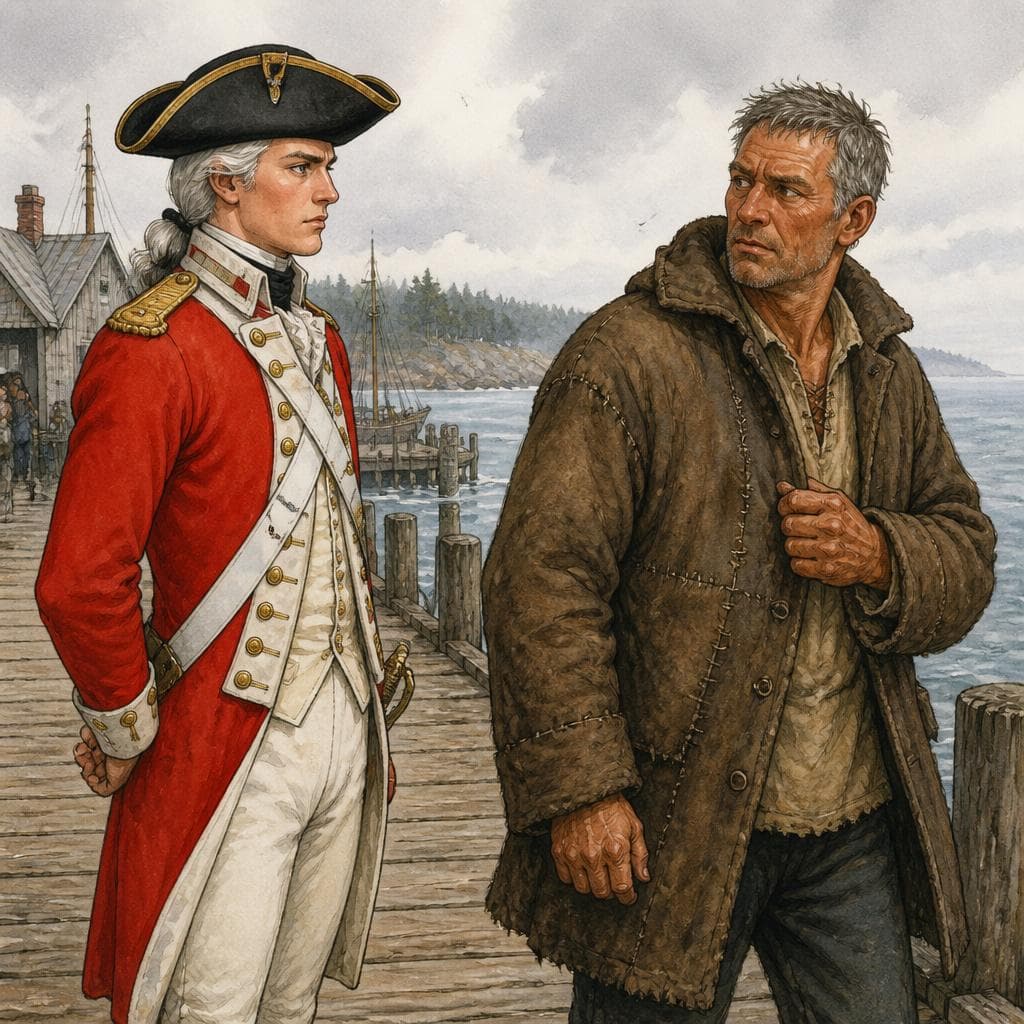
"Where are you going?" the officer asked.
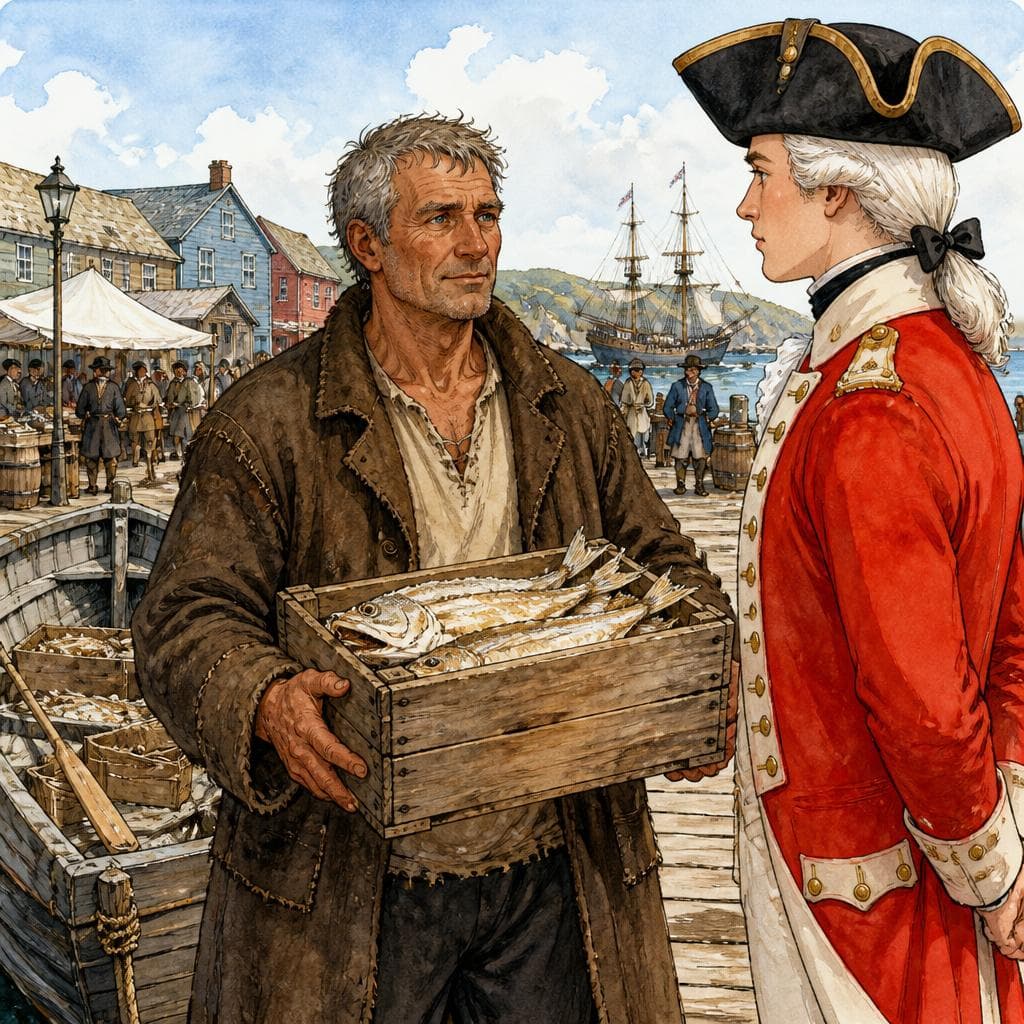
"Rose Bay," Thomas said. "Selling cod. Same as every week."
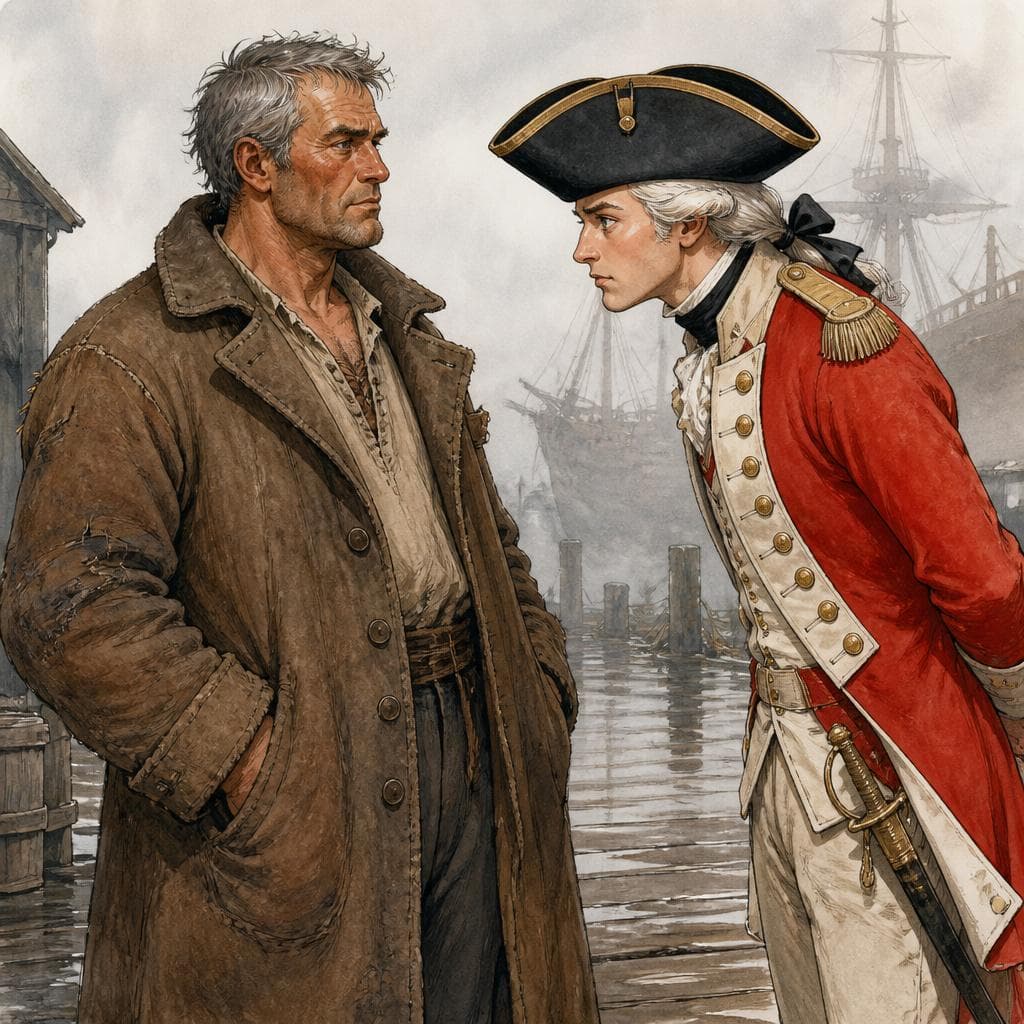
The officer studied him for a moment. His eyes moved to the coat. Thomas felt the weight of every thread in the lining.
"It's cold to be out on the water," the officer said.
"Yes," Thomas agreed. "That's why I wear the coat."
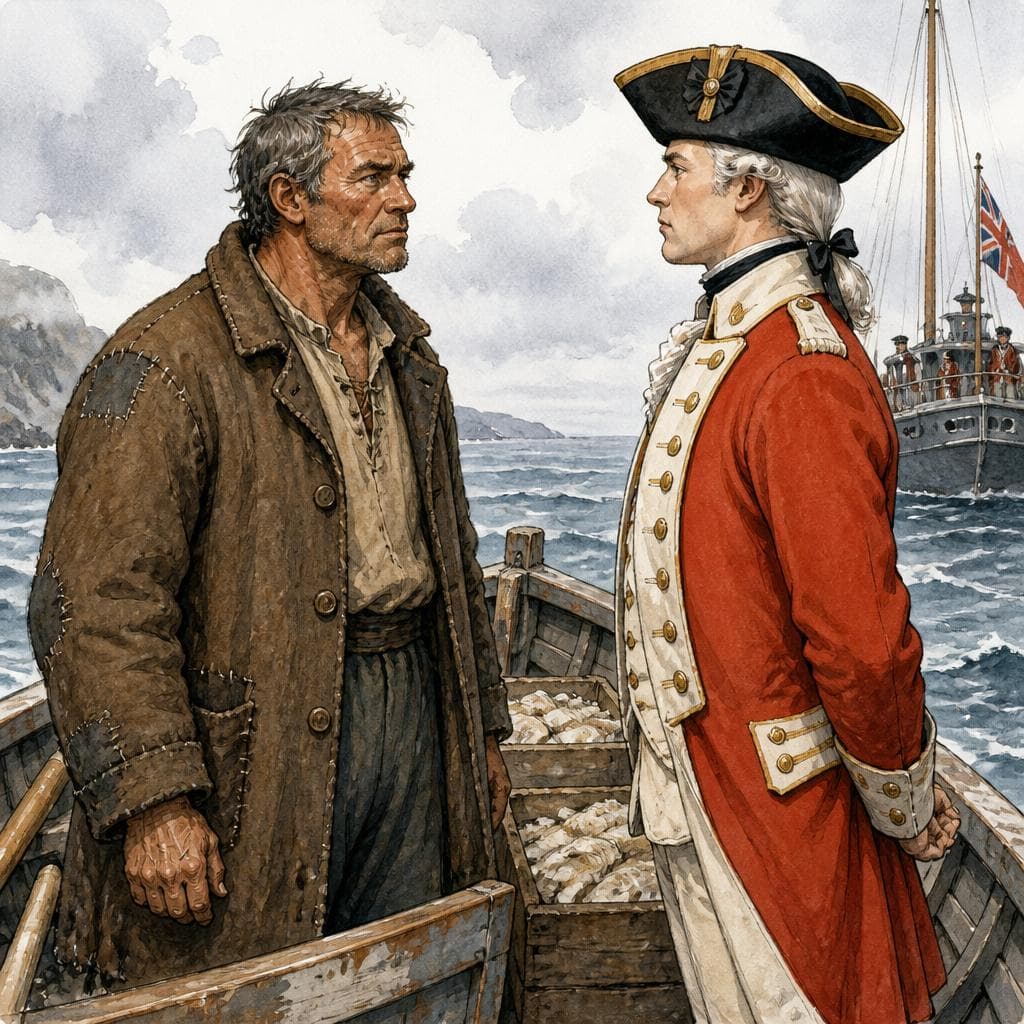
There was a long silence. The patrol boat rocked gently. A seagull cried somewhere above them. Thomas met the officer's eyes and did not look away. He was terrified, but he understood something important in that moment: looking afraid was exactly the same as looking guilty.
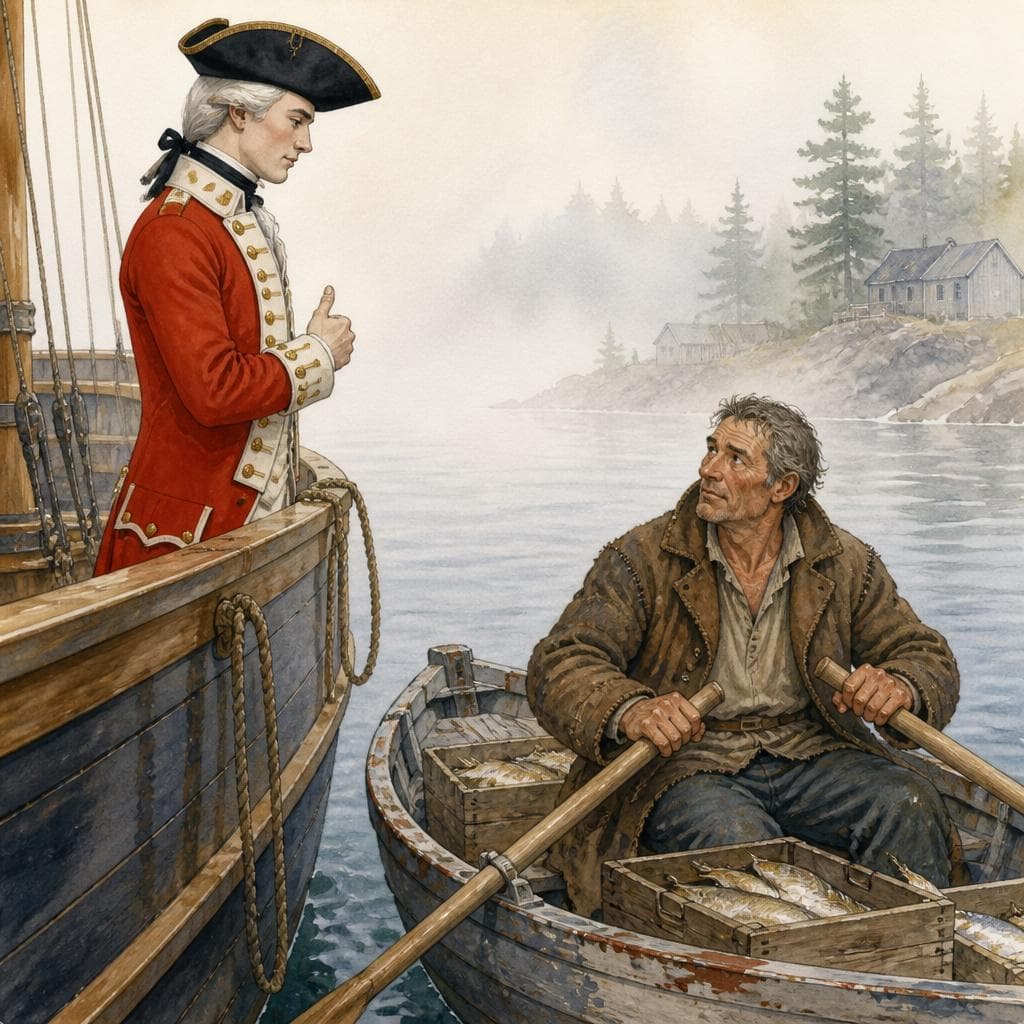
The officer nodded slowly. "Carry on," he said. And the patrol boat moved away.
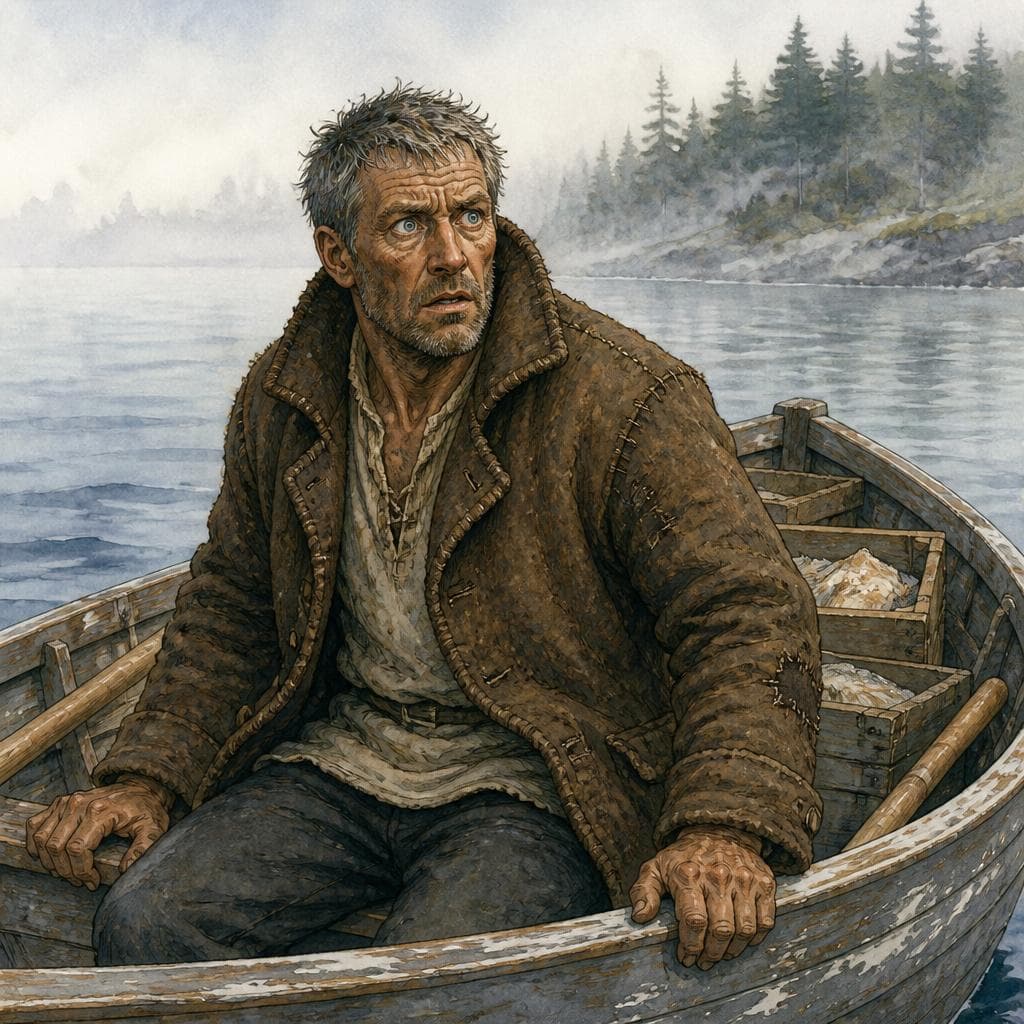
Thomas did not breathe properly for another ten minutes.
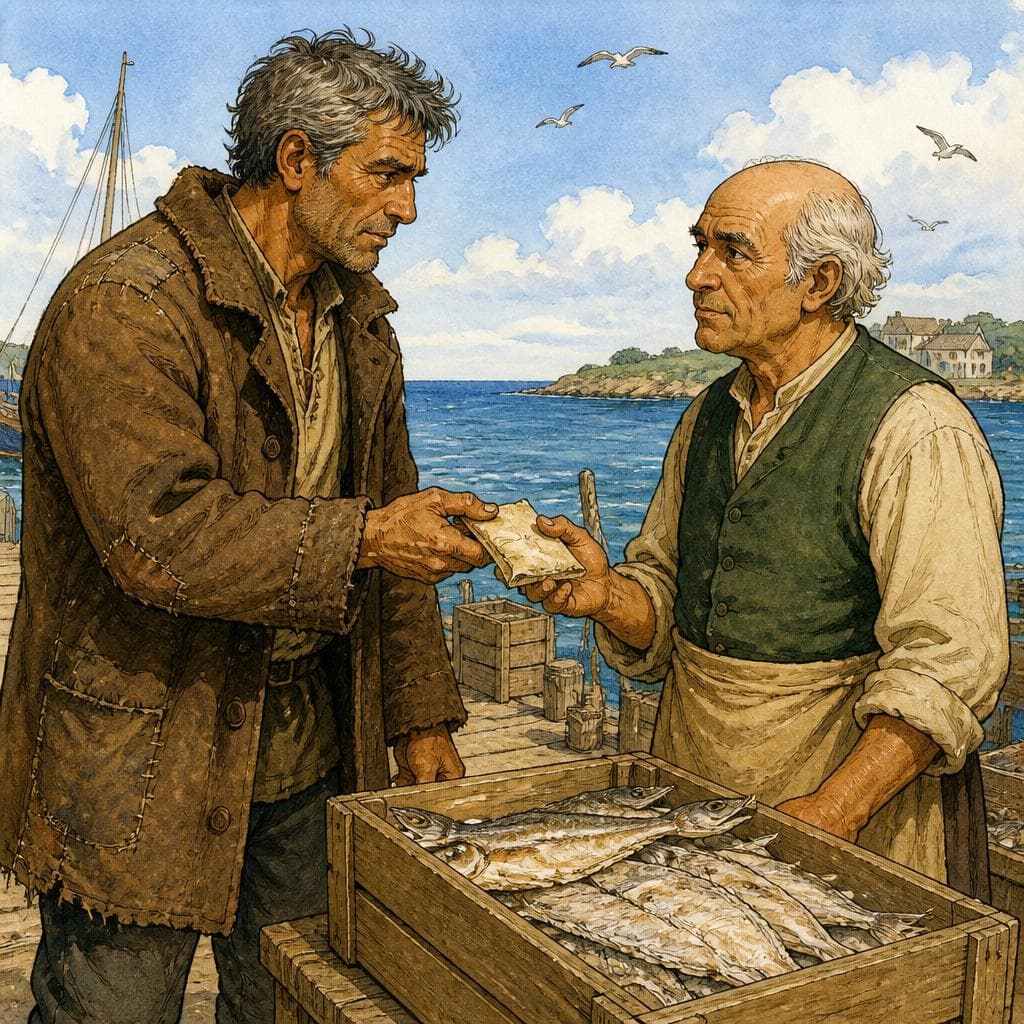
He reached Rose Bay before noon. The merchant — a quiet, older man with careful eyes — met him at the dock, pretending to inspect the fish. Thomas leaned close and, without a word, pressed a small folded package into the man's hand. The merchant slipped it into his pocket without looking at it.
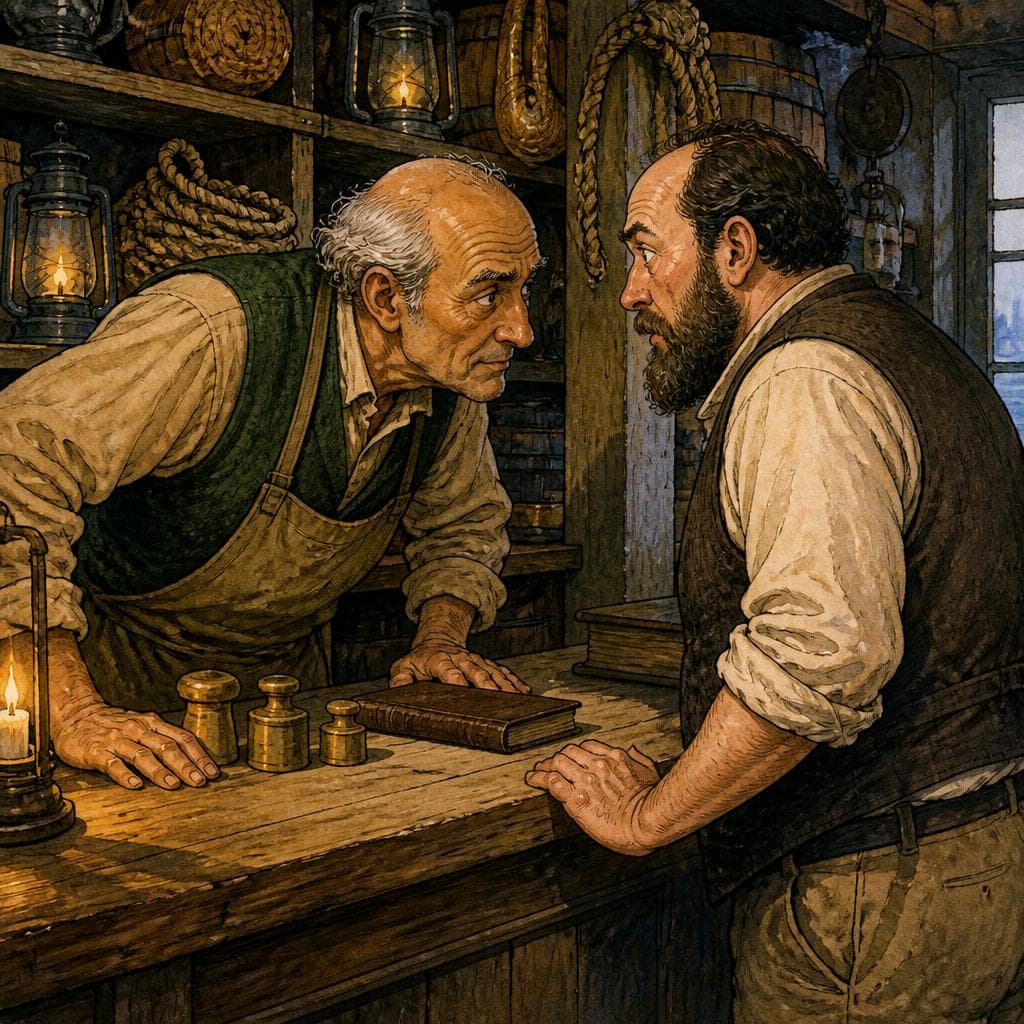
"Eckhardt?" the merchant asked quietly.
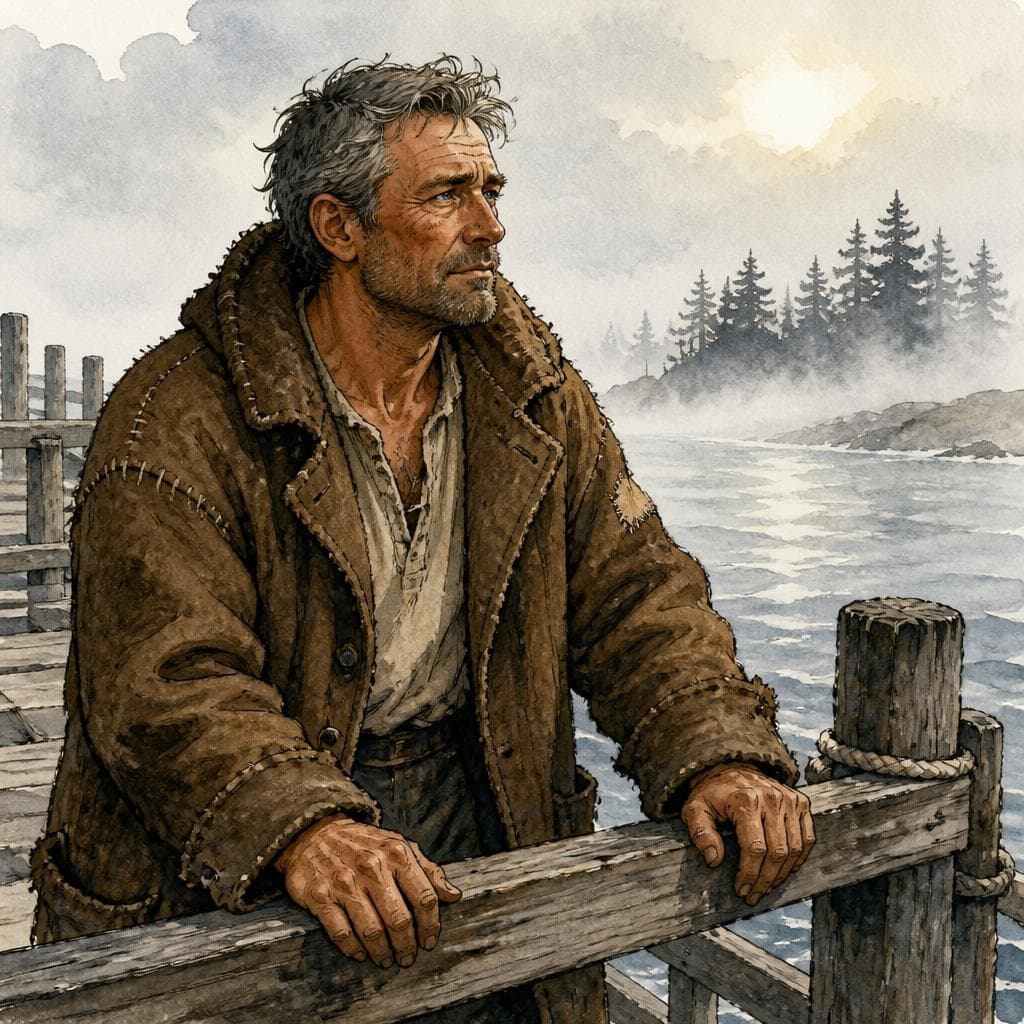
"Gone," Thomas said. "But safe, I think."
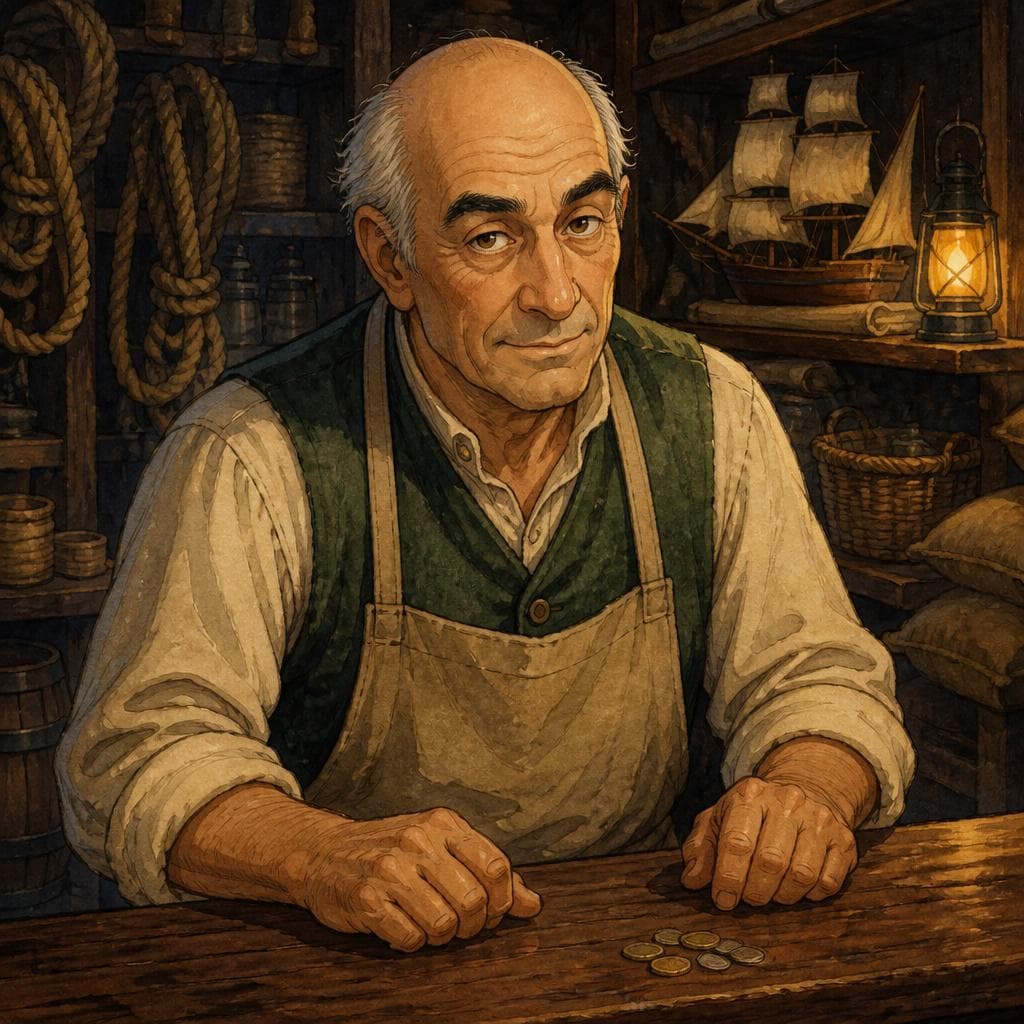
The merchant nodded once. He understood.
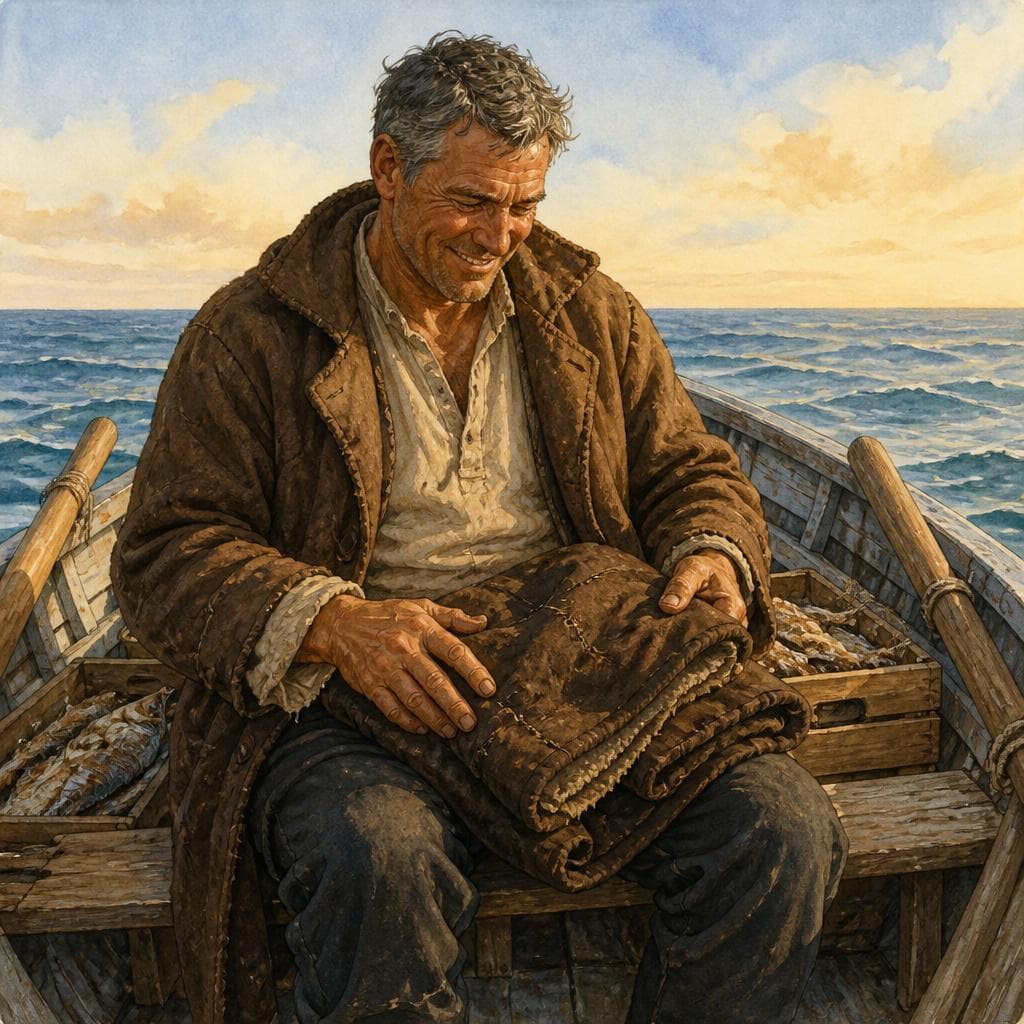
On the way home, the wind had turned warmer. Thomas finally took off the coat and folded it across his knees. Without its hidden contents, it felt like nothing at all — just old wool, just a fisherman's jacket. He almost laughed at how ordinary it seemed now.
But he did not laugh, because he was thinking about Eckhardt, and about all the names that had been written on that map, and about how many families in how many small villages depended on routes that the Crown had never bothered to understand. The smuggling was not about greed. It was about survival. And that, Thomas thought, was a distinction that probably did not matter much to the young officer in the red coat.

It mattered to him, though.
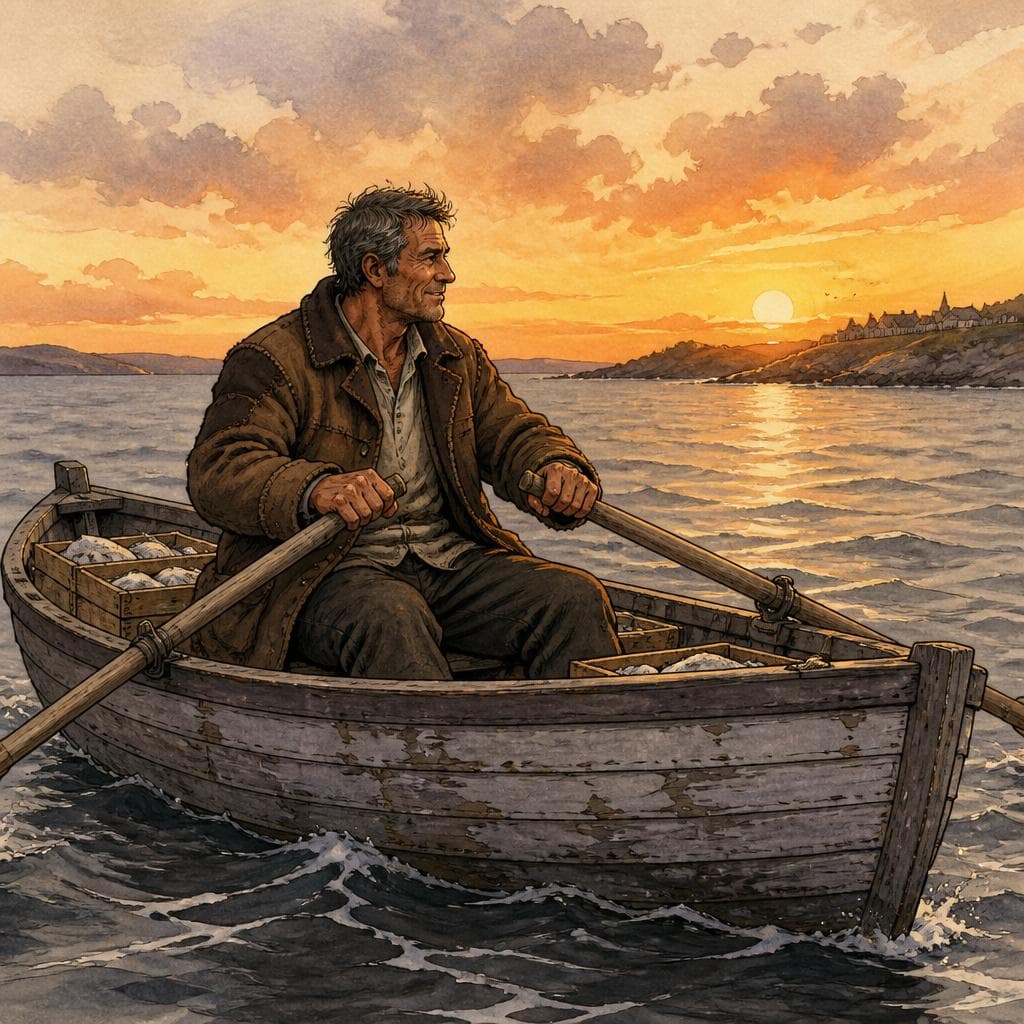
He rowed home as the sun began to set over the grey Atlantic, and for the first time in two weeks, his shoulders felt light.