Koniugacja derribar Tryb warunkowy
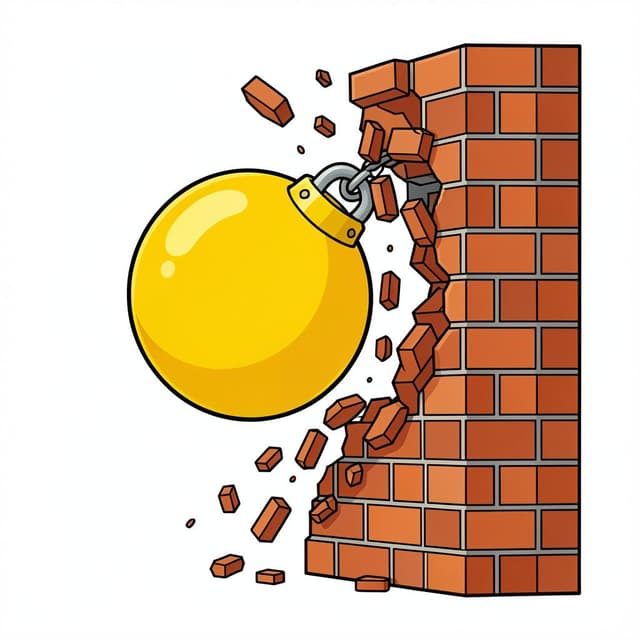
derribar — to knock down
Conditional 'derribaría' expresses hypotheticals ('would') or polite requests.
Formy derribar Tryb warunkowy
Kiedy używać Tryb warunkowy
Use the conditional for hypothetical situations ('I would knock down the wall if I had the tools'), polite requests ('Would you knock down the fence?'), or future-in-the-past ('He said he would knock it down').
Uwagi dotyczące derribar w czasie Tryb warunkowy
'Derribar' is regular in the conditional tense. The stem is the full infinitive 'derribar-'.
Przykładowe zdania
Yo derribaría esa pared si tuviera permiso.
I would knock down that wall if I had permission.
yo
¿Tú derribarías el árbol muerto?
Would you knock down the dead tree?
tú
Él derribaría el récord si entrenara más.
He would break the record if he trained more.
él/ella/usted
Nosotros derribaríamos el obstáculo juntos.
We would knock down the obstacle together.
nosotros
Częste błędy
Błąd: Using the conditional for simple future actions.
Poprawnie: Use the future tense for definite future actions: 'derribaré' instead of 'derribaría'.
Dlaczego: The conditional expresses uncertainty or hypothetical outcomes, not definite future events.
Błąd: Confusing conditional endings with future endings.
Poprawnie: Conditional endings are: -ía, -ías, -ía, -íamos, -íais, -ían. For 'derribar', it's 'derribaría', 'derribarías', etc.
Dlaczego: These endings are specific to the conditional mood and are different from the future tense endings.
Opanuj hiszpańskie czasowniki w kontekście
Zapamiętywanie tabel to dopiero początek. Przeczytaj ponad 200 ilustrowanych i udźwiękowionych hiszpańskich historii, aby zobaczyć czasowniki takie jak 'derribar' używane naturalnie — w czasach, których się uczysz.
Powiązane czasy
Czas teraźniejszy
yo: derribo
Present tense 'derribo', 'derribas', etc., describes current or habitual actions.
Czas przeszły prosty
yo: derribé
The preterite of 'derribar' is regular: derribé, derribaste, derribó, derribamos, derribasteis, derribaron.
Czas przeszły niedokonany
yo: derribaba
Imperfect 'derribaba' describes ongoing or habitual past actions.
Czas przyszły
yo: derribaré
Future tense 'derribaré', 'derribarás' etc., predicts or expresses probability.
Tryb Subj. teraźniejszy
yo: derribe
Present subjunctive (e.g., 'derribe') is used for wishes, doubts, and emotions.
Tryb Subj. przeszły niedokonany
yo: derribara
The imperfect subjunctive (e.g., 'derribara', 'derribase') expresses past hypotheticals or wishes.
Tryb rozkazujący (twierdzący)
yo: derriba
Use imperative forms like 'derriba' (tú) for direct commands with 'derribar'.
Tryb rozkazujący (przeczący)
yo: no derribes
Negative commands use 'no' + present subjunctive forms, like 'no derribes' (tú).