Koniugacja derribar Czas przeszły prosty
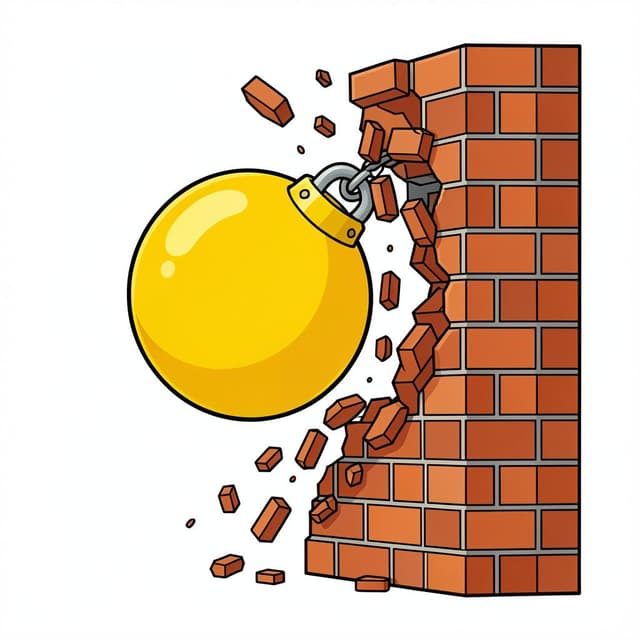
derribar — to knock down
The preterite of 'derribar' is regular: derribé, derribaste, derribó, derribamos, derribasteis, derribaron.
Formy derribar Czas przeszły prosty
Kiedy używać Czas przeszły prosty
Use the preterite for completed actions in the past. For 'derribar', it means you knocked something down at a specific point in time, like 'Derribé la pared ayer' (I knocked down the wall yesterday).
Uwagi dotyczące derribar w czasie Czas przeszły prosty
'Derribar' is a regular -ar verb and follows the standard conjugation pattern in the preterite tense.
Przykładowe zdania
Derribé el árbol caído para despejar el camino.
I knocked down the fallen tree to clear the path.
yo
Tú derribaste la puerta de una patada.
You knocked down the door with a kick.
tú
El equipo derribó la torre de naipes.
The team knocked down the card tower.
él/ella/usted
Ellos derribaron el viejo cobertizo.
They knocked down the old shed.
ellos/ellas/ustedes
Częste błędy
Błąd: Using the imperfect 'derribaba' for a single completed action.
Poprawnie: For a specific past event, use the preterite: 'Derribé' instead of 'Derribaba'.
Dlaczego: The preterite marks completed actions, while the imperfect describes ongoing or habitual past actions.
Błąd: Missing the accent on 'derribó' (él/ella/usted).
Poprawnie: The third-person singular form needs an accent: 'derribó'.
Dlaczego: The accent on the final 'ó' is crucial for distinguishing this form and indicating the stressed syllable.
Opanuj hiszpańskie czasowniki w kontekście
Zapamiętywanie tabel to dopiero początek. Przeczytaj ponad 200 ilustrowanych i udźwiękowionych hiszpańskich historii, aby zobaczyć czasowniki takie jak 'derribar' używane naturalnie — w czasach, których się uczysz.
Powiązane czasy
Czas teraźniejszy
yo: derribo
Present tense 'derribo', 'derribas', etc., describes current or habitual actions.
Czas przeszły niedokonany
yo: derribaba
Imperfect 'derribaba' describes ongoing or habitual past actions.
Czas przyszły
yo: derribaré
Future tense 'derribaré', 'derribarás' etc., predicts or expresses probability.
Tryb warunkowy
yo: derribaría
Conditional 'derribaría' expresses hypotheticals ('would') or polite requests.
Tryb Subj. teraźniejszy
yo: derribe
Present subjunctive (e.g., 'derribe') is used for wishes, doubts, and emotions.
Tryb Subj. przeszły niedokonany
yo: derribara
The imperfect subjunctive (e.g., 'derribara', 'derribase') expresses past hypotheticals or wishes.
Tryb rozkazujący (twierdzący)
yo: derriba
Use imperative forms like 'derriba' (tú) for direct commands with 'derribar'.
Tryb rozkazujący (przeczący)
yo: no derribes
Negative commands use 'no' + present subjunctive forms, like 'no derribes' (tú).