Koniugacja derribar Tryb rozkazujący (twierdzący)
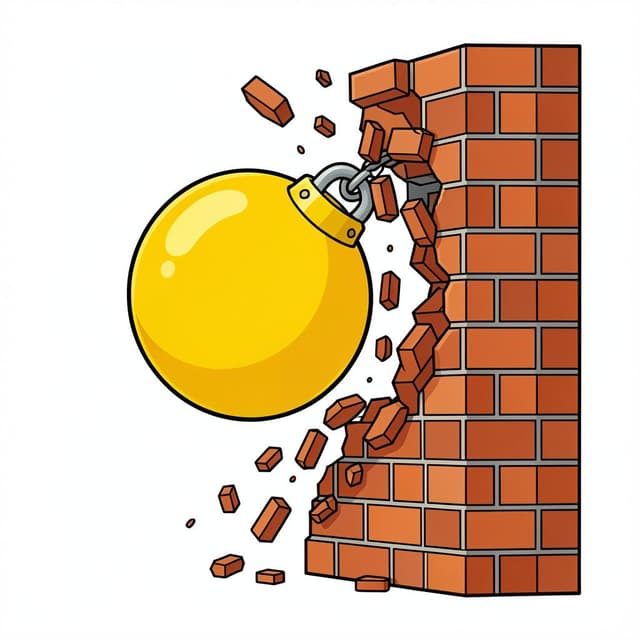
derribar — to knock down
Use imperative forms like 'derriba' (tú) for direct commands with 'derribar'.
Formy derribar Tryb rozkazujący (twierdzący)
Kiedy używać Tryb rozkazujący (twierdzący)
The imperative mood is for giving direct commands or instructions. For 'derribar', you'd use it to tell someone to knock something down, like '¡Derriba esa pared!' (Knock down that wall!).
Uwagi dotyczące derribar w czasie Tryb rozkazujący (twierdzący)
The verb 'derribar' is regular in the affirmative imperative, except for the 'vosotros' form which is formed by replacing the '-ar' with '-ad'.
Przykładowe zdania
¡Derriba la torre de bloques!
Knock down the block tower!
tú
Derribad los obstáculos del camino.
Knock down the obstacles in the path.
vosotros
Derriben esa estructura vieja.
Knock down that old structure.
ustedes
Częste błędy
Błąd: Using the present indicative 'derribas' for a command.
Poprawnie: For a direct command to 'tú', use 'derriba'.
Dlaczego: The imperative mood has unique forms for commands, distinct from the indicative.
Błąd: Forgetting the 'd' in the vosotros form.
Poprawnie: The correct form for 'vosotros' is 'derribad'.
Dlaczego: The '-ad' ending is standard for regular -ar verbs in the affirmative vosotros imperative.
Opanuj hiszpańskie czasowniki w kontekście
Zapamiętywanie tabel to dopiero początek. Przeczytaj ponad 200 ilustrowanych i udźwiękowionych hiszpańskich historii, aby zobaczyć czasowniki takie jak 'derribar' używane naturalnie — w czasach, których się uczysz.
Powiązane czasy
Czas teraźniejszy
yo: derribo
Present tense 'derribo', 'derribas', etc., describes current or habitual actions.
Czas przeszły prosty
yo: derribé
The preterite of 'derribar' is regular: derribé, derribaste, derribó, derribamos, derribasteis, derribaron.
Czas przeszły niedokonany
yo: derribaba
Imperfect 'derribaba' describes ongoing or habitual past actions.
Czas przyszły
yo: derribaré
Future tense 'derribaré', 'derribarás' etc., predicts or expresses probability.
Tryb warunkowy
yo: derribaría
Conditional 'derribaría' expresses hypotheticals ('would') or polite requests.
Tryb Subj. teraźniejszy
yo: derribe
Present subjunctive (e.g., 'derribe') is used for wishes, doubts, and emotions.
Tryb Subj. przeszły niedokonany
yo: derribara
The imperfect subjunctive (e.g., 'derribara', 'derribase') expresses past hypotheticals or wishes.
Tryb rozkazujący (przeczący)
yo: no derribes
Negative commands use 'no' + present subjunctive forms, like 'no derribes' (tú).