Koniugacja derribar Tryb Subj. przeszły niedokonany
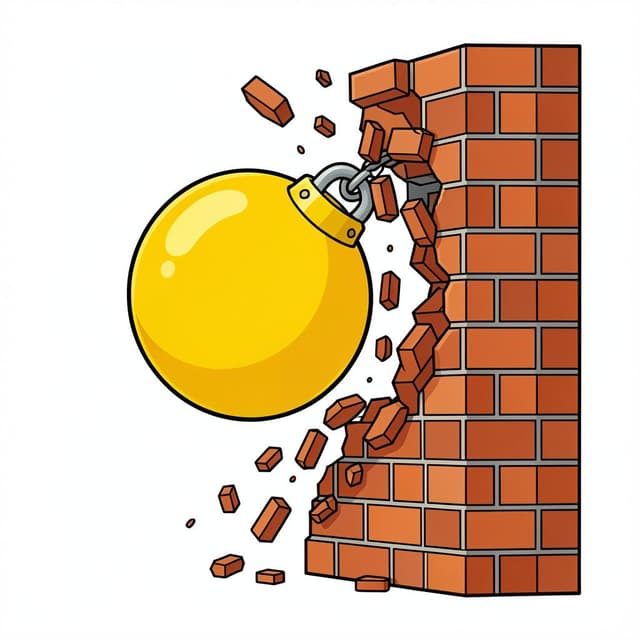
derribar — to knock down
The imperfect subjunctive (e.g., 'derribara', 'derribase') expresses past hypotheticals or wishes.
Formy derribar Tryb Subj. przeszły niedokonany
Kiedy używać Tryb Subj. przeszły niedokonany
This tense is great for talking about hypothetical situations in the past, like 'If I had knocked down the wall...' or expressing wishes that were unlikely or contrary to past fact: 'I wish he would have knocked it down.'
Uwagi dotyczące derribar w czasie Tryb Subj. przeszły niedokonany
'Derribar' is regular in the imperfect subjunctive, both in the '-ra' and '-se' forms. For example, 'derribara' and 'derribase' are both correct.
Przykładowe zdania
Si yo derribara la casa, ¿qué harías?
If I were to knock down the house, what would you do?
yo
Ojalá él derribase el muro antes de que llegáramos.
I wish he would have knocked down the wall before we arrived.
él/ella/usted
Era importante que ustedes derribaran la torre vieja.
It was important that you (plural) knocked down the old tower.
ellos/ellas/ustedes
Częste błędy
Błąd: Using the imperfect indicative instead of imperfect subjunctive.
Poprawnie: For hypotheticals or wishes about the past, use 'derribara' or 'derribase', not 'derribaba'.
Dlaczego: The indicative describes facts or reality, while the subjunctive handles doubt, emotion, and hypotheticals.
Błąd: Forgetting the accent on the '-ra' forms.
Poprawnie: Forms like 'derribara' need the accent on the 'a' for clarity, though it's often omitted in casual speech.
Dlaczego: The accent helps distinguish the imperfect subjunctive from other verb forms and indicates stress.
Opanuj hiszpańskie czasowniki w kontekście
Zapamiętywanie tabel to dopiero początek. Przeczytaj ponad 200 ilustrowanych i udźwiękowionych hiszpańskich historii, aby zobaczyć czasowniki takie jak 'derribar' używane naturalnie — w czasach, których się uczysz.
Powiązane czasy
Czas teraźniejszy
yo: derribo
Present tense 'derribo', 'derribas', etc., describes current or habitual actions.
Czas przeszły prosty
yo: derribé
The preterite of 'derribar' is regular: derribé, derribaste, derribó, derribamos, derribasteis, derribaron.
Czas przeszły niedokonany
yo: derribaba
Imperfect 'derribaba' describes ongoing or habitual past actions.
Czas przyszły
yo: derribaré
Future tense 'derribaré', 'derribarás' etc., predicts or expresses probability.
Tryb warunkowy
yo: derribaría
Conditional 'derribaría' expresses hypotheticals ('would') or polite requests.
Tryb Subj. teraźniejszy
yo: derribe
Present subjunctive (e.g., 'derribe') is used for wishes, doubts, and emotions.
Tryb rozkazujący (twierdzący)
yo: derriba
Use imperative forms like 'derriba' (tú) for direct commands with 'derribar'.
Tryb rozkazujący (przeczący)
yo: no derribes
Negative commands use 'no' + present subjunctive forms, like 'no derribes' (tú).