Koniugacja empujar Tryb warunkowy
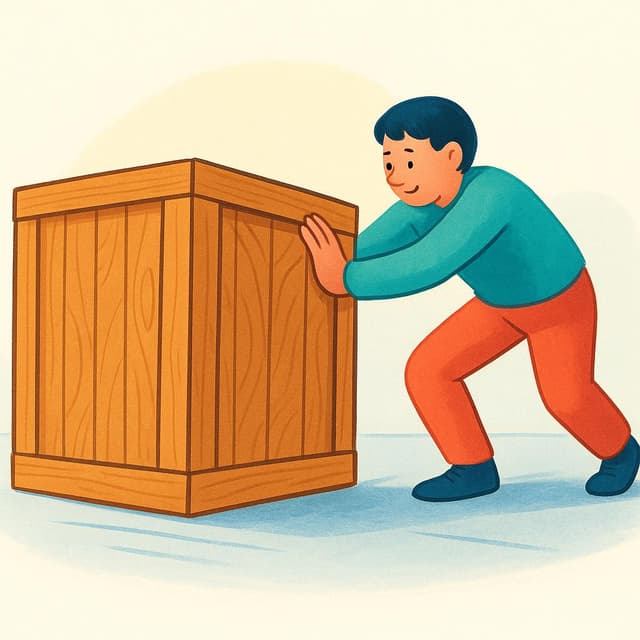
empujar — to push
The conditional of empujar is regular: empujaría, empujarías, empujaría, empujaríamos, empujaríais, empujarían.
Formy empujar Tryb warunkowy
Kiedy używać Tryb warunkowy
Use the conditional for hypothetical situations ('I would push'), polite requests ('Would you push this?'), or to express future actions from a past perspective ('He said he would push it'). For 'empujar', you might say 'Yo empujaría la puerta si no estuviera cerrada' (I would push the door if it weren't closed).
Uwagi dotyczące empujar w czasie Tryb warunkowy
Empujar is regular in the conditional tense. The stem is the infinitive 'empujar', and you add the conditional endings (-ía, -ías, -ía, -íamos, -íais, -ían).
Przykładowe zdania
Yo empujaría la carretilla si tuviera más fuerza.
I would push the wheelbarrow if I had more strength.
yo
¿Tú empujarías el sofá para hacer espacio?
Would you push the sofa to make space?
tú
Él dijo que empujaría la mesa.
He said he would push the table.
él/ella/usted
Nosotros empujaríamos la puerta juntos.
We would push the door together.
nosotros
Vosotros empujaríais la carretilla más rápido.
You (plural, informal) would push the cart faster.
vosotros
Ellos empujarían el coche si supieran cómo.
They would push the car if they knew how.
ellos/ellas/ustedes
Częste błędy
Błąd: Confusing conditional with future tense.
Poprawnie: Use 'empujaría' (conditional) for 'would push' and 'empujaré' (future) for 'will push'.
Dlaczego: The conditional expresses hypothetical or polite actions, while the future expresses certainty about future events.
Błąd: Forgetting the accent on the conditional endings.
Poprawnie: The endings all have an accent: -ía, -ías, -ía, -íamos, -íais, -ían.
Dlaczego: The accent is crucial for pronunciation and distinguishes the conditional tense.
Opanuj hiszpańskie czasowniki w kontekście
Zapamiętywanie tabel to dopiero początek. Przeczytaj ponad 200 ilustrowanych i udźwiękowionych hiszpańskich historii, aby zobaczyć czasowniki takie jak 'empujar' używane naturalnie — w czasach, których się uczysz.
Powiązane czasy
Czas teraźniejszy
yo: empujo
The present tense of empujar is regular: empujo, empujas, empuja, empujamos, empujáis, empujan.
Czas przeszły prosty
yo: empujé
The preterite of empujar is regular: empujé, empujaste, empujó, empujamos, empujasteis, empujaron.
Czas przeszły niedokonany
yo: empujaba
The imperfect of empujar is regular: empujaba, empujabas, empujaba, empujábamos, empujabais, empujaban.
Czas przyszły
yo: empujaré
The future tense of empujar is regular: empujaré, empujarás, empujará, empujaremos, empujaréis, empujarán.
Tryb Subj. teraźniejszy
yo: empuje
Present subjunctive of empujar (empuje, empujes, empuje, empujemos, empujen, empujéis) is used for wishes, doubts, and emotions.
Tryb Subj. przeszły niedokonany
yo: empujara
The imperfect subjunctive of empujar (empujara/empujase) is used for past hypotheticals or wishes.
Tryb rozkazujący (twierdzący)
yo: empuja
Imperative commands for empujar: empuja (tú), empuje (usted), empujemos (nosotros), empujen (ustedes), empujad (vosotros).
Tryb rozkazujący (przeczący)
yo: no empujes
Negative imperative for empujar: no empujes (tú), no empuje (usted), no empujemos (nosotros), no empujen (ustedes), no empujéis (vosotros).