Koniugacja empujar Tryb rozkazujący (przeczący)
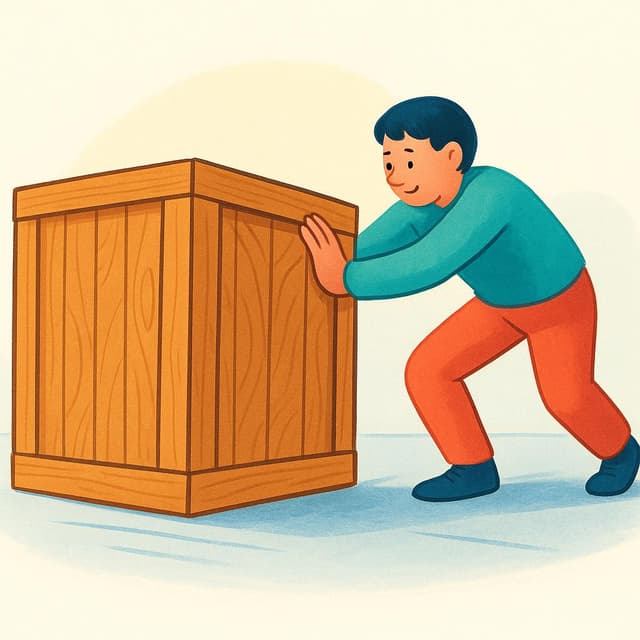
empujar — to push
Negative imperative for empujar: no empujes (tú), no empuje (usted), no empujemos (nosotros), no empujen (ustedes), no empujéis (vosotros).
Formy empujar Tryb rozkazujący (przeczący)
Kiedy używać Tryb rozkazujący (przeczący)
Use the negative imperative to tell someone *not* to do something. For 'empujar', it's like saying 'Don't push!' For example, 'No empujes al niño' (Don't push the child).
Uwagi dotyczące empujar w czasie Tryb rozkazujący (przeczący)
Empujar is regular in the negative imperative, which is formed using the present subjunctive. The 'vosotros' form 'no empujéis' is unique to this pronoun.
Przykładowe zdania
No empujes la puerta, está cerrada.
Don't push the door, it's closed.
tú
Por favor, no empuje el botón a menos que sea necesario.
Please, don't push the button unless it's necessary.
usted
No empujemos la discusión más allá.
Let's not push the argument further.
nosotros
¡No empujen la barrera!
Don't push the barrier!
No empujéis la mesa con fuerza.
Don't push the table hard.
vosotros
Częste błędy
Błąd: Using the affirmative imperative with 'no'.
Poprawnie: Use 'No empujes' (subjunctive) instead of 'No empuja' (affirmative imperative).
Dlaczego: Spanish negative commands always use the subjunctive mood.
Błąd: Confusing tú and usted negative commands.
Poprawnie: Remember 'No empujes' for tú and 'No empuje' for usted.
Dlaczego: These forms come from different present subjunctive conjugations.
Opanuj hiszpańskie czasowniki w kontekście
Zapamiętywanie tabel to dopiero początek. Przeczytaj ponad 200 ilustrowanych i udźwiękowionych hiszpańskich historii, aby zobaczyć czasowniki takie jak 'empujar' używane naturalnie — w czasach, których się uczysz.
Powiązane czasy
Czas teraźniejszy
yo: empujo
The present tense of empujar is regular: empujo, empujas, empuja, empujamos, empujáis, empujan.
Czas przeszły prosty
yo: empujé
The preterite of empujar is regular: empujé, empujaste, empujó, empujamos, empujasteis, empujaron.
Czas przeszły niedokonany
yo: empujaba
The imperfect of empujar is regular: empujaba, empujabas, empujaba, empujábamos, empujabais, empujaban.
Czas przyszły
yo: empujaré
The future tense of empujar is regular: empujaré, empujarás, empujará, empujaremos, empujaréis, empujarán.
Tryb warunkowy
yo: empujaría
The conditional of empujar is regular: empujaría, empujarías, empujaría, empujaríamos, empujaríais, empujarían.
Tryb Subj. teraźniejszy
yo: empuje
Present subjunctive of empujar (empuje, empujes, empuje, empujemos, empujen, empujéis) is used for wishes, doubts, and emotions.
Tryb Subj. przeszły niedokonany
yo: empujara
The imperfect subjunctive of empujar (empujara/empujase) is used for past hypotheticals or wishes.
Tryb rozkazujący (twierdzący)
yo: empuja
Imperative commands for empujar: empuja (tú), empuje (usted), empujemos (nosotros), empujen (ustedes), empujad (vosotros).