Koniugacja empujar Czas przyszły
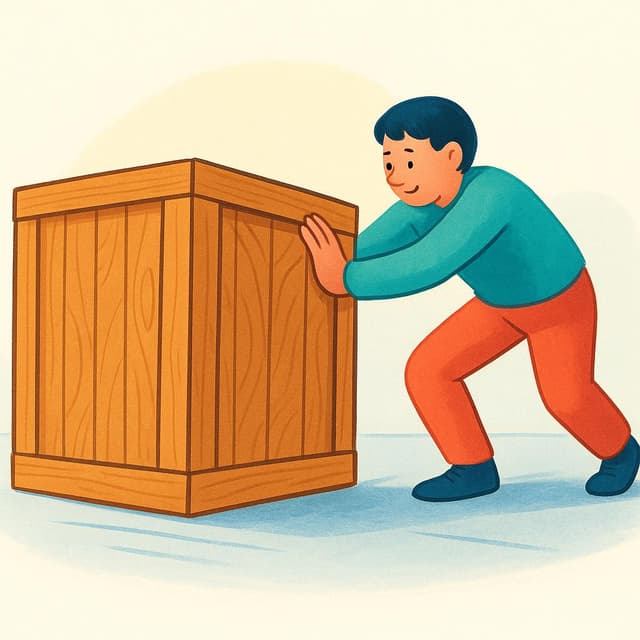
empujar — to push
The future tense of empujar is regular: empujaré, empujarás, empujará, empujaremos, empujaréis, empujarán.
Formy empujar Czas przyszły
Kiedy używać Czas przyszły
Use the future tense to talk about actions that will definitely happen. 'Mañana empujaré la caja' (Tomorrow I will push the box). It can also express probability or conjecture about the present: '¿Empujará ahora?' (Will he push it now? / Is he pushing it now?).
Uwagi dotyczące empujar w czasie Czas przyszły
Empujar is regular in the future tense. The future stem is the infinitive 'empujar', and you add the standard future endings (-é, -ás, -á, -emos, -éis, -án).
Przykładowe zdania
Yo empujaré la puerta para que entre aire fresco.
I will push the door so fresh air comes in.
yo
¿Tú empujarás el mueble pesado?
Will you push the heavy furniture?
tú
Ella empujará el coche hasta el garaje.
She will push the car to the garage.
él/ella/usted
Nosotros empujaremos la valla para abrir el paso.
We will push the fence to open the way.
nosotros
Vosotros empujaréis la carpa para montarla.
You (plural, informal) will push the tent poles to set it up.
vosotros
Ellos empujarán la carreta con cuidado.
They will push the cart carefully.
ellos/ellas/ustedes
Częste błędy
Błąd: Using the present tense instead of the future for future actions.
Poprawnie: Use 'empujaré' for a future action, not 'empujo'.
Dlaczego: While Spanish sometimes uses the present for near future, the dedicated future tense is clearer for planned or distant future events.
Błąd: Confusing future endings with present tense endings.
Poprawnie: The future endings are -é, -ás, -á, -emos, -éis, -án, added to the infinitive stem.
Dlaczego: These endings are distinct from present tense endings and are essential for forming the future tense correctly.
Opanuj hiszpańskie czasowniki w kontekście
Zapamiętywanie tabel to dopiero początek. Przeczytaj ponad 200 ilustrowanych i udźwiękowionych hiszpańskich historii, aby zobaczyć czasowniki takie jak 'empujar' używane naturalnie — w czasach, których się uczysz.
Powiązane czasy
Czas teraźniejszy
yo: empujo
The present tense of empujar is regular: empujo, empujas, empuja, empujamos, empujáis, empujan.
Czas przeszły prosty
yo: empujé
The preterite of empujar is regular: empujé, empujaste, empujó, empujamos, empujasteis, empujaron.
Czas przeszły niedokonany
yo: empujaba
The imperfect of empujar is regular: empujaba, empujabas, empujaba, empujábamos, empujabais, empujaban.
Tryb warunkowy
yo: empujaría
The conditional of empujar is regular: empujaría, empujarías, empujaría, empujaríamos, empujaríais, empujarían.
Tryb Subj. teraźniejszy
yo: empuje
Present subjunctive of empujar (empuje, empujes, empuje, empujemos, empujen, empujéis) is used for wishes, doubts, and emotions.
Tryb Subj. przeszły niedokonany
yo: empujara
The imperfect subjunctive of empujar (empujara/empujase) is used for past hypotheticals or wishes.
Tryb rozkazujący (twierdzący)
yo: empuja
Imperative commands for empujar: empuja (tú), empuje (usted), empujemos (nosotros), empujen (ustedes), empujad (vosotros).
Tryb rozkazujący (przeczący)
yo: no empujes
Negative imperative for empujar: no empujes (tú), no empuje (usted), no empujemos (nosotros), no empujen (ustedes), no empujéis (vosotros).