Koniugacja empujar Czas przeszły niedokonany
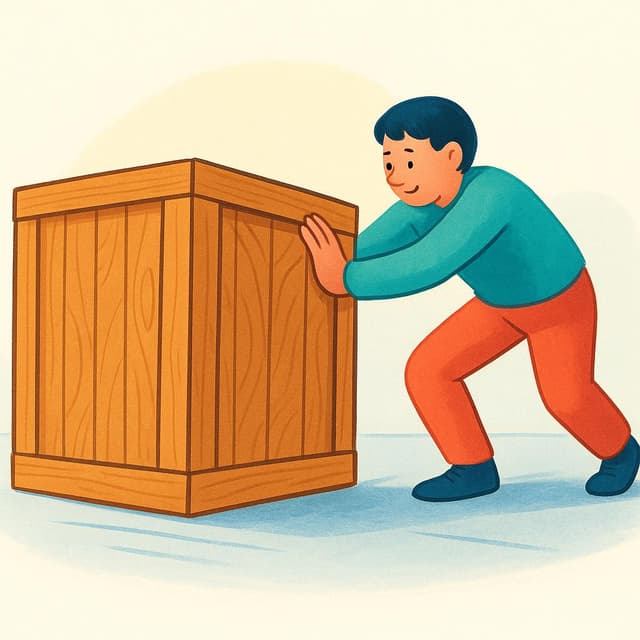
empujar — to push
The imperfect of empujar is regular: empujaba, empujabas, empujaba, empujábamos, empujabais, empujaban.
Formy empujar Czas przeszły niedokonany
Kiedy używać Czas przeszły niedokonany
Use the imperfect tense for ongoing actions in the past, habitual actions, or descriptions. For example, 'Cuando era niño, empujaba mi coche de juguete' (When I was a child, I used to push my toy car) or 'La puerta se empujaba con dificultad' (The door pushed with difficulty - describing the state).
Uwagi dotyczące empujar w czasie Czas przeszły niedokonany
Empujar is regular in the imperfect tense. All forms follow the standard -ar imperfect conjugation pattern.
Przykładowe zdania
Yo empujaba la puerta todos los días al salir.
I used to push the door every day when leaving.
yo
Tú empujabas el carrito sin quejarte.
You used to push the cart without complaining.
tú
Él empujaba la silla hacia la ventana.
He was pushing the chair towards the window.
él/ella/usted
Nosotros empujábamos el balón en el campo.
We were pushing the ball on the field.
nosotros
Vosotros empujabais la puerta con cuidado.
You (plural, informal) used to push the door carefully.
vosotros
Ellos empujaban la carreta cuesta arriba.
They were pushing the cart uphill.
ellos/ellas/ustedes
Częste błędy
Błąd: Using the preterite for ongoing or habitual past actions.
Poprawnie: Use 'empujaba' (imperfect) for habitual actions like 'Siempre empujaba la puerta', not 'empujé'.
Dlaczego: The imperfect describes continuous or repeated actions in the past, while the preterite describes completed ones.
Błąd: Confusing the imperfect nosotros form with the preterite.
Poprawnie: The imperfect is 'empujábamos' (with accent on á), while the preterite is 'empujamos' (no accent).
Dlaczego: The accent and ending clearly differentiate the two tenses for the 'nosotros' form.
Opanuj hiszpańskie czasowniki w kontekście
Zapamiętywanie tabel to dopiero początek. Przeczytaj ponad 200 ilustrowanych i udźwiękowionych hiszpańskich historii, aby zobaczyć czasowniki takie jak 'empujar' używane naturalnie — w czasach, których się uczysz.
Powiązane czasy
Czas teraźniejszy
yo: empujo
The present tense of empujar is regular: empujo, empujas, empuja, empujamos, empujáis, empujan.
Czas przeszły prosty
yo: empujé
The preterite of empujar is regular: empujé, empujaste, empujó, empujamos, empujasteis, empujaron.
Czas przyszły
yo: empujaré
The future tense of empujar is regular: empujaré, empujarás, empujará, empujaremos, empujaréis, empujarán.
Tryb warunkowy
yo: empujaría
The conditional of empujar is regular: empujaría, empujarías, empujaría, empujaríamos, empujaríais, empujarían.
Tryb Subj. teraźniejszy
yo: empuje
Present subjunctive of empujar (empuje, empujes, empuje, empujemos, empujen, empujéis) is used for wishes, doubts, and emotions.
Tryb Subj. przeszły niedokonany
yo: empujara
The imperfect subjunctive of empujar (empujara/empujase) is used for past hypotheticals or wishes.
Tryb rozkazujący (twierdzący)
yo: empuja
Imperative commands for empujar: empuja (tú), empuje (usted), empujemos (nosotros), empujen (ustedes), empujad (vosotros).
Tryb rozkazujący (przeczący)
yo: no empujes
Negative imperative for empujar: no empujes (tú), no empuje (usted), no empujemos (nosotros), no empujen (ustedes), no empujéis (vosotros).