Koniugacja empujar Czas teraźniejszy
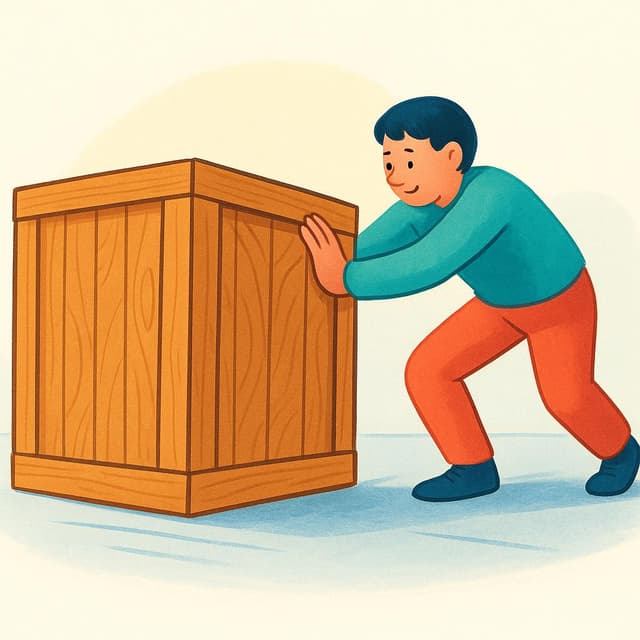
empujar — to push
The present tense of empujar is regular: empujo, empujas, empuja, empujamos, empujáis, empujan.
Formy empujar Czas teraźniejszy
Kiedy używać Czas teraźniejszy
Use the present tense for actions happening right now ('Te empujo ahora mismo' - I'm pushing you right now), habitual actions ('Ella empuja la puerta todos los días' - She pushes the door every day), or general truths ('Si empujas, se abre' - If you push, it opens).
Uwagi dotyczące empujar w czasie Czas teraźniejszy
Empujar is regular in the present tense. All forms follow the standard -ar conjugation pattern.
Przykładowe zdania
Yo empujo la carretilla en el jardín.
I push the wheelbarrow in the garden.
yo
¿Tú empujas la puerta principal?
Do you push the main door?
tú
El portero empuja a la gente para entrar.
The doorman pushes people to get in.
él/ella/usted
Nosotros empujamos la roca lentamente.
We push the rock slowly.
nosotros
Vosotros empujáis el carrito de supermercado.
You (plural, informal) push the shopping cart.
vosotros
Ellos empujan el coche averiado.
They push the broken-down car.
ellos/ellas/ustedes
Częste błędy
Błąd: Using 'estar empujando' for habitual actions.
Poprawnie: Use the simple present 'empujo' for habits, not 'estoy empujando' unless it's happening right this second.
Dlaczego: The present progressive (estar + gerund) emphasizes an action in progress at the moment of speaking.
Błąd: Confusing tú and usted forms.
Poprawnie: Remember 'tú empujas' vs 'usted empuja'.
Dlaczego: These are distinct conjugations for the second person singular.
Opanuj hiszpańskie czasowniki w kontekście
Zapamiętywanie tabel to dopiero początek. Przeczytaj ponad 200 ilustrowanych i udźwiękowionych hiszpańskich historii, aby zobaczyć czasowniki takie jak 'empujar' używane naturalnie — w czasach, których się uczysz.
Powiązane czasy
Czas przeszły prosty
yo: empujé
The preterite of empujar is regular: empujé, empujaste, empujó, empujamos, empujasteis, empujaron.
Czas przeszły niedokonany
yo: empujaba
The imperfect of empujar is regular: empujaba, empujabas, empujaba, empujábamos, empujabais, empujaban.
Czas przyszły
yo: empujaré
The future tense of empujar is regular: empujaré, empujarás, empujará, empujaremos, empujaréis, empujarán.
Tryb warunkowy
yo: empujaría
The conditional of empujar is regular: empujaría, empujarías, empujaría, empujaríamos, empujaríais, empujarían.
Tryb Subj. teraźniejszy
yo: empuje
Present subjunctive of empujar (empuje, empujes, empuje, empujemos, empujen, empujéis) is used for wishes, doubts, and emotions.
Tryb Subj. przeszły niedokonany
yo: empujara
The imperfect subjunctive of empujar (empujara/empujase) is used for past hypotheticals or wishes.
Tryb rozkazujący (twierdzący)
yo: empuja
Imperative commands for empujar: empuja (tú), empuje (usted), empujemos (nosotros), empujen (ustedes), empujad (vosotros).
Tryb rozkazujący (przeczący)
yo: no empujes
Negative imperative for empujar: no empujes (tú), no empuje (usted), no empujemos (nosotros), no empujen (ustedes), no empujéis (vosotros).