Koniugacja empujar Tryb rozkazujący (twierdzący)
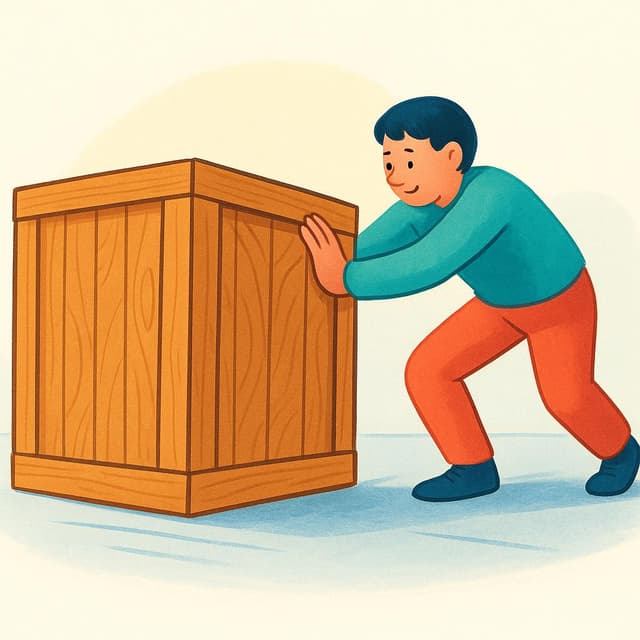
empujar — to push
Imperative commands for empujar: empuja (tú), empuje (usted), empujemos (nosotros), empujen (ustedes), empujad (vosotros).
Formy empujar Tryb rozkazujący (twierdzący)
Kiedy używać Tryb rozkazujący (twierdzący)
Use the imperative mood to give direct commands. For 'empujar', you'd use it to tell someone to push something right now, like '¡Empuja la puerta!' (Push the door!).
Uwagi dotyczące empujar w czasie Tryb rozkazujący (twierdzący)
Empujar is regular in the affirmative imperative. The 'vosotros' form 'empujad' is unique to this pronoun.
Przykładowe zdania
¡Empuja la caja hacia la pared!
Push the box towards the wall!
tú
Señor, empuje el botón rojo, por favor.
Sir, push the red button, please.
usted
¡Empujemos el coche juntos!
Let's push the car together!
nosotros
¡Empujen la puerta para abrirla!
Push the door to open it!
¡Empujad la mesa un poco más!
Push the table a little more!
vosotros
Częste błędy
Błąd: Using the present indicative instead of imperative for commands.
Poprawnie: Use 'empuja' (imperative tú) not 'empujas' (present indicative tú).
Dlaczego: The imperative mood is specifically for commands, while the present indicative describes current actions.
Błąd: Forgetting the 'no' in negative commands.
Poprawnie: Negative commands use the subjunctive mood (e.g., 'No empujes').
Dlaczego: Spanish uses a different structure for negative commands, utilizing the present subjunctive.
Opanuj hiszpańskie czasowniki w kontekście
Zapamiętywanie tabel to dopiero początek. Przeczytaj ponad 200 ilustrowanych i udźwiękowionych hiszpańskich historii, aby zobaczyć czasowniki takie jak 'empujar' używane naturalnie — w czasach, których się uczysz.
Powiązane czasy
Czas teraźniejszy
yo: empujo
The present tense of empujar is regular: empujo, empujas, empuja, empujamos, empujáis, empujan.
Czas przeszły prosty
yo: empujé
The preterite of empujar is regular: empujé, empujaste, empujó, empujamos, empujasteis, empujaron.
Czas przeszły niedokonany
yo: empujaba
The imperfect of empujar is regular: empujaba, empujabas, empujaba, empujábamos, empujabais, empujaban.
Czas przyszły
yo: empujaré
The future tense of empujar is regular: empujaré, empujarás, empujará, empujaremos, empujaréis, empujarán.
Tryb warunkowy
yo: empujaría
The conditional of empujar is regular: empujaría, empujarías, empujaría, empujaríamos, empujaríais, empujarían.
Tryb Subj. teraźniejszy
yo: empuje
Present subjunctive of empujar (empuje, empujes, empuje, empujemos, empujen, empujéis) is used for wishes, doubts, and emotions.
Tryb Subj. przeszły niedokonany
yo: empujara
The imperfect subjunctive of empujar (empujara/empujase) is used for past hypotheticals or wishes.
Tryb rozkazujący (przeczący)
yo: no empujes
Negative imperative for empujar: no empujes (tú), no empuje (usted), no empujemos (nosotros), no empujen (ustedes), no empujéis (vosotros).