Koniugacja frotar Tryb rozkazujący (twierdzący)
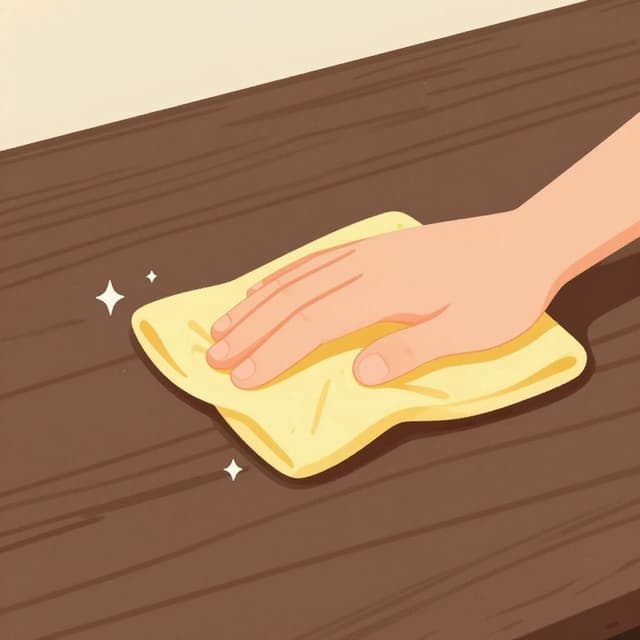
frotar — to rub
Use 'frota', 'frote', 'frotad', 'frotemos', 'froten' for direct commands with 'frotar'.
Formy frotar Tryb rozkazujący (twierdzący)
Kiedy używać Tryb rozkazujący (twierdzący)
Use the imperative to give direct commands. For 'tú', it's 'frota'; for 'usted'/'él/ella', it's 'frote'; for 'vosotros', it's 'frotad'; and for 'nosotros'/'ustedes', it's 'frotamos'/'froten'.
Uwagi dotyczące frotar w czasie Tryb rozkazujący (twierdzący)
Frotar is regular in the affirmative imperative. The 'tú' form is the same as the present indicative.
Przykładowe zdania
Frota la mancha con un paño.
Rub the stain with a cloth.
tú
Por favor, frote sus manos.
Please, rub your hands.
usted
Frotad la espalda mientras os ducháis.
Rub your backs while you shower.
vosotros
¡Frotemos las manos para calentarlas!
Let's rub our hands to warm them up!
nosotros
Frote la superficie hasta que brille.
Rub the surface until it shines.
ustedes
Częste błędy
Błąd: Using 'frotar' instead of the imperative form for a command.
Poprawnie: Use 'frota' or 'frote' etc., depending on who you're commanding.
Dlaczego: The infinitive 'frotar' is the base verb and cannot be used as a direct command.
Błąd: Confusing 'frotad' (vosotros) with 'frotan' (ellos/ellas/ustedes).
Poprawnie: Use 'frotad' for the 'vosotros' command.
Dlaczego: These are distinct forms used for different grammatical persons.
Opanuj hiszpańskie czasowniki w kontekście
Zapamiętywanie tabel to dopiero początek. Przeczytaj ponad 200 ilustrowanych i udźwiękowionych hiszpańskich historii, aby zobaczyć czasowniki takie jak 'frotar' używane naturalnie — w czasach, których się uczysz.
Powiązane czasy
Czas teraźniejszy
yo: froto
Use the present 'froto', 'frotas', 'frota', 'frotamos', 'frotáis', 'frotan' for current or habitual rubbing.
Czas przeszły prosty
yo: froté
Use the preterite 'froté', 'frotaste', 'frotó', 'frotamos', 'frotasteis', 'frotaron' for completed rubbing actions in the past.
Czas przeszły niedokonany
yo: frotaba
Use the imperfect 'frotaba', 'frotabas', 'frotaba', 'frotábamos', 'frotabais', 'frotaban' for ongoing or habitual past rubbing.
Czas przyszły
yo: frotaré
Use the future 'frotaré', 'frotarás', 'frotará', 'frotaremos', 'frotaréis', 'frotarán' for actions that will happen.
Tryb warunkowy
yo: frotaría
Use the conditional 'frotaría', 'frotarías', 'frotaría', 'frotaríamos', 'frotaríais', 'frotarían' for hypotheticals ('would rub').
Tryb Subj. teraźniejszy
yo: frote
Use 'frote', 'frotes', 'frote', 'frotemos', 'frotéis', 'froten' for wishes, doubts, and emotions with 'frotar'.
Tryb Subj. przeszły niedokonany
yo: frotara
Use the imperfect subjunctive 'frotara'/'frotase' for past hypotheticals, wishes, or doubts with 'frotar'.
Tryb rozkazujący (przeczący)
yo: no frotes
Use 'no frotes', 'no frote', 'no frotéis', 'no frotemos', 'no froten' for negative commands with 'frotar'.