Koniugacja frotar Tryb Subj. teraźniejszy
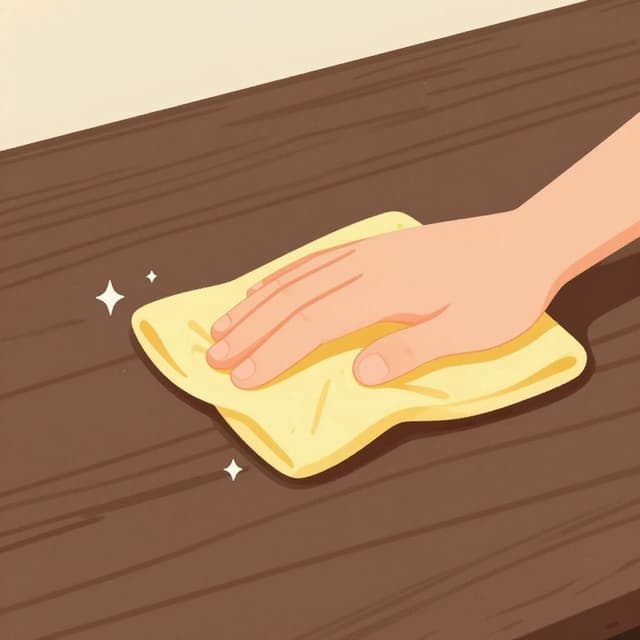
frotar — to rub
Use 'frote', 'frotes', 'frote', 'frotemos', 'frotéis', 'froten' for wishes, doubts, and emotions with 'frotar'.
Formy frotar Tryb Subj. teraźniejszy
Kiedy używać Tryb Subj. teraźniejszy
Use the present subjunctive after expressions of desire, doubt, emotion, uncertainty, or necessity. For example, 'Quiero que frotes...' (I want you to rub...), 'Dudo que frote...' (I doubt that he rubs...).
Uwagi dotyczące frotar w czasie Tryb Subj. teraźniejszy
Frotar is regular in the present subjunctive. It follows the pattern of -ar verbs, taking -e endings in the subjunctive.
Przykładowe zdania
Espero que frotes bien la espalda.
I hope you rub your back well.
tú
El médico pide que usted frote la zona afectada.
The doctor asks that you rub the affected area.
Dudamos que frotéis mucho la madera vieja.
We doubt that you (plural, informal) rub the old wood much.
vosotros
Es importante que frotemos nuestras manos antes de comer.
It's important that we rub our hands before eating.
nosotros
Quieren que ellos froten la alfombra.
They want them to rub the carpet.
ellos/ellas/ustedes
Częste błędy
Błąd: Using the present indicative ('frotas', 'frota') instead of the present subjunctive.
Poprawnie: Use 'frotes', 'frote', etc., after verbs expressing desire, doubt, or emotion.
Dlaczego: Certain trigger phrases require the subjunctive mood to express non-factual or subjective ideas.
Błąd: Forgetting the subjunctive form for 'vosotros'.
Poprawnie: The 'vosotros' form is 'frotéis'.
Dlaczego: It's a distinct ending (-éis) that learners sometimes miss.
Opanuj hiszpańskie czasowniki w kontekście
Zapamiętywanie tabel to dopiero początek. Przeczytaj ponad 200 ilustrowanych i udźwiękowionych hiszpańskich historii, aby zobaczyć czasowniki takie jak 'frotar' używane naturalnie — w czasach, których się uczysz.
Powiązane czasy
Czas teraźniejszy
yo: froto
Use the present 'froto', 'frotas', 'frota', 'frotamos', 'frotáis', 'frotan' for current or habitual rubbing.
Czas przeszły prosty
yo: froté
Use the preterite 'froté', 'frotaste', 'frotó', 'frotamos', 'frotasteis', 'frotaron' for completed rubbing actions in the past.
Czas przeszły niedokonany
yo: frotaba
Use the imperfect 'frotaba', 'frotabas', 'frotaba', 'frotábamos', 'frotabais', 'frotaban' for ongoing or habitual past rubbing.
Czas przyszły
yo: frotaré
Use the future 'frotaré', 'frotarás', 'frotará', 'frotaremos', 'frotaréis', 'frotarán' for actions that will happen.
Tryb warunkowy
yo: frotaría
Use the conditional 'frotaría', 'frotarías', 'frotaría', 'frotaríamos', 'frotaríais', 'frotarían' for hypotheticals ('would rub').
Tryb Subj. przeszły niedokonany
yo: frotara
Use the imperfect subjunctive 'frotara'/'frotase' for past hypotheticals, wishes, or doubts with 'frotar'.
Tryb rozkazujący (twierdzący)
yo: frota
Use 'frota', 'frote', 'frotad', 'frotemos', 'froten' for direct commands with 'frotar'.
Tryb rozkazujący (przeczący)
yo: no frotes
Use 'no frotes', 'no frote', 'no frotéis', 'no frotemos', 'no froten' for negative commands with 'frotar'.