Koniugacja frotar Czas przeszły prosty
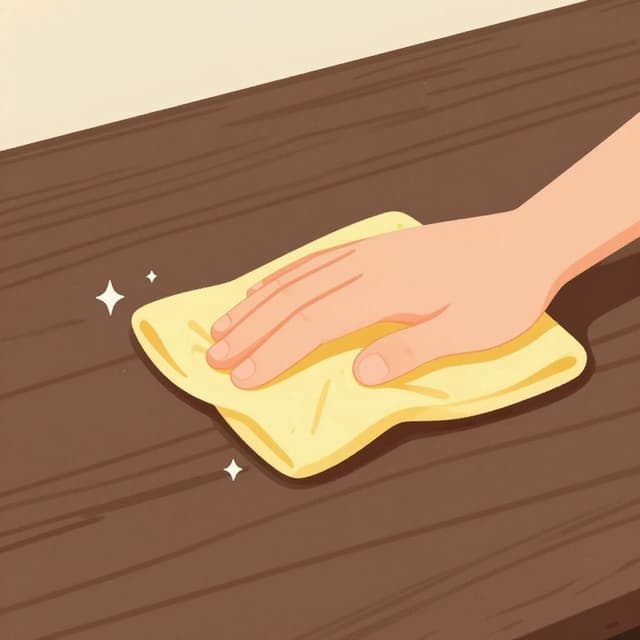
frotar — to rub
Use the preterite 'froté', 'frotaste', 'frotó', 'frotamos', 'frotasteis', 'frotaron' for completed rubbing actions in the past.
Formy frotar Czas przeszły prosty
Kiedy używać Czas przeszły prosty
Use the preterite of 'frotar' to talk about a specific instance of rubbing that started and finished in the past. Think of it as 'I rubbed (once)', 'He rubbed (at that moment)'.
Uwagi dotyczące frotar w czasie Czas przeszły prosty
Frotar is regular in the preterite. All forms are predictable based on the '-ar' verb pattern.
Przykładowe zdania
Ayer froté la madera para quitar la pintura vieja.
Yesterday I rubbed the wood to remove the old paint.
yo
¿Frotaste tus manos antes de entrar?
Did you rub your hands before coming in?
tú
Ella frotó la lámpara mágica y apareció un genio.
She rubbed the magic lamp and a genie appeared.
él/ella/usted
Nosotros frotamos las sartenes después de usarlas.
We rubbed the pans after using them.
nosotros
Los niños frotaron sus rodillas después de caerse.
The children rubbed their knees after falling.
ellos/ellas/ustedes
Częste błędy
Błąd: Using the imperfect 'frotábamos' instead of 'frotamos' for a completed action.
Poprawnie: Use 'frotamos' for a specific instance of rubbing.
Dlaczego: The preterite indicates a finished action, while the imperfect suggests a repeated or ongoing action in the past.
Błąd: Missing the accent on 'frotó' (él/ella/usted) or 'froté' (yo).
Poprawnie: Add the accent: 'frotó', 'froté'.
Dlaczego: The accent marks the stressed syllable and distinguishes these forms.
Opanuj hiszpańskie czasowniki w kontekście
Zapamiętywanie tabel to dopiero początek. Przeczytaj ponad 200 ilustrowanych i udźwiękowionych hiszpańskich historii, aby zobaczyć czasowniki takie jak 'frotar' używane naturalnie — w czasach, których się uczysz.
Powiązane czasy
Czas teraźniejszy
yo: froto
Use the present 'froto', 'frotas', 'frota', 'frotamos', 'frotáis', 'frotan' for current or habitual rubbing.
Czas przeszły niedokonany
yo: frotaba
Use the imperfect 'frotaba', 'frotabas', 'frotaba', 'frotábamos', 'frotabais', 'frotaban' for ongoing or habitual past rubbing.
Czas przyszły
yo: frotaré
Use the future 'frotaré', 'frotarás', 'frotará', 'frotaremos', 'frotaréis', 'frotarán' for actions that will happen.
Tryb warunkowy
yo: frotaría
Use the conditional 'frotaría', 'frotarías', 'frotaría', 'frotaríamos', 'frotaríais', 'frotarían' for hypotheticals ('would rub').
Tryb Subj. teraźniejszy
yo: frote
Use 'frote', 'frotes', 'frote', 'frotemos', 'frotéis', 'froten' for wishes, doubts, and emotions with 'frotar'.
Tryb Subj. przeszły niedokonany
yo: frotara
Use the imperfect subjunctive 'frotara'/'frotase' for past hypotheticals, wishes, or doubts with 'frotar'.
Tryb rozkazujący (twierdzący)
yo: frota
Use 'frota', 'frote', 'frotad', 'frotemos', 'froten' for direct commands with 'frotar'.
Tryb rozkazujący (przeczący)
yo: no frotes
Use 'no frotes', 'no frote', 'no frotéis', 'no frotemos', 'no froten' for negative commands with 'frotar'.