Koniugacja frotar Czas teraźniejszy
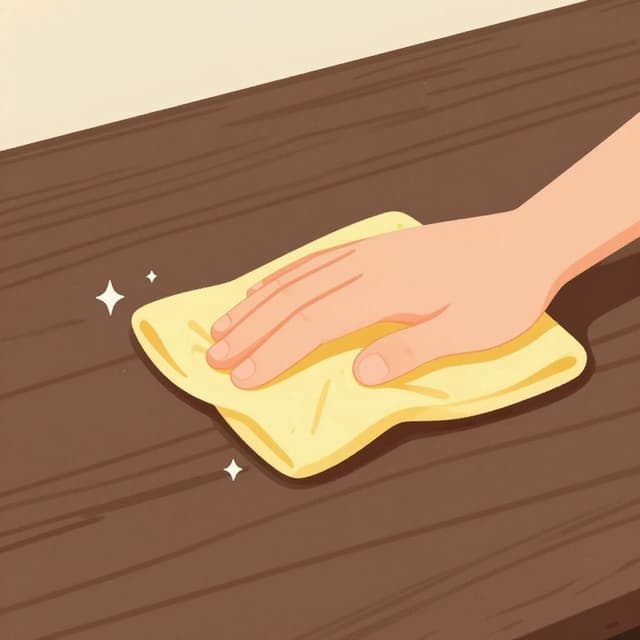
frotar — to rub
Use the present 'froto', 'frotas', 'frota', 'frotamos', 'frotáis', 'frotan' for current or habitual rubbing.
Formy frotar Czas teraźniejszy
Kiedy używać Czas teraźniejszy
Use the present tense of 'frotar' for actions happening right now ('Te frotas los ojos') or for habits and routines ('Ella frota el suelo cada semana'). It's also used for general truths.
Uwagi dotyczące frotar w czasie Czas teraźniejszy
Frotar is a regular -ar verb in the present tense. All its forms are predictable.
Przykładowe zdania
Me froto las manos porque tengo frío.
I'm rubbing my hands because I'm cold.
yo
¿Por qué te frotas la nariz?
Why are you rubbing your nose?
tú
El artista frota el lienzo con un trapo.
The artist rubs the canvas with a cloth.
él/ella/usted
Frotamos las ventanas para que queden limpias.
We rub the windows so they get clean.
nosotros
Ellos frotan sus cartas para la buena suerte.
They rub their cards for good luck.
ellos/ellas/ustedes
Częste błędy
Błąd: Using 'frotar' (infinitive) when describing a current action.
Poprawnie: Use the conjugated present tense form, like 'froto' or 'frotas'.
Dlaczego: The infinitive is the base form and needs to be conjugated to match the subject and tense.
Błąd: Confusing 'frotáis' (vosotros) with 'frotan' (ellos/ellas/ustedes).
Poprawnie: Use 'frotáis' for 'vosotros' and 'frotan' for 'ellos/ellas/ustedes'.
Dlaczego: These are distinct forms for different plural subjects.
Opanuj hiszpańskie czasowniki w kontekście
Zapamiętywanie tabel to dopiero początek. Przeczytaj ponad 200 ilustrowanych i udźwiękowionych hiszpańskich historii, aby zobaczyć czasowniki takie jak 'frotar' używane naturalnie — w czasach, których się uczysz.
Powiązane czasy
Czas przeszły prosty
yo: froté
Use the preterite 'froté', 'frotaste', 'frotó', 'frotamos', 'frotasteis', 'frotaron' for completed rubbing actions in the past.
Czas przeszły niedokonany
yo: frotaba
Use the imperfect 'frotaba', 'frotabas', 'frotaba', 'frotábamos', 'frotabais', 'frotaban' for ongoing or habitual past rubbing.
Czas przyszły
yo: frotaré
Use the future 'frotaré', 'frotarás', 'frotará', 'frotaremos', 'frotaréis', 'frotarán' for actions that will happen.
Tryb warunkowy
yo: frotaría
Use the conditional 'frotaría', 'frotarías', 'frotaría', 'frotaríamos', 'frotaríais', 'frotarían' for hypotheticals ('would rub').
Tryb Subj. teraźniejszy
yo: frote
Use 'frote', 'frotes', 'frote', 'frotemos', 'frotéis', 'froten' for wishes, doubts, and emotions with 'frotar'.
Tryb Subj. przeszły niedokonany
yo: frotara
Use the imperfect subjunctive 'frotara'/'frotase' for past hypotheticals, wishes, or doubts with 'frotar'.
Tryb rozkazujący (twierdzący)
yo: frota
Use 'frota', 'frote', 'frotad', 'frotemos', 'froten' for direct commands with 'frotar'.
Tryb rozkazujący (przeczący)
yo: no frotes
Use 'no frotes', 'no frote', 'no frotéis', 'no frotemos', 'no froten' for negative commands with 'frotar'.