Koniugacja pinchar Tryb rozkazujący (twierdzący)
pinchar — to prick
Use 'pincha' (tú), 'pinche' (usted), 'pinchemos' (nosotros), 'pinchad' (vosotros), 'pinchen' (ustedes) for direct commands.
Formy pinchar Tryb rozkazujący (twierdzący)
Kiedy używać Tryb rozkazujący (twierdzący)
The imperative is for giving direct orders or instructions. For example, you'd use 'pincha' to tell a friend to prick something, or 'pinche' to tell a doctor to administer a shot.
Uwagi dotyczące pinchar w czasie Tryb rozkazujący (twierdzący)
Pinchar is regular in the affirmative imperative. The vosotros form 'pinchád' has an accent on the 'a'.
Przykładowe zdania
¡Pincha la pelota con cuidado!
Prick the ball carefully!
tú
Señor, por favor, pinche la vena.
Sir, please prick the vein.
usted
¡Pinchen aquí para continuar!
Click here to continue!
ustedes
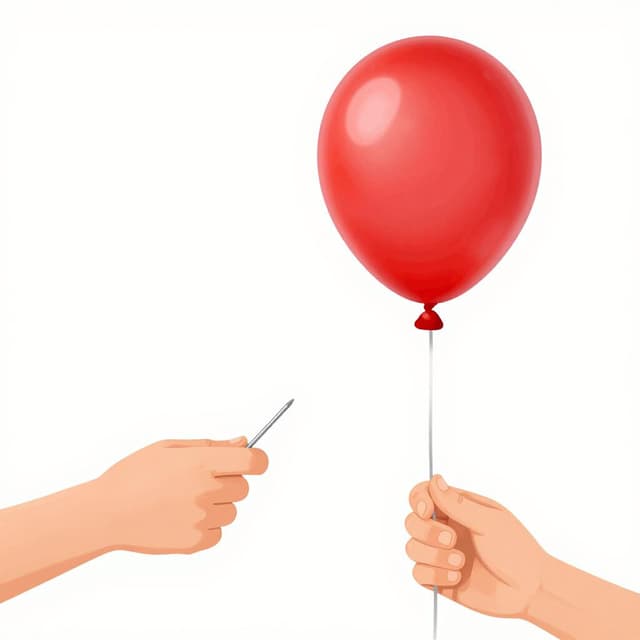
¡Pinchad el globo!
Prick the balloon!
vosotros
Częste błędy
Błąd: Using the present subjunctive instead of the imperative for tú, like 'No pinches' instead of 'Pincha'.
Poprawnie: For positive commands to 'tú', use the affirmative imperative form 'pincha'.
Dlaczego: Learners often confuse the affirmative tú imperative with the negative tú imperative (which uses the present subjunctive).
Błąd: Forgetting the accent on 'pinchád' for vosotros.
Poprawnie: The vosotros form is 'pinchád', with an accent on the 'a'.
Dlaczego: The accent is needed to maintain the correct stress on the final syllable.
Opanuj hiszpańskie czasowniki w kontekście
Zapamiętywanie tabel to dopiero początek. Przeczytaj ponad 200 ilustrowanych i udźwiękowionych hiszpańskich historii, aby zobaczyć czasowniki takie jak 'pinchar' używane naturalnie — w czasach, których się uczysz.
Powiązane czasy
Czas teraźniejszy
yo: pincho
The present of pinchar is regular: pincho, pinchas, pincha, pinchamos, pincháis, pinchan.
Czas przeszły prosty
yo: pinché
The preterite of pinchar is regular: pinché, pinchaste, pinchó, pinchamos, pinchasteis, pincharon.
Czas przeszły niedokonany
yo: pinchaba
The imperfect of pinchar is regular: pinchaba, pinchabas, pinchaba, pinchábamos, pinchabais, pinchaban.
Czas przyszły
yo: pincharé
The future of pinchar is regular: pincharé, pincharás, pinchará, pincharemos, pincharéis, pincharán.
Tryb warunkowy
yo: pincharía
The conditional of pinchar is regular: pincharía, pincharías, pincharía, pincharíamos, pincharíais, pincharían.
Tryb Subj. teraźniejszy
yo: pinche
Use 'pinche' (yo/él/ella/Ud.), 'pinches' (tú), 'pinchemos' (nosotros), 'pinchéis' (vosotros), 'pinchen' (ellos/ellas/Uds.) for wishes, doubts, emotions.
Tryb Subj. przeszły niedokonany
yo: pinchara
Use 'pinchara' or 'pinchase' forms for past hypothetical situations, wishes, or doubts.
Tryb rozkazujący (przeczący)
yo: no pinches
Negative commands use 'no' plus the present subjunctive: 'no pinches' (tú), 'no pinche' (usted), etc.