Koniugacja pinchar Tryb rozkazujący (przeczący)
pinchar — to prick
Negative commands use 'no' plus the present subjunctive: 'no pinches' (tú), 'no pinche' (usted), etc.
Formy pinchar Tryb rozkazujący (przeczący)
Kiedy używać Tryb rozkazujący (przeczący)
Use the negative imperative to tell someone *not* to do something. It's used for all persons when giving prohibitions.
Uwagi dotyczące pinchar w czasie Tryb rozkazujący (przeczący)
Pinchar is regular in the negative imperative, which is formed using the present subjunctive.
Przykładowe zdania
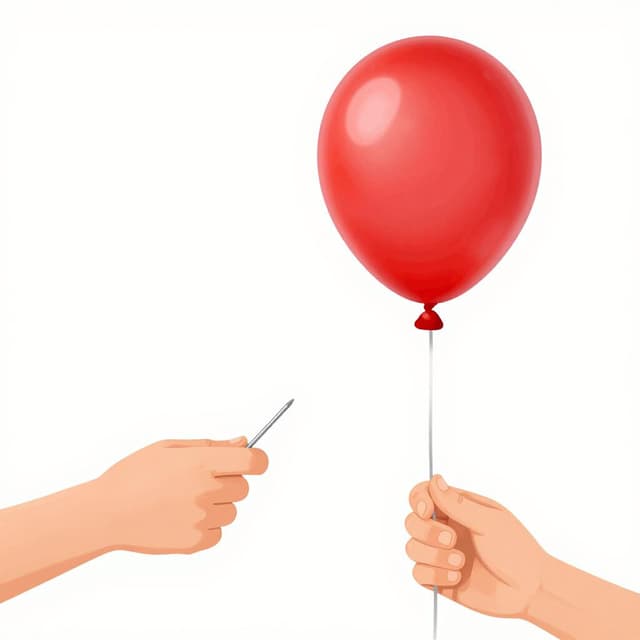
No pinches el globo, se va a explotar.
Don't prick the balloon, it's going to explode.
tú
Por favor, no pinche la llanta con esa aguja.
Please, don't prick the tire with that needle.
usted
No pinchen el cable, es peligroso.
Don't prick the cable, it's dangerous.
ustedes
No pinchéis esto, es muy frágil.
Don't prick this, it's very fragile.
vosotros
Częste błędy
Błąd: Using the infinitive instead of the subjunctive, like 'No pinchar'.
Poprawnie: Always use the present subjunctive form after 'no' for negative commands: 'no pinches', 'no pinche', etc.
Dlaczego: The infinitive is used for general prohibitions (like on signs), but commands to specific people require the subjunctive.
Błąd: Confusing tú and usted forms, e.g., 'No pincha'.
Poprawnie: Remember 'no pinches' for 'tú' and 'no pinche' for 'usted'.
Dlaczego: These are distinct forms derived from the present subjunctive.
Opanuj hiszpańskie czasowniki w kontekście
Zapamiętywanie tabel to dopiero początek. Przeczytaj ponad 200 ilustrowanych i udźwiękowionych hiszpańskich historii, aby zobaczyć czasowniki takie jak 'pinchar' używane naturalnie — w czasach, których się uczysz.
Powiązane czasy
Czas teraźniejszy
yo: pincho
The present of pinchar is regular: pincho, pinchas, pincha, pinchamos, pincháis, pinchan.
Czas przeszły prosty
yo: pinché
The preterite of pinchar is regular: pinché, pinchaste, pinchó, pinchamos, pinchasteis, pincharon.
Czas przeszły niedokonany
yo: pinchaba
The imperfect of pinchar is regular: pinchaba, pinchabas, pinchaba, pinchábamos, pinchabais, pinchaban.
Czas przyszły
yo: pincharé
The future of pinchar is regular: pincharé, pincharás, pinchará, pincharemos, pincharéis, pincharán.
Tryb warunkowy
yo: pincharía
The conditional of pinchar is regular: pincharía, pincharías, pincharía, pincharíamos, pincharíais, pincharían.
Tryb Subj. teraźniejszy
yo: pinche
Use 'pinche' (yo/él/ella/Ud.), 'pinches' (tú), 'pinchemos' (nosotros), 'pinchéis' (vosotros), 'pinchen' (ellos/ellas/Uds.) for wishes, doubts, emotions.
Tryb Subj. przeszły niedokonany
yo: pinchara
Use 'pinchara' or 'pinchase' forms for past hypothetical situations, wishes, or doubts.
Tryb rozkazujący (twierdzący)
yo: pincha
Use 'pincha' (tú), 'pinche' (usted), 'pinchemos' (nosotros), 'pinchad' (vosotros), 'pinchen' (ustedes) for direct commands.