Koniugacja pinchar Czas przeszły prosty
pinchar — to prick
The preterite of pinchar is regular: pinché, pinchaste, pinchó, pinchamos, pinchasteis, pincharon.
Formy pinchar Czas przeszły prosty
Kiedy używać Czas przeszły prosty
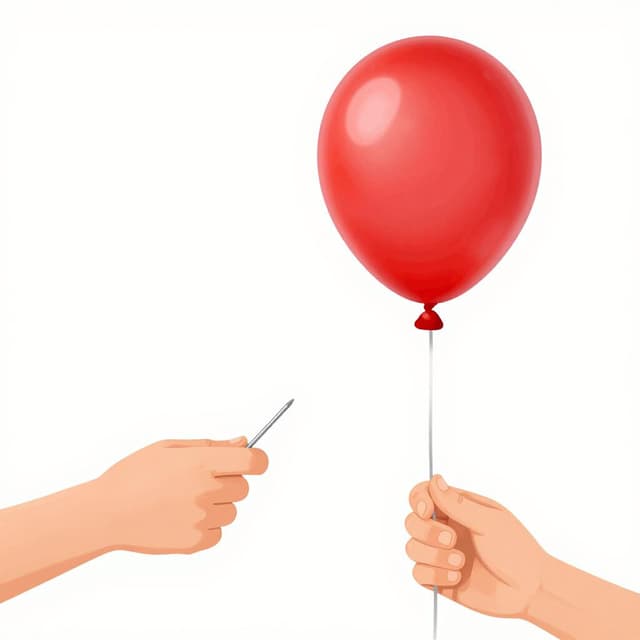
Use the preterite for completed actions in the past. Think of it as 'pinched' or 'pricked' at a specific moment. For example, 'pinché el globo' (I pricked the balloon) is a single, finished event.
Uwagi dotyczące pinchar w czasie Czas przeszły prosty
Pinchar is a regular -ar verb and follows the standard conjugation pattern in the preterite.
Przykładowe zdania
Yo pinché la pelota con una aguja.
I pricked the ball with a needle.
yo
Tú pinchaste el dedo con el alfiler.
You pricked your finger with the pin.
tú
Él pinchó la llanta del coche sin querer.
He accidentally pricked the car tire.
él/ella/usted
Ellos pincharon la lista de tareas.
They ticked off the to-do list.
ellos/ellas/ustedes
Częste błędy
Błąd: Using the imperfect instead of the preterite for a single, completed action.
Poprawnie: For a specific past event like 'pinchar', use the preterite: 'pinché'.
Dlaczego: The imperfect ('pinchaba') describes ongoing or habitual past actions, not single, finished ones.
Błąd: Forgetting the accent on 'pinchó' for él/ella/usted.
Poprawnie: The él/ella/usted form is 'pinchó' with an accent on the 'o'.
Dlaczego: The accent is crucial for distinguishing this form and indicating stress.
Opanuj hiszpańskie czasowniki w kontekście
Zapamiętywanie tabel to dopiero początek. Przeczytaj ponad 200 ilustrowanych i udźwiękowionych hiszpańskich historii, aby zobaczyć czasowniki takie jak 'pinchar' używane naturalnie — w czasach, których się uczysz.
Powiązane czasy
Czas teraźniejszy
yo: pincho
The present of pinchar is regular: pincho, pinchas, pincha, pinchamos, pincháis, pinchan.
Czas przeszły niedokonany
yo: pinchaba
The imperfect of pinchar is regular: pinchaba, pinchabas, pinchaba, pinchábamos, pinchabais, pinchaban.
Czas przyszły
yo: pincharé
The future of pinchar is regular: pincharé, pincharás, pinchará, pincharemos, pincharéis, pincharán.
Tryb warunkowy
yo: pincharía
The conditional of pinchar is regular: pincharía, pincharías, pincharía, pincharíamos, pincharíais, pincharían.
Tryb Subj. teraźniejszy
yo: pinche
Use 'pinche' (yo/él/ella/Ud.), 'pinches' (tú), 'pinchemos' (nosotros), 'pinchéis' (vosotros), 'pinchen' (ellos/ellas/Uds.) for wishes, doubts, emotions.
Tryb Subj. przeszły niedokonany
yo: pinchara
Use 'pinchara' or 'pinchase' forms for past hypothetical situations, wishes, or doubts.
Tryb rozkazujący (twierdzący)
yo: pincha
Use 'pincha' (tú), 'pinche' (usted), 'pinchemos' (nosotros), 'pinchad' (vosotros), 'pinchen' (ustedes) for direct commands.
Tryb rozkazujący (przeczący)
yo: no pinches
Negative commands use 'no' plus the present subjunctive: 'no pinches' (tú), 'no pinche' (usted), etc.