Koniugacja retrasar Czas przeszły prosty
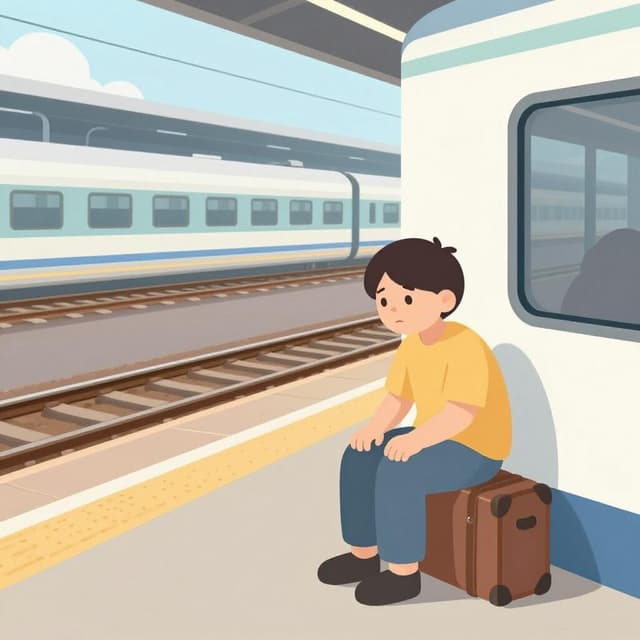
retrasar — to delay
The preterite of retrasar is regular: retrasé, retrasaste, retrasó, retrasamos, retrasasteis, retrasaron, for completed past actions.
Formy retrasar Czas przeszły prosty
Kiedy używać Czas przeszły prosty
Use the preterite of 'retrasar' to talk about a specific instance where a delay happened and finished in the past. Think of it as marking the start or completion of the delay event.
Uwagi dotyczące retrasar w czasie Czas przeszły prosty
Retrasar is fully regular in the preterite tense. All the endings are standard for -ar verbs.
Przykładowe zdania
Retrasé mi vuelo por una hora debido al tráfico.
I delayed my flight by an hour due to traffic.
yo
¿Por qué retrasaste la respuesta?
Why did you delay the answer?
tú
El mal tiempo retrasó la construcción del edificio.
The bad weather delayed the building's construction.
él/ella/usted
Ellos retrasaron la reunión hasta el lunes.
They delayed the meeting until Monday.
ellos/ellas/ustedes
Częste błędy
Błąd: Using the imperfect 'retrasaba' instead of the preterite 'retrasó' for a specific, completed delay.
Poprawnie: For a single, finished delay, use 'El accidente retrasó el tren' (preterite), not 'El accidente retrasaba el tren' (imperfect).
Dlaczego: The preterite marks a completed action, while the imperfect describes an ongoing or habitual past situation.
Błąd: Forgetting the accent on 'retrasó' (él/ella/usted) and 'retrasé' (yo).
Poprawnie: The forms 'retrasó' and 'retrasé' both require an accent mark on the final 'o' and 'é' respectively.
Dlaczego: These accents distinguish the preterite forms and indicate the stressed syllable.
Opanuj hiszpańskie czasowniki w kontekście
Zapamiętywanie tabel to dopiero początek. Przeczytaj ponad 200 ilustrowanych i udźwiękowionych hiszpańskich historii, aby zobaczyć czasowniki takie jak 'retrasar' używane naturalnie — w czasach, których się uczysz.
Powiązane czasy
Czas teraźniejszy
yo: retraso
The present tense of retrasar (retraso, retrasas, etc.) is for actions happening now or habitual delays.
Czas przeszły niedokonany
yo: retrasaba
The imperfect of retrasar (retrasaba, retrasabas, etc.) describes ongoing or habitual delays in the past.
Czas przyszły
yo: retrasaré
The future tense of retrasar (retrasaré, retrasarás, etc.) indicates actions that will happen or expresses probability.
Tryb warunkowy
yo: retrasaría
The conditional of retrasar (retrasaría, retrasarías, etc.) expresses 'would' delays, polite requests, or future-in-the-past.
Tryb Subj. teraźniejszy
yo: retrase
The present subjunctive of retrasar (retrace, retrases, etc.) follows expressions of doubt, desire, emotion, or uncertainty.
Tryb Subj. przeszły niedokonany
yo: retrasara
The imperfect subjunctive of retrasar (retrasara, retrasaras, etc.) is used for past hypotheticals, wishes, or politeness.
Tryb rozkazujący (twierdzący)
yo: retrasa
Use the imperative of retrasar for direct commands: retrasa (tú), retrase (usted), retrasemos (nosotros), retrasad (vosotros), retrasen (ustedes).
Tryb rozkazujący (przeczący)
yo: no retrases
Negative commands for retrasar use 'no' plus the present subjunctive: no retrases (tú), no retrase (usted), no retrasemos (nosotros), no retraséis (vosotros), no retrasen (ustedes).