Koniugacja trasladar Tryb rozkazujący (twierdzący)
trasladar — to move
The imperative of trasladar has regular commands like 'traslada' (tú) and 'trasladen' (ustedes).
Formy trasladar Tryb rozkazujący (twierdzący)
Kiedy używać Tryb rozkazujący (twierdzący)
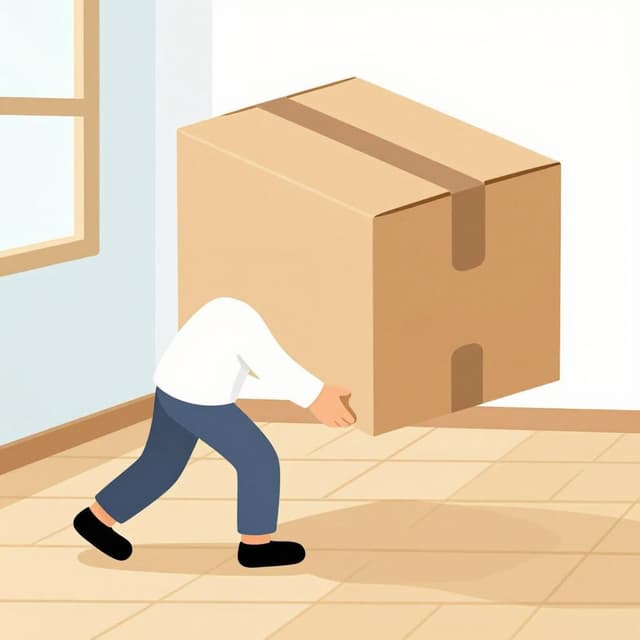
Use the imperative to give direct commands. For 'trasladar', this means telling someone to move something or to move themselves, like '¡Traslada esa caja!' (Move that box!) or '¡Trasladémonos a la sala!' (Let's move to the living room!).
Uwagi dotyczące trasladar w czasie Tryb rozkazujący (twierdzący)
Trasladar is regular in the affirmative and negative imperative. The tú form 'traslada' is the same as the present indicative, but the context makes it a command.
Przykładowe zdania
Traslada la silla más cerca de la ventana.
Move the chair closer to the window.
tú
Traslademos nuestros libros a la otra mesa.
Let's move our books to the other table.
nosotros
¡Trasladen todo al nuevo edificio!
Move everything to the new building!
Trasladad el equipo con cuidado.
Move the equipment carefully.
vosotros
Częste błędy
Błąd: Using the infinitive instead of the imperative, like 'Trasladar la mesa'.
Poprawnie: Use the correct imperative form, e.g., 'Traslada la mesa' (tú) or 'Traslade la mesa' (usted).
Dlaczego: The infinitive is the base form of the verb, not a command.
Błąd: Confusing 'traslada' (tú imperative) with 'traslada' (él/ella/usted present indicative).
Poprawnie: In context, 'Traslada el sofá' can be a command to 'you' or a statement about 'him/her/it'. Add context or use a pronoun if needed to clarify.
Dlaczego: They are spelled identically, so context is key.
Opanuj hiszpańskie czasowniki w kontekście
Zapamiętywanie tabel to dopiero początek. Przeczytaj ponad 200 ilustrowanych i udźwiękowionych hiszpańskich historii, aby zobaczyć czasowniki takie jak 'trasladar' używane naturalnie — w czasach, których się uczysz.
Powiązane czasy
Czas teraźniejszy
yo: traslado
The present tense of trasladar (traslado, trasladas, traslada...) describes current actions, habits, or general truths about moving.
Czas przeszły prosty
yo: trasladé
The preterite of trasladar is regular: trasladé, trasladaste, trasladó, trasladamos, trasladasteis, trasladaron.
Czas przeszły niedokonany
yo: trasladaba
The imperfect of trasladar (trasladaba, trasladabas, trasladaba...) describes ongoing or habitual past actions of moving.
Czas przyszły
yo: trasladaré
The future tense of trasladar (trasladaré, trasladarás, trasladará...) indicates actions that will happen.
Tryb warunkowy
yo: trasladaría
The conditional of trasladar (trasladaría, trasladarías, trasladaría...) expresses hypothetical actions ('would move') or polite requests.
Tryb Subj. teraźniejszy
yo: traslade
The present subjunctive of trasladar (e.g., traslade, traslades, trasladen) follows expressions of doubt, desire, emotion, or uncertainty.
Tryb Subj. przeszły niedokonany
yo: trasladara
The imperfect subjunctive of trasladar (e.g., trasladara, trasladase) is used for past wishes, hypothetical situations, or polite requests.
Tryb rozkazujący (przeczący)
yo: no traslades
Negative commands for 'trasladar' use the present subjunctive, like 'no traslades' (tú) and 'no trasladen' (ustedes).