Koniugacja trepar Tryb rozkazujący (twierdzący)
trepar — to climb
Use 'trepa' and 'trepad' for direct commands to 'tú' and 'vosotros'.
Formy trepar Tryb rozkazujący (twierdzący)
Kiedy używać Tryb rozkazujący (twierdzący)
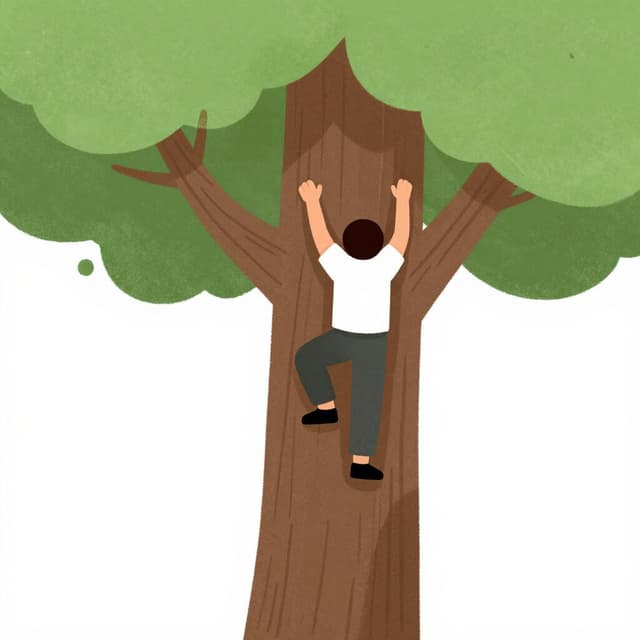
The imperative is for giving direct commands. For example, '¡Trepa al árbol!' means 'Climb the tree!' when talking to one person informally (tú).
Uwagi dotyczące trepar w czasie Tryb rozkazujący (twierdzący)
Trepar is regular in the affirmative imperative. Note that the 'tú' form 'trepa' is the same as the present indicative third person singular.
Przykładowe zdania
¡Trepa a la rama más alta!
Climb to the highest branch!
tú
¡Trepemos juntos!
Let's climb together!
nosotros
¡Trepadores, trepad con cuidado!
Climbers, climb carefully!
vosotros
Señores, trepen por esa pared.
Gentlemen, climb up that wall.
ustedes
Częste błędy
Błąd: Using the subjunctive instead of the imperative for a direct command.
Poprawnie: Use 'trepa' for 'climb!' not 'trepes'.
Dlaczego: The imperative mood is specifically for commands; the subjunctive is for wishes, doubts, etc.
Błąd: Forgetting the 'vosotros' form 'trepad'.
Poprawnie: Remember 'trepad' is the command form for 'vosotros'.
Dlaczego: This form is unique to 'vosotros' and is often overlooked by learners.
Opanuj hiszpańskie czasowniki w kontekście
Zapamiętywanie tabel to dopiero początek. Przeczytaj ponad 200 ilustrowanych i udźwiękowionych hiszpańskich historii, aby zobaczyć czasowniki takie jak 'trepar' używane naturalnie — w czasach, których się uczysz.
Powiązane czasy
Czas teraźniejszy
yo: trepo
Use 'trepo' and 'trepa' for actions happening now or habitual climbing.
Czas przeszły prosty
yo: trepé
Use 'trepé' and 'trepó' for completed climbing actions in the past.
Czas przeszły niedokonany
yo: trepaba
Use 'trepaba' and 'trepaban' for ongoing or habitual climbing in the past.
Czas przyszły
yo: treparé
Use 'treparé' and 'trepará' for actions that will happen in the future.
Tryb warunkowy
yo: treparía
Use 'treparía' and 'treparían' for hypothetical 'would' scenarios.
Tryb Subj. teraźniejszy
yo: trepe
Use 'trepe' and 'trepen' after expressions of doubt, desire, or emotion.
Tryb Subj. przeszły niedokonany
yo: trepara
Use 'trepara' or 'trepara' for past hypotheticals or wishes, like 'If I climbed...'.
Tryb rozkazujący (przeczący)
yo: no trepes
Use 'no trepes' and 'no trepéis' for negative commands to 'tú' and 'vosotros'.