Koniugacja trepar Czas przeszły prosty
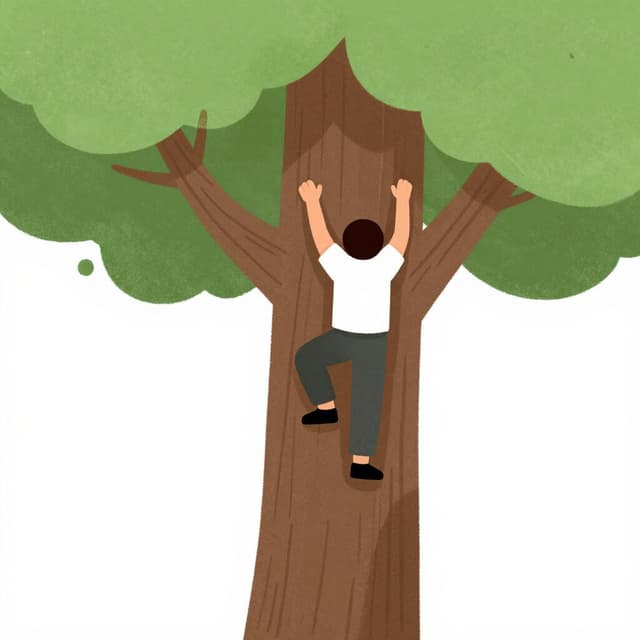
trepar — to climb
Use 'trepé' and 'trepó' for completed climbing actions in the past.
Formy trepar Czas przeszły prosty
Kiedy używać Czas przeszły prosty
The preterite is for actions that started and finished at a specific point in the past. If you climbed a tree yesterday and were done, you'd use the preterite: 'Ayer trepé ese árbol'.
Uwagi dotyczące trepar w czasie Czas przeszły prosty
Trepar is regular in the preterite. The 'yo' form 'trepé' has a written accent.
Przykładowe zdania
Ayer trepé a la cima de la montaña.
Yesterday I climbed to the summit of the mountain.
yo
¿Tú trepaste por la escalera?
Did you climb up the ladder?
tú
El niño trepó al árbol muy rápido.
The boy climbed the tree very quickly.
él/ella/usted
Ellos treparon la pared para escapar.
They climbed the wall to escape.
ellos/ellas/ustedes
Częste błędy
Błąd: Using the imperfect 'trepaba' for a single completed action.
Poprawnie: For 'I climbed the tree yesterday', use 'Ayer trepé', not 'Ayer trepaba'.
Dlaczego: The preterite marks a completed event, while the imperfect describes an ongoing or habitual past action.
Błąd: Forgetting the accent on 'trepé'.
Poprawnie: The 'yo' form requires an accent: 'trepé'.
Dlaczego: The accent on 'trepé' distinguishes it from other forms and indicates the stressed syllable.
Opanuj hiszpańskie czasowniki w kontekście
Zapamiętywanie tabel to dopiero początek. Przeczytaj ponad 200 ilustrowanych i udźwiękowionych hiszpańskich historii, aby zobaczyć czasowniki takie jak 'trepar' używane naturalnie — w czasach, których się uczysz.
Powiązane czasy
Czas teraźniejszy
yo: trepo
Use 'trepo' and 'trepa' for actions happening now or habitual climbing.
Czas przeszły niedokonany
yo: trepaba
Use 'trepaba' and 'trepaban' for ongoing or habitual climbing in the past.
Czas przyszły
yo: treparé
Use 'treparé' and 'trepará' for actions that will happen in the future.
Tryb warunkowy
yo: treparía
Use 'treparía' and 'treparían' for hypothetical 'would' scenarios.
Tryb Subj. teraźniejszy
yo: trepe
Use 'trepe' and 'trepen' after expressions of doubt, desire, or emotion.
Tryb Subj. przeszły niedokonany
yo: trepara
Use 'trepara' or 'trepara' for past hypotheticals or wishes, like 'If I climbed...'.
Tryb rozkazujący (twierdzący)
yo: trepa
Use 'trepa' and 'trepad' for direct commands to 'tú' and 'vosotros'.
Tryb rozkazujący (przeczący)
yo: no trepes
Use 'no trepes' and 'no trepéis' for negative commands to 'tú' and 'vosotros'.