Koniugacja trepar Czas przeszły niedokonany
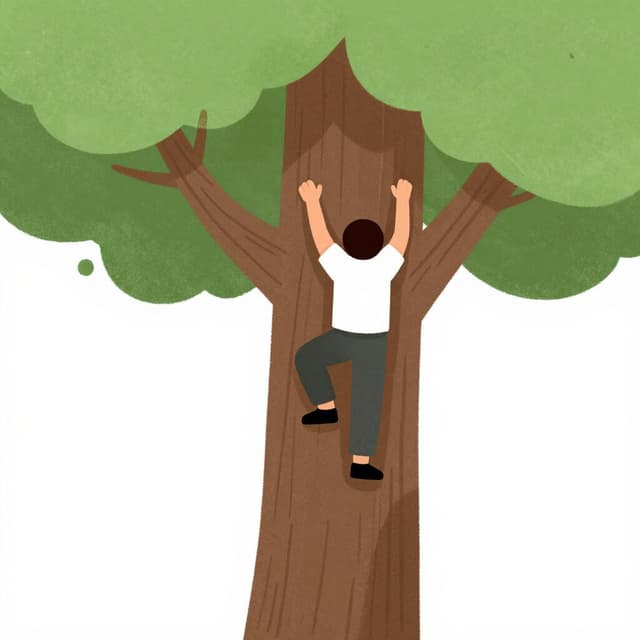
trepar — to climb
Use 'trepaba' and 'trepaban' for ongoing or habitual climbing in the past.
Formy trepar Czas przeszły niedokonany
Kiedy używać Czas przeszły niedokonany
The imperfect describes actions that were happening over a period of time in the past, or actions that were habitual. For instance, 'Cuando era niño, trepaba a todos los árboles' means 'When I was a child, I used to climb all the trees'.
Uwagi dotyczące trepar w czasie Czas przeszły niedokonany
Trepar is regular in the imperfect indicative. The 'yo' and 'él/ella/usted' forms are identical ('trepaba').
Przykładowe zdania
Yo trepaba a los árboles en mi infancia.
I used to climb trees in my childhood.
yo
Tú trepabas muy alto cuando eras joven.
You climbed very high when you were young.
tú
El mono trepaba por la liana sin parar.
The monkey climbed up the vine non-stop.
él/ella/usted
Ellos trepaban la montaña cuando empezó a nevar.
They were climbing the mountain when it started to snow.
ellos/ellas/ustedes
Częste błędy
Błąd: Using the imperfect for a single, completed past action.
Poprawnie: For 'He climbed the tree yesterday', use the preterite 'trepó', not 'trepaba'.
Dlaczego: The imperfect describes ongoing or habitual past actions, not specific completed events.
Błąd: Confusing the imperfect 'trepaba' with the imperfect subjunctive 'trepara'.
Poprawnie: 'Trepaba' describes past reality; 'trepara' describes past hypotheticals.
Dlaczego: These forms sound similar but have very different uses related to reality vs. non-reality.
Opanuj hiszpańskie czasowniki w kontekście
Zapamiętywanie tabel to dopiero początek. Przeczytaj ponad 200 ilustrowanych i udźwiękowionych hiszpańskich historii, aby zobaczyć czasowniki takie jak 'trepar' używane naturalnie — w czasach, których się uczysz.
Powiązane czasy
Czas teraźniejszy
yo: trepo
Use 'trepo' and 'trepa' for actions happening now or habitual climbing.
Czas przeszły prosty
yo: trepé
Use 'trepé' and 'trepó' for completed climbing actions in the past.
Czas przyszły
yo: treparé
Use 'treparé' and 'trepará' for actions that will happen in the future.
Tryb warunkowy
yo: treparía
Use 'treparía' and 'treparían' for hypothetical 'would' scenarios.
Tryb Subj. teraźniejszy
yo: trepe
Use 'trepe' and 'trepen' after expressions of doubt, desire, or emotion.
Tryb Subj. przeszły niedokonany
yo: trepara
Use 'trepara' or 'trepara' for past hypotheticals or wishes, like 'If I climbed...'.
Tryb rozkazujący (twierdzący)
yo: trepa
Use 'trepa' and 'trepad' for direct commands to 'tú' and 'vosotros'.
Tryb rozkazujący (przeczący)
yo: no trepes
Use 'no trepes' and 'no trepéis' for negative commands to 'tú' and 'vosotros'.