Koniugacja trepar Tryb Subj. przeszły niedokonany
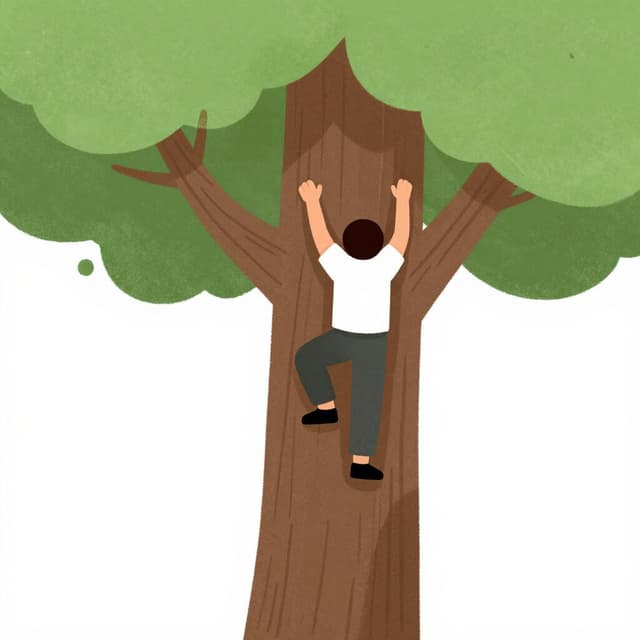
trepar — to climb
Use 'trepara' or 'trepara' for past hypotheticals or wishes, like 'If I climbed...'.
Formy trepar Tryb Subj. przeszły niedokonany
Kiedy używać Tryb Subj. przeszły niedokonany
This tense is used for hypothetical situations in the past, often in 'if' clauses ('si...') or after expressions of doubt or desire that occurred in the past. For instance, 'Ojalá trepara más alto' means 'I wish I climbed higher'.
Uwagi dotyczące trepar w czasie Tryb Subj. przeszły niedokonany
Trepar is regular in the imperfect subjunctive. Both -ra and -se forms exist, but -ra is more common in speech. The yo and él/ella/usted forms are identical.
Przykładowe zdania
Si yo trepara más rápido, ganaría la carrera.
If I climbed faster, I would win the race.
yo
Me gustaría que tú treparas por ese árbol.
I would like you to climb that tree.
tú
Ellos habrían llegado si treparan por la otra ruta.
They would have arrived if they climbed by the other route.
ellos/ellas/ustedes
Era importante que el gato trepara al tejado.
It was important that the cat climbed onto the roof.
él/ella/usted
Częste błędy
Błąd: Confusing imperfect subjunctive with imperfect indicative.
Poprawnie: Use 'trepara' for hypotheticals, not 'trepaba'.
Dlaczego: The imperfect indicative describes ongoing past actions, while the imperfect subjunctive deals with unreal or hypothetical past conditions.
Błąd: Using the -se form when -ra is expected or vice versa.
Poprawnie: While both exist (e.g., 'trepase'), the '-ra' form ('trepara') is generally more common and often preferred.
Dlaczego: Learners might be exposed to both and get confused about which to use.
Opanuj hiszpańskie czasowniki w kontekście
Zapamiętywanie tabel to dopiero początek. Przeczytaj ponad 200 ilustrowanych i udźwiękowionych hiszpańskich historii, aby zobaczyć czasowniki takie jak 'trepar' używane naturalnie — w czasach, których się uczysz.
Powiązane czasy
Czas teraźniejszy
yo: trepo
Use 'trepo' and 'trepa' for actions happening now or habitual climbing.
Czas przeszły prosty
yo: trepé
Use 'trepé' and 'trepó' for completed climbing actions in the past.
Czas przeszły niedokonany
yo: trepaba
Use 'trepaba' and 'trepaban' for ongoing or habitual climbing in the past.
Czas przyszły
yo: treparé
Use 'treparé' and 'trepará' for actions that will happen in the future.
Tryb warunkowy
yo: treparía
Use 'treparía' and 'treparían' for hypothetical 'would' scenarios.
Tryb Subj. teraźniejszy
yo: trepe
Use 'trepe' and 'trepen' after expressions of doubt, desire, or emotion.
Tryb rozkazujący (twierdzący)
yo: trepa
Use 'trepa' and 'trepad' for direct commands to 'tú' and 'vosotros'.
Tryb rozkazujący (przeczący)
yo: no trepes
Use 'no trepes' and 'no trepéis' for negative commands to 'tú' and 'vosotros'.