
Aquí vs Acá
Aquí is a precise 'right here'. Acá is a general 'around here'.
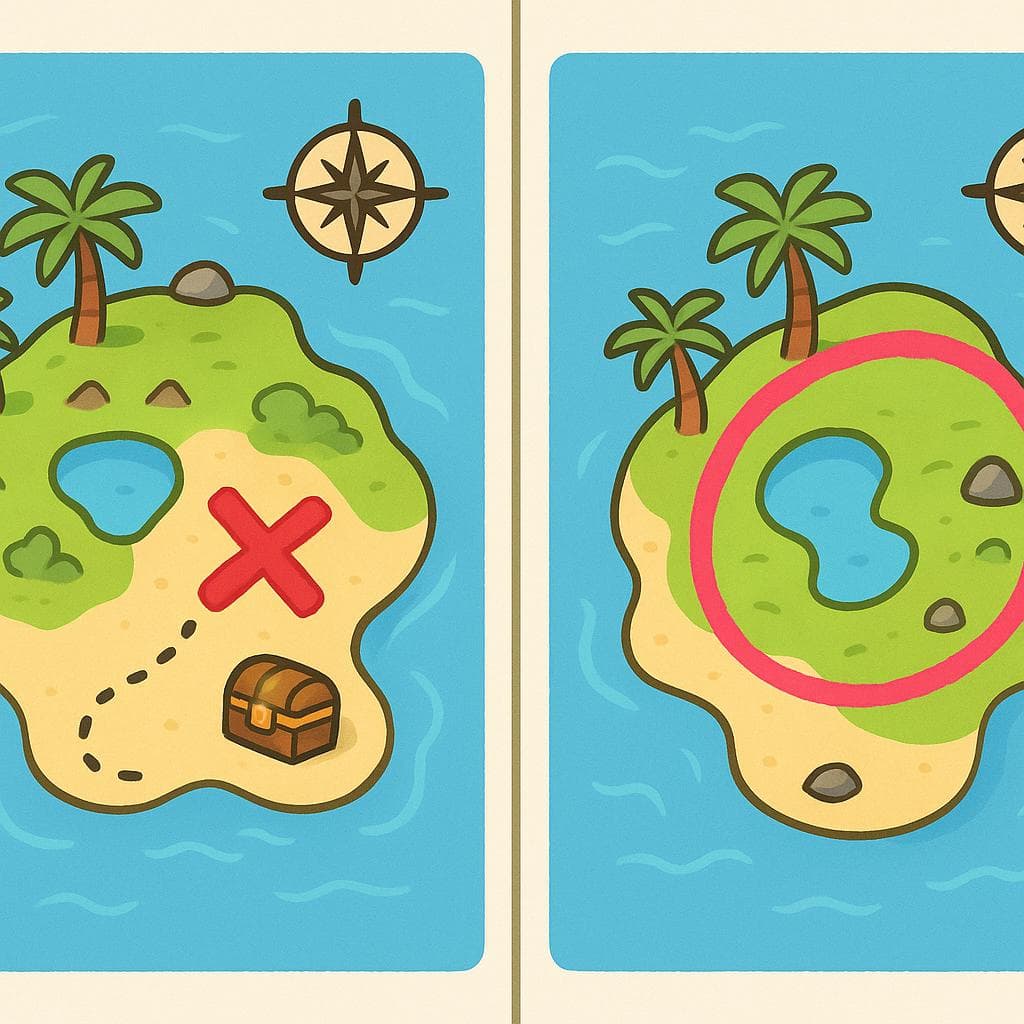
aquí
Here (a specific, precise location)
ah-KEEacá
Here (a general area, less precise)
ah-KAHQuick Rule
Aquí is a precise 'right here'. Acá is a general 'around here'.
Think: Aquí has an 'i' for 'pInpoint', like 'I am here'. Acá has an 'a' for 'Area'.
- In much of Latin America, they are used almost interchangeably in daily speech.
- In Spain, 'acá' is very rarely used; 'aquí' is the standard.
- With verbs of motion (like 'venir' or 'traer'), 'acá' is often preferred in Latin America.
Comparison Table
| Context | aquí | acá | Why? |
|---|---|---|---|
| Precision | Pon la taza aquí. | Busca por acá. | Aquí points to a specific spot. Acá refers to a general area to search in. |
| Movement | Quédate aquí conmigo. | Tráelo para acá. | Aquí often implies a static location. Acá is very common with verbs of motion towards the speaker. |
| Regional Use | Aquí en España se cena tarde. | Acá en Argentina comemos asado. | In Spain, 'aquí' is standard. In Latin America, 'acá' is very common and often preferred. |
When to Use "aquí / acá"
aquí
Here (a specific, precise location)
ah-KEE
Pinpointing an exact spot
Firma aquí, por favor.
Sign right here, please.
Referring to a static, current location
Estamos aquí en la biblioteca.
We are here in the library.
Referring to 'this point' in time or a story
Hasta aquí, todo claro.
Up to this point, everything is clear.
acá
Here (a general area, less precise)
ah-KAH
Indicating a general area
Dejé mis llaves por acá.
I left my keys around here somewhere.
With movement towards the speaker
¡Ven acá ahora mismo!
Come here right now!
Referring to 'this region' or 'our country'
Acá en Colombia, tomamos mucho café.
Here in Colombia, we drink a lot of coffee.
Contrast Examples
With "aquí":
Deja la caja aquí, sobre la marca.
Leave the box right here, on the mark.
With "acá":
Deja la caja por acá, en cualquier rincón.
Leave the box around here, in any corner.
The Difference: Aquí is precise and tells you the exact spot. Acá is vague and indicates a general area is fine.
With "aquí":
El doctor te verá aquí, en esta sala.
The doctor will see you here, in this room. (Static location)
With "acá":
¡Hijo, ven acá!
Son, come here! (Commanding movement)
The Difference: While 'ven aquí' is also correct, 'ven acá' is extremely common in Latin America to emphasize movement towards the person speaking.
Common Mistakes
En España: '¿Vienes acá a menudo?'
En España: '¿Vienes aquí a menudo?'
Using 'acá' in Spain can sound unnatural or foreign, as 'aquí' is the standard word for 'here'.
El tesoro está enterrado acá.
El tesoro está enterrado aquí.
When pointing to an exact spot on a map or ground, the precision of 'aquí' is a better fit than the general area of 'acá'.
Quick Practice
Quick Quiz: Aquí vs Acá
Question 1 of 3
If you are in Latin America and want to call your friend over to you, what is the most natural-sounding option?
Related Grammar
Want to understand the grammar behind this pair? Explore these lessons for a deep dive:
Key Words

Tags
Build the instinct, not just the rule
Rules help you get it right; context makes it automatic. Read 200+ illustrated and narrated Spanish stories to see confusing pairs chosen correctly — over and over — until you stop thinking about it.
Frequently Asked Questions
So are aquí and acá completely interchangeable in Latin America?
In many everyday situations, yes. Many native speakers use them without thinking about the difference. However, the nuance of 'aquí' being more precise and 'acá' being more general still exists. If you want to sound more precise, use 'aquí'. If you're indicating a general area or movement, 'acá' is a great choice.
What about 'ahí'?
'Ahí' is another adverb of place, meaning 'there' when something is close to the person you're talking to, but not close to you. Think of it as the middle ground: 'Aquí' (here by me), 'Ahí' (there by you), 'Allí' (over there, far from both of us).
If I'm a beginner, which one should I learn first?
Focus on 'aquí' first. It's universally understood and is the only one used in Spain, so you can't go wrong with it. As you get more comfortable and listen to more speakers from Latin America, you'll naturally start to pick up when and how to use 'acá'.