
Cocinar vs Cocer
Cocinar is the general act of cooking a meal. Cocer is a specific method: to boil or to bake.
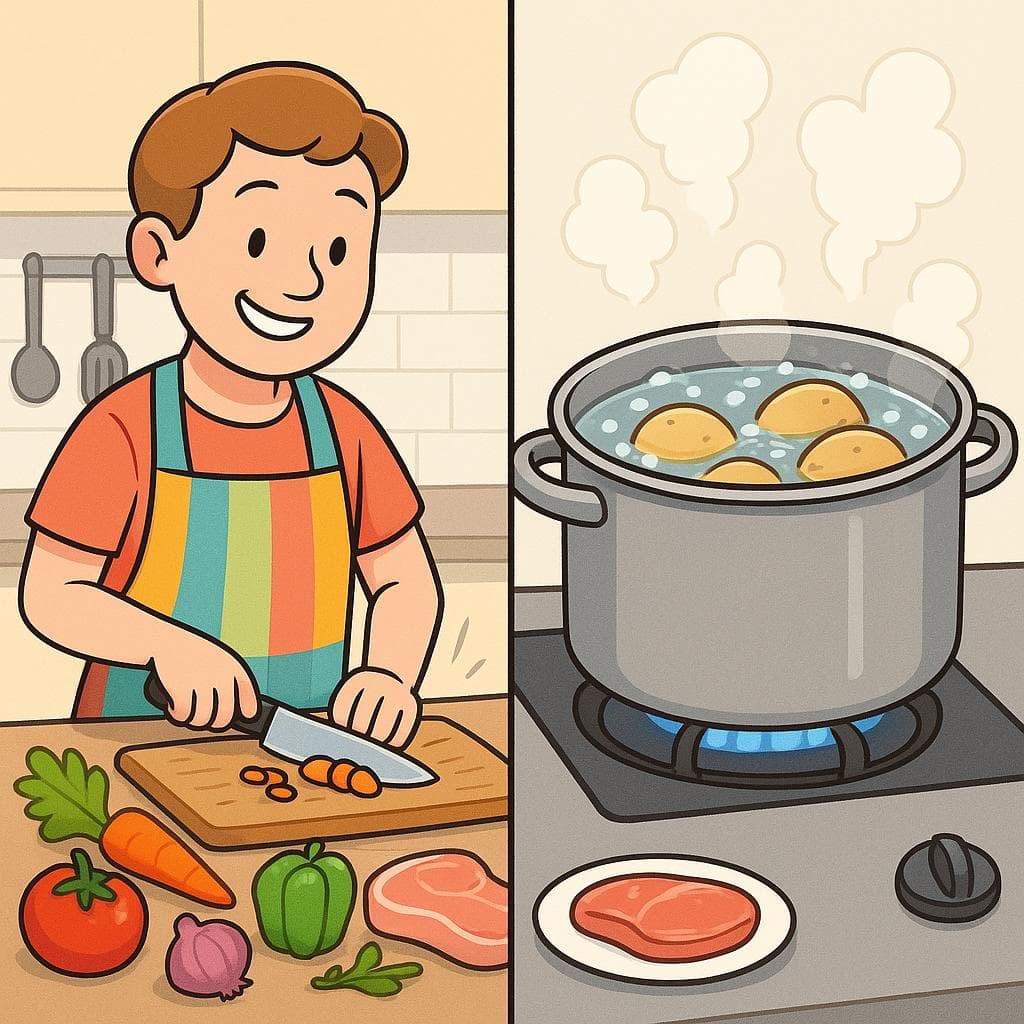
cocinar
To cook (the general process of preparing food or a meal)
koh-see-NARcocer
To cook using a specific method, typically boiling, stewing, or baking
koh-SEHRQuick Rule
Cocinar is the general act of cooking a meal. Cocer is a specific method: to boil or to bake.
Think: Cocinar happens in the kitchen (la cocina). Cocer happens in a pot (boiling) or oven (baking).
- The noun 'un cocido' is a famous Spanish stew made by boiling ingredients.
- You can say 'cocinar al horno' (to cook in the oven), which is a general alternative to the more specific 'cocer'.
Comparison Table
| Context | cocinar | cocer | Why? |
|---|---|---|---|
| General vs. Specific | Voy a cocinar algo rico. | Voy a cocer unas patatas. | Cocinar is the whole plan (making something tasty). Cocer is one specific action (boiling potatoes). |
| Pasta & Grains | Hoy cocino pasta para cenar. | Pon a cocer el arroz, por favor. | Cocinar refers to making the pasta dish. Cocer refers to the specific step of boiling the rice or pasta itself. |
| In the Oven | Voy a cocinar un pollo al horno. | El pan se está cociendo. | You can use 'cocinar' for oven dishes, but for bread and baked goods, 'cocer' is the specific term for baking. |
When to Use "cocinar / cocer"
cocinar
To cook (the general process of preparing food or a meal)
koh-see-NAR
The general activity of cooking
Me encanta cocinar los fines de semana.
I love to cook on the weekends.
Preparing a specific dish
Esta noche voy a cocinar paella.
Tonight I'm going to cook paella.
As a profession or skill
Mi hermano cocina muy bien.
My brother cooks very well.
cocer
To cook using a specific method, typically boiling, stewing, or baking
koh-SEHR
Boiling in liquid
Tienes que cocer la pasta por 8 minutos.
You have to boil the pasta for 8 minutes.
Baking bread or pastries
El pan se cuece en el horno a 200 grados.
The bread is baked in the oven at 200 degrees.
Stewing or simmering
Deja cocer las verduras a fuego lento.
Let the vegetables stew over low heat.
Contrast Examples
With "cocinar":
Voy a cocinar lentejas.
I'm going to cook lentils. (Make a lentil dish.)
With "cocer":
Primero, hay que cocer las lentejas.
First, you have to boil the lentils. (One step of the recipe.)
The Difference: Cocinar refers to creating the final meal. Cocer refers to the specific action of boiling the ingredients as part of the preparation.
With "cocinar":
Mi abuela cocina unos postres increíbles.
My grandmother makes incredible desserts. (A general skill.)
With "cocer":
Mi abuela cuece el bizcocho a la perfección.
My grandmother bakes the sponge cake to perfection. (A specific technique.)
The Difference: Use 'cocinar' to talk about someone's overall cooking talent. Use 'cocer' to talk about their skill with a specific technique like baking.
Common Mistakes
Voy a cocinar los huevos en agua.
Voy a cocer los huevos en agua.
Because you are specifically boiling the eggs in water, 'cocer' is the correct verb. 'Cocinar' isn't wrong, just less precise.
¿Sabes cocer paella?
¿Sabes cocinar paella?
Preparing a complex dish like paella is a general cooking process. You use 'cocinar'. You might 'cocer' the rice as one step, but you 'cocinar' the whole dish.
Quick Practice
Quick Quiz: Cocinar vs Cocer
Question 1 of 3
Para hacer espaguetis, primero tienes que ___ la pasta en agua caliente.
Related Grammar
Want to understand the grammar behind this pair? Explore these lessons for a deep dive:
Key Words





Tags
Build the instinct, not just the rule
Rules help you get it right; context makes it automatic. Read 200+ illustrated and narrated Spanish stories to see confusing pairs chosen correctly — over and over — until you stop thinking about it.
Frequently Asked Questions
Can I just use 'cocinar' for everything?
You can often be understood, but it will sound unnatural to native speakers, especially when talking about boiling or baking. Using 'cocer' for pasta, potatoes, or bread shows a better command of the language.
What's the difference between 'cocer' and 'hervir'?
'Hervir' specifically means 'to boil'—it describes the action of the water. 'Cocer' describes what happens to the food in that boiling water. You put water on 'a hervir' (to boil), and then you 'cueces la pasta' (boil the pasta) in it.
How is 'cocer' conjugated? It looks weird.
Good eye! 'Cocer' is a stem-changing verb. The 'o' changes to 'ue' in some present tense forms (yo cuezo, tú cueces, él cuece...). It's irregular, so it's a good one to practice!