
Comer vs Comerse
Use `comer` for the general act of eating. Use `comerse` to emphasize eating something specific completely.
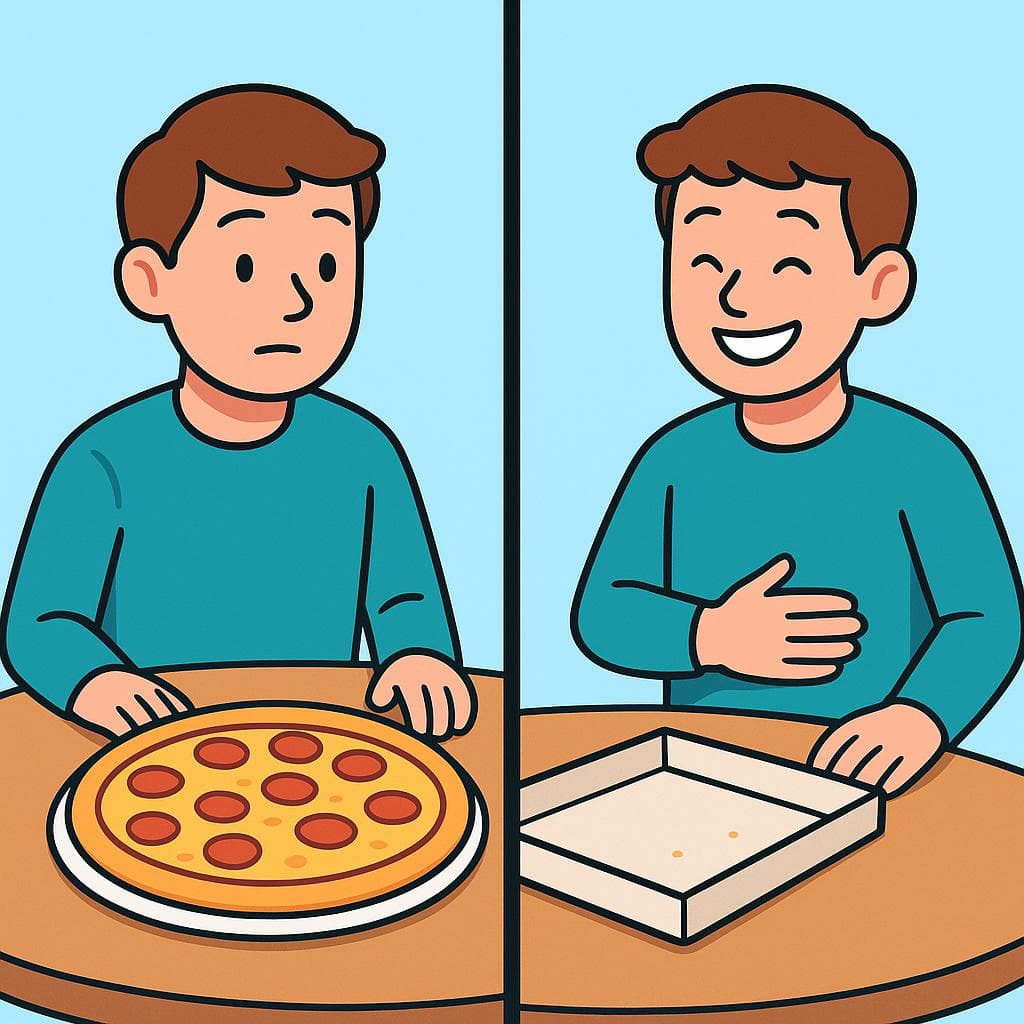
comer
To eat (the general action, unspecified amounts, regular habits)
koh-MEHRcomerse
To eat up (a specific item, a whole portion, with emphasis or personal enjoyment)
koh-MEHR-sehQuick Rule
Use `comer` for the general act of eating. Use `comerse` to emphasize eating something specific completely.
Think `comerse` = 'to eat it all up'. The `-se` adds a feeling of personal involvement or completion.
- It's often a stylistic choice to add emphasis; `comer` is rarely wrong for just stating a fact.
- Some idioms require `comerse`, like `comerse el coco` (to overthink).
Comparison Table
| Context | comer | comerse | Why? |
|---|---|---|---|
| Pizza Night | Comimos pizza. | Nos comimos la pizza. | `Comer` states what you ate. `Comerse` implies you ate a specific pizza, probably the whole thing. |
| A Child's Dinner | El niño no come verduras. | El niño no se come las verduras. | `Comer` describes a general habit (he doesn't eat vegetables). `Comerse` refers to the specific vegetables on his plate right now. |
| Daily Fruit | Como una manzana cada día. | Me comí una manzana. | `Comer` is for a routine or habit. `Comerse` focuses on a single, completed action. |
| A Plate of Cookies | Comí galletas. | Me comí las galletas. | `Comer` means you had some cookies (unspecified amount). `Comerse` strongly suggests you ate all of them. |
When to Use "comer / comerse"
comer
To eat (the general action, unspecified amounts, regular habits)
koh-MEHR
The general act of eating
¿A qué hora comemos?
What time do we eat?
Habits or preferences
No como carne.
I don't eat meat.
Eating an unspecified amount
Comí pizza anoche.
I ate pizza last night.
Stating a general fact
Los osos comen pescado.
Bears eat fish.
comerse
To eat up (a specific item, a whole portion, with emphasis or personal enjoyment)
koh-MEHR-seh
Eating something completely
Me comí toda la tarta.
I ate up the whole cake.
Eating a specific, countable item
Se comió tres tacos.
He ate three tacos.
Adding personal emphasis or enjoyment
¡Cómete la sopa, que te va a encantar!
Eat up the soup, you're going to love it!
Figurative or idiomatic expressions
El niño se come las uñas.
The child bites his nails.
Contrast Examples
With "comer":
Juan comió un sándwich.
Juan ate a sandwich. (A simple statement of fact.)
With "comerse":
Juan se comió un sándwich.
Juan ate up a sandwich. (He ate the whole thing, emphasizing completion.)
The Difference: `Comer` is like a neutral report. `Comerse` adds a layer of completion and personal involvement. It often implies the action was done with some gusto or finality.
With "comer":
Mi hijo no come brócoli.
My son doesn't eat broccoli. (As a general rule, he dislikes it.)
With "comerse":
Mi hijo no se come el brócoli.
My son isn't eating the broccoli. (He's refusing the specific broccoli on his plate right now.)
The Difference: `Comer` describes a general preference or habit. `Comerse` is about a specific instance and a particular portion of food.
With "comer":
Comimos pastel en la fiesta.
We ate cake at the party. (Cake was served, and we had some.)
With "comerse":
Nos comimos todo el pastel.
We ate up all the cake. (We devoured it; there's none left!)
The Difference: `Comerse` (often with words like 'todo') powerfully emphasizes that the entire quantity was consumed.
Common Mistakes
Me como a las dos de la tarde.
Como a las dos de la tarde.
For the general act of eating at a certain time, use `comer`. `Comerse` needs a specific object (what you ate).
Los leones se comen.
Los leones comen carne.
`Comerse` without an object can mean 'to eat each other'. For general facts about what an animal eats, use `comer` followed by the food.
Quick Practice
Quick Quiz: Comer vs Comerse
Question 1 of 2
Which sentence means 'I ate the entire apple'?
Related Grammar
Want to understand the grammar behind this pair? Explore these lessons for a deep dive:
Key Words

Tags
Build the instinct, not just the rule
Rules help you get it right; context makes it automatic. Read 200+ illustrated and narrated Spanish stories to see confusing pairs chosen correctly — over and over — until you stop thinking about it.
Frequently Asked Questions
Is `comer` ever wrong when I could use `comerse`?
Rarely. Using `comer` is almost always grammatically correct, it just might sound less natural or lack emphasis. For example, saying 'Comí tres tacos' is fine, but 'Me comí tres tacos' is more common and emphatic. The reverse is not true; using `comerse` for general habits is incorrect.
Does this apply to other verbs too?
Yes! This is a common pattern in Spanish. Many verbs can add '-se' to change the meaning slightly, often to add emphasis, completion, or personal involvement. Other examples include `ir` (to go) vs. `irse` (to leave), and `dormir` (to sleep) vs. `dormirse` (to fall asleep).