
Dormir vs Dormirse
Dormir = to sleep (the whole action). Dormirse = to fall asleep (the moment it starts).
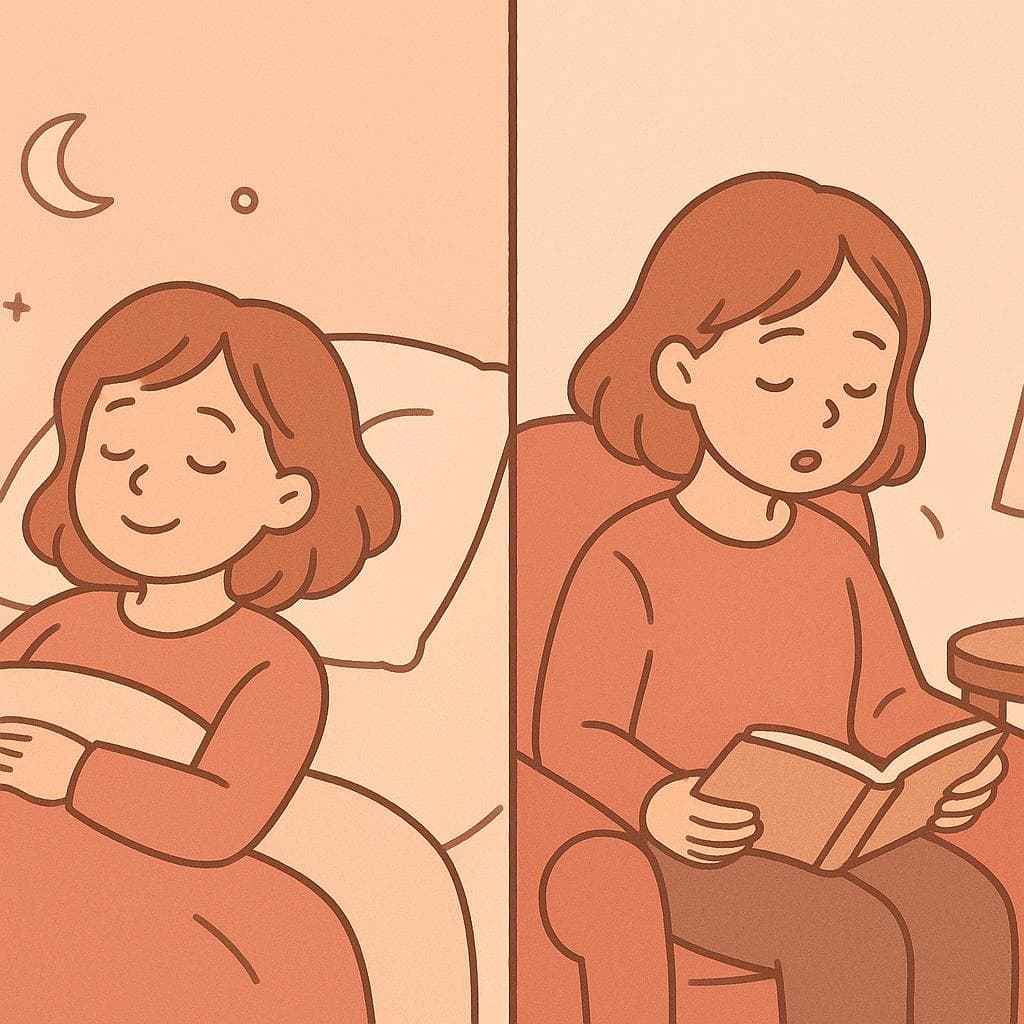
dormir
To sleep (the general state or activity of sleeping)
dohr-MEERdormirse
To fall asleep (the transition from being awake to being asleep)
dohr-MEER-sehQuick Rule
Dormir = to sleep (the whole action). Dormirse = to fall asleep (the moment it starts).
Think: 'Dormir' is the entire movie. 'Dormirse' is just the opening scene.
- The phrase 'quedarse dormido' is a common synonym for 'dormirse', often implying falling asleep unintentionally.
- 'Dormirse' can also mean a body part 'falls asleep' or goes numb (Se me durmió el pie).
Comparison Table
| Context | dormir | dormirse | Why? |
|---|---|---|---|
| Duration vs. Starting Point | Dormí por diez horas. | Me dormí en diez minutos. | Dormir describes how long you were asleep. Dormirse describes how long it took you to fall asleep. |
| Past Action | Ayer dormí en casa de mis padres. | Ayer me dormí muy tarde. | Dormir focuses on where/how you slept. Dormirse focuses on when you started sleeping. |
| During an Activity | El bebé durmió todo el viaje. | Casi me duermo en la reunión. | Dormir implies being asleep for the duration. Dormirse implies dozing off or the struggle to stay awake. |
| Physical Sensation | Mi perro duerme en mi cama. | Se me durmió la pierna. | Only 'dormirse' is used when a body part goes numb or 'falls asleep'. |
When to Use "dormir / dormirse"
dormir
To sleep (the general state or activity of sleeping)
dohr-MEER
Talking about duration
Necesito dormir ocho horas esta noche.
I need to sleep eight hours tonight.
Describing sleep quality
Anoche no dormí bien.
Last night I didn't sleep well.
Stating a general habit
Normalmente duermo de lado.
I normally sleep on my side.
dormirse
To fall asleep (the transition from being awake to being asleep)
dohr-MEER-seh
The moment you fall asleep
Me dormí a las once en punto.
I fell asleep at eleven o'clock sharp.
Falling asleep unintentionally
Me dormí viendo una película en el sofá.
I fell asleep watching a movie on the sofa.
When a body part goes numb
Se me durmió el brazo.
My arm fell asleep.
Contrast Examples
With "dormir":
El niño durmió durante la película.
The child slept during the movie.
With "dormirse":
El niño se durmió durante la película.
The child fell asleep during the movie.
The Difference: 'Dormir' implies he was asleep for a significant portion of the film. 'Dormirse' highlights the moment he drifted off.
With "dormir":
¿Dormiste bien?
Did you sleep well?
With "dormirse":
¿A qué hora te dormiste?
What time did you fall asleep?
The Difference: 'Dormir' asks about the quality and state of the entire sleep period. 'Dormirse' asks about the specific point in time your sleep began.
With "dormir":
Duermo con la ventana abierta.
I sleep with the window open.
With "dormirse":
Normalmente me duermo muy rápido.
Normally I fall asleep very quickly.
The Difference: 'Dormir' describes a condition that is true while you are asleep. 'Dormirse' describes the process of getting to sleep.
Common Mistakes
Me dormí por ocho horas.
Dormí por ocho horas.
When talking about the duration of your sleep, use 'dormir'. 'Me dormí' only refers to the moment you fell asleep.
Yo duermo a las diez.
Yo me duermo a las diez.
To state the specific time you fall asleep, you need the reflexive 'dormirse'. 'Duermo a las diez' is grammatically odd but could mean 'At ten o'clock, I am sleeping'.
Quick Practice
Quick Quiz: Dormir vs Dormirse
Question 1 of 2
Which is correct to describe the quality of your sleep? 'Anoche ___ muy bien.'
Related Grammar
Want to understand the grammar behind this pair? Explore these lessons for a deep dive:
Key Words


Tags
Build the instinct, not just the rule
Rules help you get it right; context makes it automatic. Read 200+ illustrated and narrated Spanish stories to see confusing pairs chosen correctly — over and over — until you stop thinking about it.
Frequently Asked Questions
Is 'quedarse dormido' the same as 'dormirse'?
They are very similar and often interchangeable. 'Quedarse dormido' strongly implies falling asleep unintentionally or by accident, like when you're watching TV. 'Dormirse' can be intentional (I went to bed and fell asleep) or unintentional.
Why does 'se me durmió el pie' use 'se' and 'me'?
This is a special construction in Spanish to show something happened to you unintentionally. 'Se durmió el pie' means 'the foot fell asleep', but adding 'me' clarifies it happened *to me*. It removes your responsibility, like saying 'my foot went and fell asleep on me!'