
Poner vs Ponerse
Poner = to put something somewhere. Ponerse = to put something on yourself (or to become an emotion).
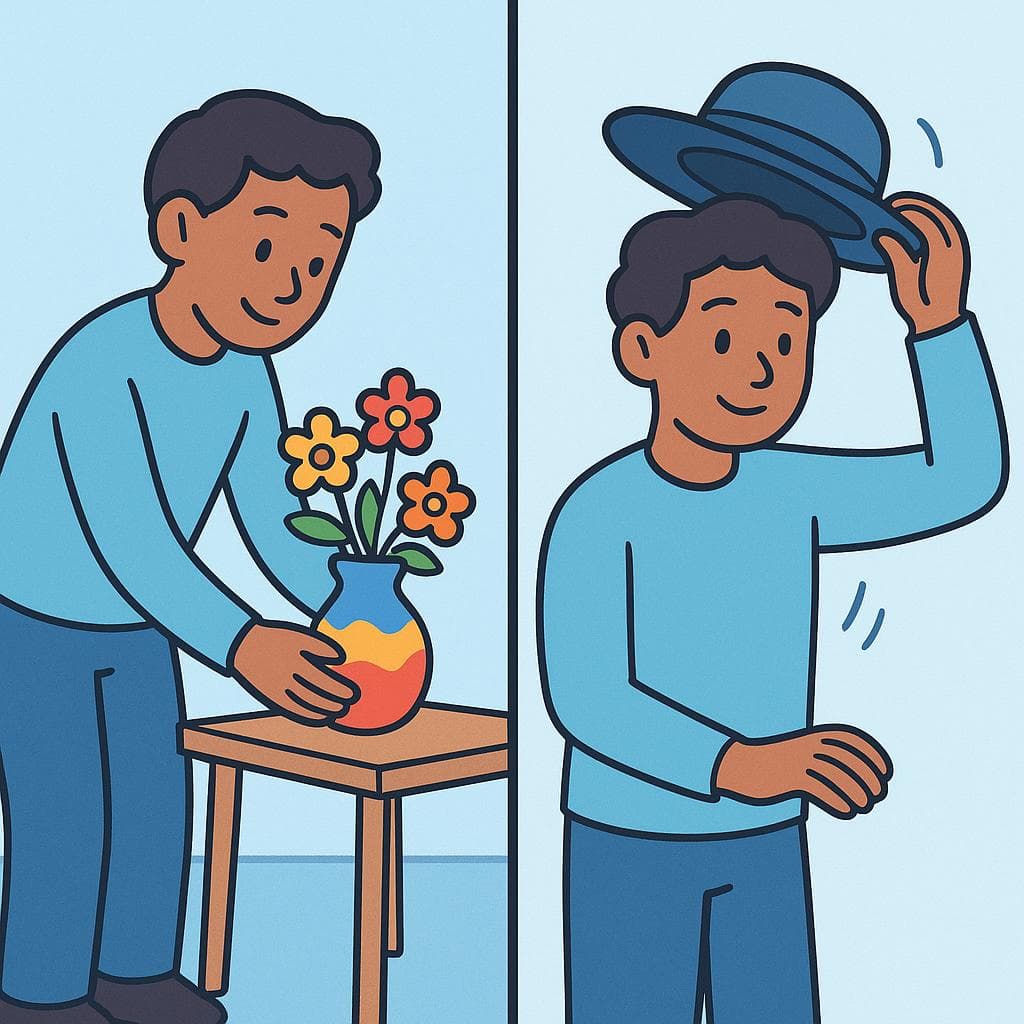
poner
To put, place, set, or turn on
poh-NAIRponerse
To put on (clothing), to become (an emotion), to place oneself
poh-NAIR-sehQuick Rule
Poner = to put something somewhere. Ponerse = to put something on yourself (or to become an emotion).
Think: `poner` is an OUTWARD action (put the book on the table). `ponerse` is an INWARD action (put the shirt on yourself).
- With emotions, 'ponerse' means 'to become' (e.g., 'me pongo triste' = 'I become sad').
- The phrase 'ponerse a + [verb]' means 'to start doing something' (e.g., 'se puso a estudiar' = 'he started to study').
Comparison Table
| Context | poner | ponerse | Why? |
|---|---|---|---|
| Objects vs. Clothing | Pone el plato en la mesa. | Se pone la chaqueta. | Poner acts on an external object. Ponerse is for putting something on yourself. |
| Emotions | La noticia me pone triste. | Me pongo triste con la noticia. | Poner describes what *causes* the emotion in someone. Ponerse describes the emotional change you *experience*. |
| Starting an action | Pon el cronómetro. | Ponte a trabajar. | Poner starts a device. 'Ponerse a' means a person begins an activity. |
| Physical position | Pon la silla aquí. | Ponte aquí. | Poner is for placing an object. Ponerse is for placing yourself. |
When to Use "poner / ponerse"
poner
To put, place, set, or turn on
poh-NAIR
Placing an object somewhere
Pongo las llaves en la mesa.
I put the keys on the table.
Setting up or preparing something
Vamos a poner la mesa para la cena.
Let's set the table for dinner.
Turning on an appliance
Por favor, pon la música.
Please, put on the music.
To make someone feel an emotion
Esa película siempre me pone sentimental.
That movie always makes me sentimental.
ponerse
To put on (clothing), to become (an emotion), to place oneself
poh-NAIR-seh
Putting on clothing or accessories
Me pongo el abrigo porque hace frío.
I'm putting on my coat because it's cold.
Changing emotional state
Se pone nerviosa antes de los exámenes.
She gets nervous before exams.
Changing physical state or appearance
Se puso rojo como un tomate.
He turned red as a tomato.
To start doing something (ponerse a + infinitive)
Me voy a poner a limpiar la casa.
I'm going to start cleaning the house.
Contrast Examples
With "poner":
Pongo tu abrigo en la cama.
I'm putting your coat on the bed.
With "ponerse":
Me pongo el abrigo.
I'm putting on my coat.
The Difference: Poner is about placing an object somewhere else. Ponerse is about putting it on your own body.
With "poner":
Hablar en público me pone nervioso.
Public speaking makes me nervous.
With "ponerse":
Me pongo nervioso cuando hablo en público.
I get nervous when I speak in public.
The Difference: 'Poner + adjective' explains the external cause of an emotion. 'Ponerse + adjective' describes the internal change you feel.
Common Mistakes
Yo pongo mi chaqueta.
Yo me pongo la chaqueta.
When you put clothes on yourself, the action is reflexive. You must use 'ponerse'.
Cuando veo perros, yo pongo feliz.
Cuando veo perros, me pongo feliz.
To describe becoming an emotion, you need the reflexive form 'ponerse'. 'Poner feliz' means to make someone else happy.
Quick Practice
Quick Quiz: Poner vs Ponerse
Question 1 of 3
Which is correct? 'Cada mañana, yo ___ la ropa para ir a trabajar.'
Related Grammar
Want to understand the grammar behind this pair? Explore these lessons for a deep dive:
Key Words


Tags
Build the instinct, not just the rule
Rules help you get it right; context makes it automatic. Read 200+ illustrated and narrated Spanish stories to see confusing pairs chosen correctly — over and over — until you stop thinking about it.
Frequently Asked Questions
Why is 'ponerse' called a 'reflexive' verb?
It's called 'reflexive' because the action 'reflects' back on the person doing it. When you say 'me pongo un sombrero' (I put a hat on myself), you are both doing the action and receiving the action. The action starts and ends with you.
Does 'ponerse' always imply a change?
Yes, that's a great way to think about it! Whether you're putting on clothes (changing your state of dress), becoming sad (changing your emotional state), or turning red (changing your appearance), 'ponerse' almost always signals a change or transition.